Microbial fertilizer is more expensive than ordinary fertilizer. Is it really worth the money?
With the development of science and technology, the types of fertilizers are also constantly changing, gradually developing from the single chemical element fertilizers of the past to today's multi-element fertilizers that also contain microorganisms.
In recent years, some farmers growing cash crops have indeed found through practical use that microbial fertilizer can build soil fertility and increase yields. So what is the principle behind this? At present, the price of microbial fertilizer is indeed somewhat higher than that of organic fertilizer and inorganic fertilizer, so why do people still use it? Is it really worth the money?
Before explaining the reasons, the editor will first analyze the evolution of our country's soil environment, because the soil environment is what crops and fertilizers come into direct contact with, and its changes directly affect crop growth and fertilizer utilization efficiency.
The evolution of the overall soil environment
Since the 1970s and 1980s, our country's agricultural land has used large amounts of single chemical element fertilizers, such as ammonium bicarbonate, ammonium sulfate, diammonium phosphate, urea and other macroelement fertilizers. Although these fertilizers can be absorbed quickly and increase yields, they have also caused the deterioration of the overall soil environment.
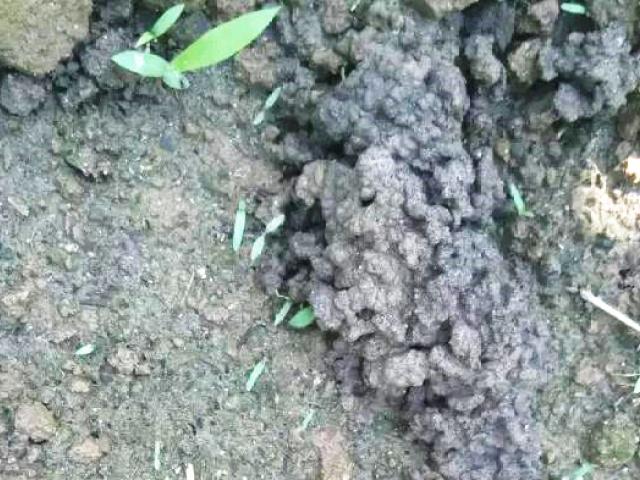
Due to the large input of chemical fertilizers, large amounts of acid radical ions such as nitrate, sulfate and bisulfate gradually accumulated in the soil, causing the soil pH to gradually decrease and tend toward acidification, resulting in hard, compacted soil, where the land is waterlogged whenever watered and cracks whenever the weather is sunny.
This is mainly reflected in the following aspects:
Crops grow slowly and become subhealthy
Every crop has a suitable pH range, and the growing environment of the vast majority of crops is slightly acidic to slightly alkaline. However, the presence of large amounts of acid radical ions makes the soil fairly acidic, so crop roots cannot normally absorb and secrete substances, causing root nutrition to fall short.
Roots are the foundation of crop growth, and the lack of their nutrition directly affects the growth of the entire crop. It can even accelerate the weathering of aluminum-containing primary minerals and secondary minerals in the soil and release large amounts of aluminum ions, forming aluminum compounds in a form that crops can absorb. Long-term excessive absorption of aluminum by crops can cause poisoning and even death.
Low fertilizer utilization efficiency and high investment
After many years of chemical fertilizer input, soil minerals themselves have fixed large amounts of nutrients such as phosphorus and potassium, reaching a saturated state. If fertilizer is applied again, it will not only fail to be adsorbed by the soil, but will instead leach away with water, further acidifying the overall soil environment. When soil acidifies, crop roots cannot absorb nutrients and grow poorly, and farmers often increase fertilizer input, which further increases the concentration of acid radical ions in the soil, creating a vicious cycle.
Easy to breed pathogens and cause disease
After soil acidification, the reproductive capacity and viability of some beneficial microbial communities decline, and they may even die. On the contrary, some harmful microorganisms take the opportunity to multiply in large numbers, then infect crop roots and spread throughout the whole plant. For example, root rot in some crops is caused by the invasion of harmful microorganisms.
What role can microbial fertilizer play?
The effects of microbial fertilizer are mainly related to the sources and availability of nutrient elements, or to crop absorption of nutrients and water and disease resistance. In summary, they include the following aspects:
Building soil fertility
This is one of the main effects of microbial fertilizer. For example, various free-living and symbiotic nitrogen-fixing microorganisms can increase the source of nitrogen in the soil; the application of various phosphate-solubilizing and potassium-solubilizing microorganisms can decompose insoluble phosphorus and potassium in the soil so that crops can absorb and use them.
After microbial fertilizer is applied to the soil, it can rapidly multiply and form a highly active probiotic community, fundamentally improving the ecological structure of the soil and the area around the roots, making soil that has been compacted by many years of chemical fertilizer use loose and breathable, absorbing nitrogen from the air and forming "ecological nitrogen fertilizer," and activating the ineffective dead phosphorus and dead potassium deposited in the soil for many years so that crop roots can absorb them.
Enhancing stress resistance
In addition to the yield- and income-increasing effects of traditional fertilizers, microbial fertilizer can also reduce crop diseases. This is mainly due to the following three reasons:
First, the beneficial microorganisms in the fertilizer grow and multiply, forming a dominant population within the microecosystem of the crop rhizosphere soil, inhibiting the growth and reproduction of other harmful microorganisms, and even producing antagonistic effects on some harmful pathogenic bacteria, reducing the chances of harm from harmful microorganisms.
Second, during their growth and reproduction, beneficial microorganisms secrete various metabolites into the microecosystem of the crop rhizosphere soil. These metabolites can stimulate crop growth and improve the crop's ability to resist adverse environments.
Third, when crops suffer stress such as disease, freezing injury, drought or senescence, applying microbial fertilizer can, through the microbial strains it contains, induce crops to produce superoxide dismutase, eliminating free radicals produced by stress, thereby improving crop stress resistance and reducing disease.
Improving quality, early maturity and high yield
Microbial fertilizer can activate fixed medium and trace nutrient elements such as potassium, calcium and zinc in the soil, and these elements can be supplied to crops. Many of the beneficial soil microorganisms it contains can also produce plant hormone-like substances, stimulating and regulating crop growth, making crops grow robustly and improving their nutritional status. Generally, it can increase the yield of cash crops by more than 30%, and increase the yield of field crops by 7~10% or more.
Having said this, do you think the money is worth spending?
To achieve high and stable yields, investment is necessary. Rather than investing blindly, it is better to choose rationally and spend money where it counts. That is the real principle!
Microbial fertilizer
1. Supplement beneficial bacteria in the soil, deeply loosen the soil and clean it, break up compaction, quickly promote the formation of granular structure, fill the soil with vitality, and reshape healthy, fertile good farmland.
2. With more than 80 kinds of beneficial bacteria combined, it promotes well-developed rooting and mycorrhizal symbiosis, significantly improves fertilizer utilization efficiency through nitrogen fixation, phosphorus solubilization and potassium solubilization, increases soil organic matter, supplements medium and trace elements and various growth-promoting substances, balances nutrient absorption, and enhances crop stress resistance.
3. An aircraft-carrier-style large beneficial bacterial community works together to inhibit and kill harmful pathogens and insect eggs, remove toxins, degrade heavy metals, decompose residues, adjust acidity and reduce alkalinity, cultivate healthy soil, and achieve the purpose of thoroughly preventing and controlling pests and diseases.
4. Biological control of diseases solves crop obstacles and effectively prevents and controls various fruit trees' rot disease, root rot, viral disease, nutrient deficiency, replant disease, as well as peach gummosis and kiwifruit canker; it solves the problem of continuous cropping and replanting of vegetables, and is a good helper for your planting.
ChinaKiwifruitIndustry Network (www.51qiyiguo.com), using the "Internet + industry" approach, with Wugong kiwifruit as the center, radiating to kiwifruit upstream and downstream enterprises across the country, integrating industry resources, and forming a national single-product industry upstream and downstream focus center. It provides information services for the ecological supply chain of the kiwifruit planting, processing and sales industry, driving the online upgrade of the industry.