A Detailed Guide to Growing and Caring for Peperomia tetraphylla
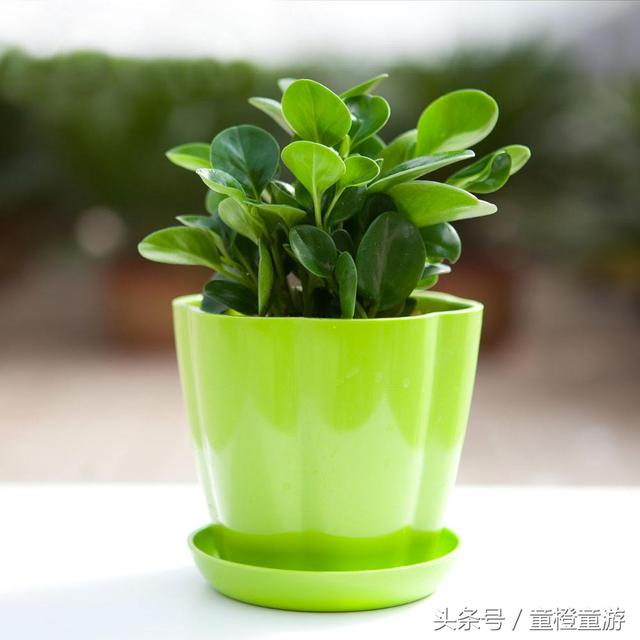 Peperomia tetraphylla, also known as pepper grass, four-leaf peperomia, emerald peperomia, green-leaf jade, peperomia ruyi and one-pillar incense. It originates from the West Indies, Panama and northern South America. In China it is produced in Taiwan, China, Fujian, Guangdong, Guangxi, Guizhou, Yunnan, Sichuan, southern Gansu and southern Tibet. It is a succulent, clump-forming herb with creeping, much-branched stems, dense leaves and nearly ovoid berries, flowering from February to April and from September to December.
Planting
Peperomia tetraphylla requires loose, fertile, well-drained soil when planted. For pot culture, a nutrient soil can be prepared from garden soil, leaf mold and coarse sand in a 6:3:1 ratio.
Watering
Peperomia tetraphylla likes moisture, and during the growing period from May to September it should be watered more; in hot weather the leaves should be sprayed or sprinkled with water to maintain relatively high air humidity and keep the leaf patterns clear and the foliage emerald green. In winter the potting soil should be kept slightly dry to increase the plant's cold resistance.
Temperature
Peperomia tetraphylla likes warmth, with an optimum growing temperature of 18-27°C, and in winter it should not fall below 5°C.
Light
Peperomia tetraphylla likes a semi-shaded environment and dislikes strong light.
Fertilizer
The growing period of Peperomia tetraphylla is from May to September, and during this period a dilute liquid fertilizer based mainly on nitrogen or a suitable flower fertilizer can be applied once every 2-3 weeks.
Pest and Disease Control
It is not prone to diseases, but if they occur they are mainly ringspot disease, root and crown rot and corky scab.
Ringspot disease: affected plants become stunted and their leaves become distorted, reducing their ornamental value. In this case, an equal-strength Bordeaux mixture can be sprayed for control.
Root and crown rot, corky scab: 50% carbendazim wettable powder at 1000 times dilution can be sprayed for control.
Propagation Methods
Peperomia tetraphylla can be propagated by cuttings and division.
Main Value
1. Peperomia tetraphylla is small and elegant as a potted plant, with emerald-green leaves that seem ready to drip, making it very suitable for placing on a desk, tea table, office and other places. Throughout the year, keep it in a spot indoors with bright scattered light as far as possible to prevent leggy growth. In summer it should be placed on a north-facing balcony.
2. Peperomia tetraphylla has a certain purifying effect on formaldehyde, xylene and secondhand smoke, and is the best plant for radiation protection.