Complete guide to growing tomatoes on a balcony: grow great vegetables at home too
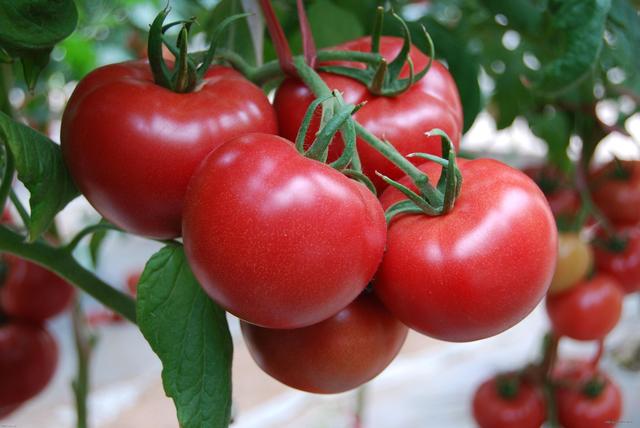
According to research measurements by nutritionists: eating 50 g-100 g of fresh tomatoes per person per day can meet the body's needs for several vitamins and minerals. The "tomato red" contained in tomatoes has an antibacterial effect; the malic acid, citric acid and sugars they contain aid digestion. Among the vegetables that can be grown on a balcony, tomatoes are easy and simple to handle, so small-scale gardeners might as well add a touch of red to their little vegetable patch.
Key points of balcony tomato cultivation techniques
1. Variety selection
Choose varieties that are disease-resistant, high quality, high yielding and have good market appeal.
2. Cultivation environment
Tomatoes are a vegetable that likes warmth and light; choose a balcony with good light, especially a south-facing balcony, which is ideal with plenty of sunshine.
3. Cultivation season:
They can be cultivated and planted in spring, summer and autumn, but they are not tolerant of intense heat; for a home balcony, spring and summer planting is better.
4. Substrate treatment and sowing
(1) Substrate treatment before sowing
Treatment of new substrate: 1-2 days before planting, keep the pot substrate in its original state without turning it, and use clean water to wet the substrate through to the bottom so that the substrate is moist. Substrate treatment can also be done at the same time as sowing, but by no means let the substrate become too wet, which causes seeds to rot, or too dry, which causes uneven germination and emergence.
Treatment of used substrate: if the substrate was used in the previous season, before sowing in the next season it is best to water and rinse it or leave it outdoors in the rain, then take out about 1/3 cm of the surface substrate, add the supplied biological organic fertilizer A and mix well for use as the surface soil for sowing and for covering in this batch, then add the supplied biological organic fertilizer B to the remaining substrate and mix well to make the bottom substrate for planting. Avoid continuous cropping of crops of the same family over multiple seasons.
(Treatment of used substrate: if the substrate was used in the previous season, before sowing in the next season it is best to water and rinse it or leave it outdoors in the rain, then add the supplied biological organic fertilizer B to the remaining substrate and mix well to make the growing substrate. Place the supplied cultivation substrate blocks G in the growing pot, placing 2-3 of them for sowing in the second season. Avoid continuous cropping of crops of the same family over multiple seasons.) Choose one of the two
(2) Seed treatment and sowing: soak the seeds in warm water at 50-55°C for 8-10 hours, then take them out and sow them directly in the cultivation pot. Sow one seed every 15-20 cm. After sowing, cover with 1 cm of substrate, cover with plastic film, and cut the film open after the seedlings emerge. Thin when there are 5-6 leaves, gently pull out the excess seedlings, keeping 1-2 strong seedlings per pot, and be careful not to damage the roots of the seedlings you keep when pulling out the others.
(3) Sowing time: when the local temperature steadily passes 12°C, depending on the region generally sow from late February to March to raise spring seedlings; where conditions allow, seedlings can be raised in nutrient pots or nutrient bags and then transplanted. Plant 1-2 plants per pot.
5. Growing management
(1). Water management: tomatoes have a long growing period; with the substrate, water when it looks dry and water again when it looks dry. Control watering before fruit set, and after fruit set keep the potting soil moist. It is better to water in the morning, keeping the soil moist all day; avoid overwatering, and keep the drainage holes at the bottom of the pot clear and free of standing water.
(2). Fertilizer management: tomatoes have a well-developed root system and a high fertilizer requirement, with a demand ratio for nitrogen, phosphorus and potassium of 2.5:1:5; at the seedling stage apply one "seedling boost" of biological organic fertilizer D, 1 bag diluted in 1500 ml of water, using nitrogen fertilizer plus appropriate phosphorus and potassium fertilizer to promote vegetative growth at the seedling stage; after the first truss of fruit begins to swell, apply the second top dressing of biological organic fertilizer E, 1 bag; when the first truss of fruit is about to ripen and the second truss of fruit is swelling, apply the third top dressing of biological organic fertilizer E, 1 bag; when the first to second trusses of fruit are harvested and the third to fourth trusses of fruit are growing rapidly, apply the fourth top dressing of biological organic fertilizer E, 1 bag of fertilizer.
(3). Pruning side shoots: when the side shoots are 3-5 cm, remove the young shoots promptly to promote flowering and fruiting.
(4). Training
Single-stem training: keep one main stem and cut off all other side branches. Single-stem training can be used when two plants are grown in one pot.
Double-stem training: keep two main stems and remove all the others. Double-stem training can be used when only 1 plant is grown in one pot.
(5). Flower and fruit thinning: pinch off the growing tip when the plant is 80-100 cm tall. Remove the heart leaves at the top, leave two leaves and pinch off the tip, keeping the side shoots above them. Except for cherry tomatoes, when there is too much fruit, thin flowers and fruit promptly, keeping 4-6 fruits per truss.
(6). Pest and disease control: use sugar-vinegar liquid to trap and kill cutworms; remove pest egg masses by hand and catch and kill the pests.
(7). Harvesting: after the tomatoes turn red and ripe, harvest them promptly in batches