Cotton Cultivation Guide (Part 1): A Detailed Explanation of Key Planting Points
Cotton is the seed fiber of plants in the genus Gossypium of the mallow family (Malvaceae). It is one of the world's most important crops, with high yields and low production costs, which makes cotton products relatively inexpensive. It can be made into fabrics of many specifications, from light and transparent voile to thick canvas and thick velveteen, suitable for making all kinds of clothing, furnishing fabrics and industrial fabrics.
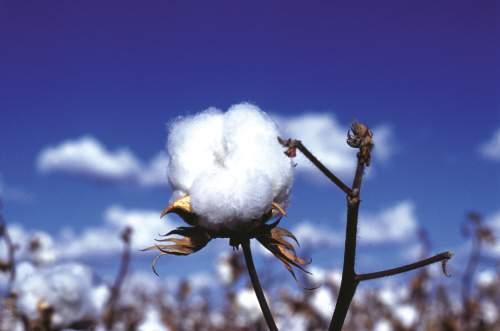
Cotton has a broad market, so growing cotton is a good choice. Below, let us learn about cotton cultivation techniques together.
Getting started is important: you must choose high-quality, high-yielding varieties. You can select good varieties according to local conditions, and you can choose good varieties promoted by the local agricultural technology department.
Because cotton is a crop that likes warmth and light, the cotton field should be chosen as flat land or a sunny slope with deep soil layers and medium or higher fertility. Before sowing, the seeds should be sun-dried. Choose a sunny day, spread the seeds on a non-cement surface, and sun-dry them for 4-5 days to promote after-ripening of the seeds and increase the germination rate. After that, sowing generally begins when the 5 cm soil temperature steadily passes 16°C. The suitable sowing period for plastic-film cotton is April 20-30, and for open-field cotton it is after April 25.
The sowing rate should be determined according to the sowing method, seed quality, retained seedling density, soil and climate conditions, and so on. Too little makes it difficult to ensure the proper number of plants and affects yield. Too much wastes cotton seed and also causes crowding of cotton seedlings, easily forming leggy seedlings and increasing the labor for thinning, etc. When the seed germination rate is low, soil moisture is poor, the soil is clayey or saline-alkali, or underground pests are severe, the sowing rate should be increased as appropriate.
Cotton has a long growth period, and its root system is deep and wide. It requires not only abundant mineral nutrients in the surface soil, but also relatively high fertility in the deeper plow layer that can slowly release nutrients. Base fertilizer is applied into the soil by plowing before cotton sowing, which can meet this requirement. Base fertilizer is mainly farmyard manure. It can be applied into the soil in autumn and winter together with deep plowing and deep turning, or it can be applied during land preparation in spring. Cotton-specific fertilizers such as Sinochem Fertilizer cotton formula slow-release fertilizer can be chosen for fertilization.
At the same time, it is worth noting that the physiological water requirements of cotton differ at each growth stage. From sowing to emergence, the water content of the 0-20 cm soil layer should preferably be 70-80% of field capacity; at the seedling stage, the water content of the 0-40 cm soil layer should preferably be 60-70% of field capacity; at the early bud stage, the water content of the 0-60 cm soil layer should preferably be 65-75% of field capacity; after the full bud stage, the water content of the 0-80 cm soil layer should preferably be 70-80% of field capacity; at the boll-opening stage, the relative soil water content should preferably remain at 55-70%. Cotton growth and development require water and nutrients, which are mainly obtained from the soil through the root system. The required temperature and air are partly taken from the soil, and at the same time mechanical support from the soil is needed for growth.