What are the key points of lettuce cultivation techniques?
I. Growth habits of lettuce
Lettuce is slightly heat-tolerant yet not heat-tolerant, cold-tolerant, and highly adaptable. It has strong cold tolerance, prefers moisture, resists pests and diseases, and has a sweet, crisp quality with few fibers. The optimum growth temperature is 20-25°C. The nutritional value of lettuce is slightly higher than that of romaine lettuce (celtuce) and far superior to that of celtuce stems. For example, compared with celtuce stems, it has 40% more protein, 1.4 times more carotene, 2 times more calcium, 33% more iron, and 1.8 times more selenium.
II. Seedling raising and planting
1. Sowing and seedling raising
Apply an appropriate amount of decomposed barnyard manure to the seedbed and water it thoroughly. Because the seeds are brown and very small, they must be mixed with fine soil before sowing and broadcast. After sowing, cover with a layer of sieved fine soil. If the weather is hot, add a straw mat; if the weather is cold, cover with a layer of plastic film. Remove the covering after the seedlings emerge. For summer and autumn cultivation of lettuce, germination must be promoted before sowing; otherwise it is difficult to ensure successful seedling raising. This is because the optimum germination temperature for lettuce seeds is 18-20°C, and they cannot germinate above 25°C or below 8°C. A simple and easy method is: first soak the seeds in clean water for 4-6 hours, then remove and drain them, and put them into silk stockings. The following 3 methods can be chosen for germination promotion: First, the river sand germination method, that is, spread 20-30 mm thick moist river sand in a cool place, then scatter the soaked seeds on the surface of the river sand, then spread 1-2 mm thick wet river sand, and cover with fresh vegetable leaves; Second, the thermos bottle ice cube germination method, hang the soaked seeds inside the bottle, add clean water and ice cubes to the bottle, and control the temperature at 18-20°C, rinse once every other day, and keep changing the water and adding ice cubes; Third, the refrigerator low-temperature germination method, wrap the soaked seeds in gauze, put them in a refrigerator at 15-20°C, and rinse once a day. The above germination promotion takes about 2-4 days. When 60%-70% have sprouted, they can be sown. In suitable seasons, direct seeding for seedling raising can be used. In winter and spring, seedlings can be raised with insulation in arched sheds. In summer and autumn, seedling raising and production are best carried out with shade net covering for cooling.
2. Planting density
The seedling age varies greatly with the season. It takes 20-30 days in summer and autumn, and 50-70 days in winter and spring. When there are 3-6 true leaves, they can be transplanted. The general plant and row spacing requirement is 15 cm x 20 cm. To obtain higher yield, appropriate close planting can be used. In winter, the plant and row spacing is 10 cm x 15 cm; in summer and autumn, the plant and row spacing is 15 cm x 15 cm. About 13,000-15,000 plants can be planted per mu.
3. Land preparation and transplanting
Before transplanting, plow the land deeply. Apply about 3 t of farmyard manure, 20 kg of potassium sulfate, 1-2 kg of magnesium fertilizer, 200 kg of silicon-calcium fertilizer, 2 kg of boron fertilizer, and 10 kg of ferrous sulfate per mu, then plow the soil to a depth of 20-25 cm. Make flat beds in winter, and make high beds in spring, summer, and autumn. Transplant when the seedlings grow to 3-4 true leaves. Note during cultivation: lettuce is a leafy green vegetable with a crisp and tender quality and is not suitable for storage. Therefore, in production, sowing periods must be staggered so that it comes to market in batches and avoids concentrated harvesting in large quantities.
4. Field management
Lettuce has a short growth period, and management is also very simple. After transplanting, water to settle the seedlings; 5-7 days later, water to help them recover, then carry out intertillage, which can both remove weeds and promote root growth. After intertillage, carry out seedling hardening, which helps form a good root system, makes the leaves thick and green, and makes the plants robust, laying a good foundation for later growth and for creating excellent quality. The seedling hardening period is about 10 days, after which watering and fertilizing can begin, keeping the soil moist. On the basis of applying organic fertilizer, a small amount of high-phosphorus and high-potassium water-soluble fertilizer can be applied twice with water, 5-10 kg each time. About 5 days before harvest, watering and fertilizing should stop. In protected cultivation, ventilation and dehumidification are also required so that the plants are not too tender, reducing plant water content and improving quality.
III. Pest and disease control
1. Downy mildew:
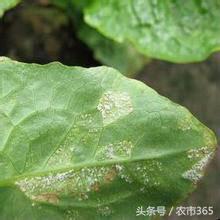
Symptoms: The disease can occur at the seedling and adult plant stages, with adult plants suffering more severely. The disease spreads from the lower part upward. On the leaves, pale yellow nearly round or polygonal lesions initially form. When humidity is high, white mold grows on the lesions on the back of the leaves. In severe cases, the entire leaf dries up. This makes lettuce lose its commercial value.
 Cultivation techniques" inline="0">
Control methods:
1. Agricultural control: Increase the application of organic fertilizer, plant at a reasonable density, carry out timely intertillage, and strictly prohibit flood irrigation in the later growth stage.
2. Reasonably regulate temperature and humidity: Ventilate moderately around noon, reduce the relative humidity in the shed to below 80%, and control the temperature at 20°C-25°C.
3. Reasonably apply nitrogen fertilizer and increase the application amount of phosphorus and potassium fertilizers.
Chemical control: metalaxyl, benalaxyl-M, dimethomorph, flumorph, fluopicolide, propamocarb hydrochloride, mancozeb, oxadixyl, cyazofamid, famoxadone, etc.
Zhanshuang 1500 times + Chushuangyi/Pushuangjiao 750 times
Youhui 1500 times
Wanshide 750 times + Zhongchunsheng 500 times
2. Sclerotinia rot:
Symptoms: Sclerotinia rot of lettuce occurs at the base of the stem. The infected parts are mostly brown water-soaked rot. When humidity is high, dense cottony white mycelium grows on the surface of the diseased part and then forms sclerotia. The sclerotia are initially white and gradually become mouse-dropping-like black granular bodies. The leaves of infected plants wilt and eventually the whole plant dies.
Cultivation techniques" inline="0">
Transmission routes and disease conditions: The pathogen mainly overwinters in the soil as sclerotia with diseased residues. It survives for about 1 year in moist soil and more than 3 years in dry soil, and dies from rot after 1 month in water. After sclerotia germinate, they produce apothecia, and then form asci and ascospores. After the ascospores mature, they spread through airflow. During initial infection, the ascospores germinate and produce germ tubes, invading from senescent or locally necrotic tissues. When the pathogen acquires stronger infection ability, it directly infects healthy stems and leaves. In the field, disease is transmitted when diseased and healthy leaves contact mycelium. At 20°C and relative humidity above 85%, the disease is severe. When humidity is below 70%, the disease is noticeably reduced. In addition, excessive density, poor ventilation and light transmission, or poorly drained low-lying plots, or excessive nitrogen fertilizer, or continuous cropping land lead to severe disease.
Control methods: (1) Water and ventilate at the proper time. Appropriately control watering in the early growth stage and after disease onset. Choose sunny mornings for watering, and ventilate and dehumidify in time. Ventilate even on cloudy and rainy days. When the nighttime minimum temperature is above 8°C, ventilate all night to disperse moisture. (2) Plant at a reasonable density. (3) Chemical control: procymidone, iprodione, diethofencarb, boscalid, dimethachlon, pyrimethanil, polyoxin, nicotinamide, famoxadone, etc.
3. Brown spot disease
Symptoms: It mainly damages leaves. Leaf spots show two kinds of symptoms: one is initially water-soaked, then gradually expands into round to irregular brown to dark gray lesions, with diameters ranging from 2-10 mm; the other is dark brown lesions with irregular edges and a water-soaked halo on the outside. When moist, dark gray moldy matter grows on the lesion surface. In severe cases, the lesions merge with each other, causing the leaves to dry up and die. The pathogen overwinters on diseased residues as mycelium and conidia. When conditions are suitable, conidia cause primary infection and spread through airflow and rain splash. Warm and humid conditions are suitable for disease onset. Rainy, dewy, or foggy autumn weather all favor disease onset. Weak plant growth, fertilizer deficiency, excessive nitrogen fertilizer, or excessive vigorous growth lead to more severe disease occurrence.
Chemical control: Xiandian 750 times, Tanbansheng one pack, difenoconazole, tebuconazole, prochloraz, prochloraz manganese salt, myclobutanil, flusilazole, etc. Xiandian (20% prochloraz + iprodione) 500-750 times + Xixi (23% copper abietate) + Tanbansheng one pack (40% bromothalonil + carbendazim); Yuanshengguan (Shitehao) 750-1000 times, Zongjuesai 2000 times; Yuanshengguan 750-1000 times + Zhongchunsheng 500 times
4. Soft rot
Symptoms: When the stem is infected, water-soaked spots initially appear, dark green and irregular, then turn brown and rapidly soften and rot. When the root-stem part is infected, the base of the root stem turns light brown and gradually softens and rots. In severe cases, it can extend deep into the root pith. There is also a foul odor.