How much hard work goes into growing Panax notoginseng? Growing records (Part 3)
Harvesting Panax notoginseng is heavy physical labor, yet its initial processing is delicate handwork, and the procedures are numerous. Every step is necessary and cannot be skipped. Panax notoginseng is basically dug up by hand; the main reason machinery is not used is to avoid mechanical damage to the roots. Once a root is damaged during digging, its value drops by several grades.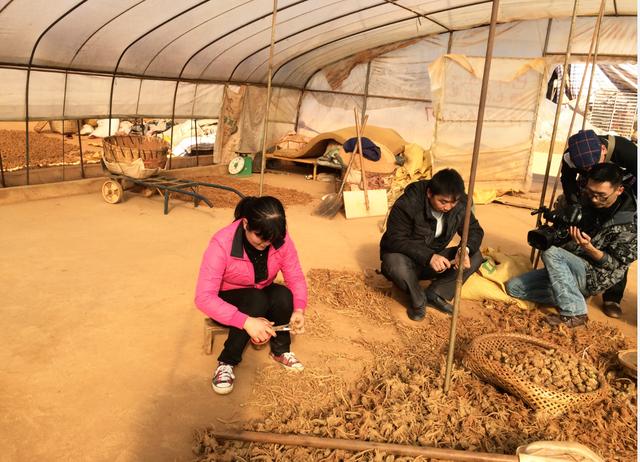
Careful trimming
After harvesting, Panax notoginseng needs to be trimmed: the lateral roots are removed, leaving only the main root and the rhizome (the "cut head"). After trimming, the rhizome and main root must be tied together with rubber bands, because the rhizome easily falls off; then they are sun-dried or oven-dried. Relatively larger Panax notoginseng roots usually keep their rhizomes; after dehydration they count as larger Panax notoginseng and can fetch a good price, while relatively smaller ones do not necessarily keep their rhizomes. Panax notoginseng has a very high water content; after dehydration, its weight and volume are 20% of the fresh state, or even lower, which invisibly increases the cost of processing Panax notoginseng.
Washing immediately
Once dehydration is complete and the water content is between 5% and 10%, the Panax notoginseng can then be called dried Panax notoginseng. The next work is trimming and washing again. Washing is for cleanliness and hygiene; trimming is to make the shape of the Panax notoginseng look better, thereby removing some excess parts. This is a skilled job: those without washing experience can easily knock off the rhizome. Originally a 20-head Panax notoginseng becomes a 25-head one once the rhizome falls off, and the price naturally drops a great deal. Trimming is the same: without experience, one trims too much, causing a loss in the weight of individual Panax notoginseng roots, which means economic loss.
The essence of "copper skin and iron bones"
After trimming and washing comes a crucial step: grade classification. The "head count" we often talk about is a weight unit unique to Panax notoginseng. It refers to how many main roots of Panax notoginseng there are in every 500 grams; that is how many heads the Panax notoginseng is. It does not mean counting the raised lumps on the Panax notoginseng heads. Most of the time, growers carefully select them by hand. As technology has advanced, people have begun using machinery for selection. Although it is not as perfect as manual selection, efficiency has improved a great deal. The more large Panax notoginseng roots that are selected out, the higher the profit; otherwise, there may be a loss. That is why people often say high returns go hand in hand with high risks.