Detailed Explanation of Forage Grass Planting Techniques and Management Knowledge
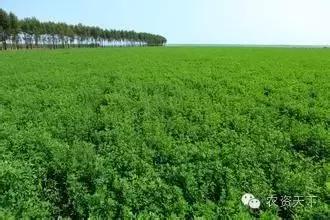
How to choose a pasture area for planting grass?
First of all, the forage grass planting area should be relatively vast. When choosing a pasture area, you should select a broad and flat area, and the soil should be relatively fertile, deep, and well-drained, capable of supporting the nutritional needs for dense growth and multi-season growth of forage grass. After determining the location of the pasture area, the land in the pasture area should be tilled once, which can make the soil looser and also distribute the nutrients in the soil more evenly.
How to choose forage grass quality?
For forage grass planting techniques, good forage grass must be selected. There are very many types of forage grass. The most important conditions for selection are good grass quality, high yield, the ability to be harvested in multiple seasons, strong vitality, high nutritional value for livestock, and improving the meat quality of livestock. Most are mainly leguminous crops, and many other crops can also be chosen, such as ryegrass, Mexican corn grass, king grass forage, sweet elephant grass forage, purple alfalfa, and many other varieties. However, fellow herdsmen and farmers should also choose forage grass according to conditions such as the climate and soil of the region where their own farm is located.
How to plant forage grass?
The sowing period for forage grass planting is generally divided into spring sowing and autumn sowing. For annual forage grass, spring sowing is better, generally starting from early to mid-April and continuing until late May. Perennial forage grass can be sown in spring, summer, and autumn, but spring sowing is mostly used in areas where wind and sand damage is not severe, while summer sowing is often used in areas where the soil is dry in spring, late frost comes later, or there is excessive wind and sand in spring, from early June to the end of July. For autumn sowing, both annual and perennial forage grasses can be sown in autumn, preferably from August to September, and no later than late October. The climate in our city is mild, and conditions such as moisture and temperature are relatively good, so sowing can be done in both spring and autumn, and summer sowing can also be done in mountainous areas above 800 m in altitude.
What are the sowing methods?
The sowing methods for forage grass planting usually use broadcasting and drilling.
1. Broadcasting: scatter the seeds directly on the soil surface by hand, then lightly harrow and cover with soil.
2. Drilling: ① Same-row sowing: several kinds of forage grass seeds are sown in the same row; ② Alternate-row drilling: one or several kinds of forage grass are sown in another row.
What are the cultivation methods?
After obtaining forage grass seeds, cultivating forage grass is very important. After choosing the pasture area and forage grass, fellow herdsmen and farmers should choose the amount of forage grass according to the size of the pasture area. After planting the forage grass in the soil, maintenance must be carried out. Because the growth of forage grass needs to supply livestock across multiple seasons, fertilization of the forage grass should be increased during ordinary maintenance to increase the growth rate of the forage grass. In addition, in summer the weather is relatively hot and water evaporates vigorously, so watering of the forage grass should be increased. In addition, pests and diseases of the forage grass should be prevented and treated. Finally, when the forage grass matures, grazing or harvesting should be carried out in time, so as to allow the new season of growth of the forage grass and also ensure that the forage grass is tender and nutritious.