How to Grow Pomelo for High Yields? Key Cultivation Techniques Explained
 Cultivation Techniques" inline="0">
1. Soil Requirements:
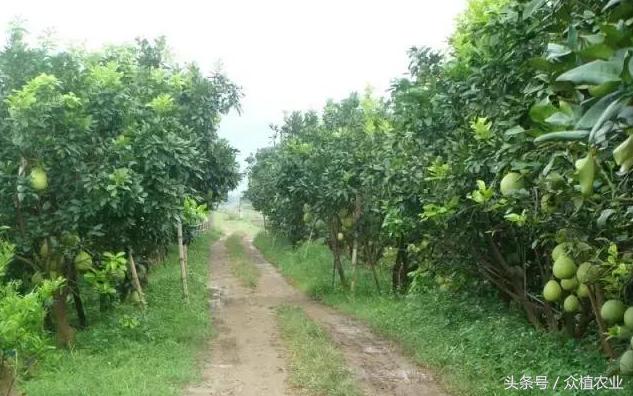
Site selection: Pomelo has no strict soil requirements for planting; as long as the soil layer is deep and drainage is good, it can be planted, but sandy loam soil is best. Field management: Newly planted young trees need sufficient water and fertilizer, and should be sprayed with New High-Lipid Film, which can ensure that above-ground moisture does not evaporate and seedling moisture does not transpire, isolate pests and diseases, shorten the seedling revival period, and accelerate root development. Specific requirements: deep soil layer (60cm), fertile; soil pH of 5.5-7.0; orchard slope of less than 25 degrees. When planning the orchard site, necessary roads, drainage and irrigation, water storage, and ancillary building facilities should be included. In specific planning, aim to concentrate plantings in contiguous blocks and build the orchard in locations with good transportation and water source conditions. For mature fruiting trees, during the flower bud differentiation stage, apply flower-promoting agents by banding around the trunk to promote flower bud differentiation, suppress excessive summer shoot growth, and spraying in late autumn suppresses winter shoot emergence.
Deep plowing and hole expansion should be carried out to mature the soil,It is prohibited to plant in the orchardcorn、wheatand other tall-stalked plants, and do a good job of reasonable intercropping in the orchard and cultivation and weeding work.
2. Planting Requirements:
(1) Timing. Generally planted in September-November after autumn shoots mature or in February-March before spring shoots sprout.
(2) Density. Plant at a density of 3m between plants x 4m between rows, planting 55-60 plants per mu.
(3) Planting technique. Digging planting holes in soil: set out lines at fixed spacing, dig planting holes 80 cm deep and 80 cm wide, then press in green manure to a depth of 50 cm, backfill soil to 40 cm high and plant; ridge planting in fields: open beds at 8 m with ditches (ditch width 60-8 cm, depth 40-60 cm), form 2 ridges per bed (ridge width 1.5 m, ridge center spacing 4 m, ridge height 20-30 cm). When planting, moderately prune the seedling's root system, place it in the center of the planting hole, spread the roots, hold the seedling upright, and while filling soil, gently lift the seedling upward and firm the soil so that the roots are in close contact with the soil. Water thoroughly to settle the roots, make a 1 m tree basin around the seedling, and cover with rice husks.
Cultivation Techniques" inline="0">
3. Field Planting:
The field planting period is generally in the two seasons of spring (February-March) and autumn (September-October). Field planting density is 3 x 3.5 m, planting 60 plants per mu. Use large-hole planting, requiring planting holes 80 cm deep and 100 cm wide. After planting, use 2-3 kg of Genxiaobao per mu diluted 300-500 times with water to drench the roots, build the hole ridge into a tree basin 15-20 cm high and 60-100 cm in diameter, then cover with rice straw.
4. Young Tree Management:
Young tree fertilization follows the principle of "frequent application, light application," and quick-acting fertilizer should be applied 2-3 times per month. Also do a good job of intercropping vegetables or short-stalked crops. Two years after planting, uniformly adopt the modified side-trunk form, using methods such as propping, pulling, hanging, and bud wiping to control shoots, so that the canopy is ventilated and light-transmitting, and the fruiting mother branches in the inner canopy are numerous and robust. And according to tree vigor, use girdling techniques to increase nutrient accumulation in branches and shoots and promote early fruiting.
5. Flower Thinning and Fruit Preservation:
When most flower buds are the size of a match head, begin flower thinning; when flower buds show white, thin out the flower clusters, the tail portion, and weak small flower buds, keeping only 4-5 robust flower buds in the middle. After the second physiological fruit drop, remove deformed fruit; for pest-damaged and disease-damaged fruit, retain fruit at a leaf-to-fruit ratio of about 60-70:1. Fruit preservation mainly involves spraying 2.4-D at 5-10 PPm or 4-CPA (anti-drop agent) after flower drop.
6. Fertilization Management:
Emphasis is placed on organic fertilizer as the main input. For fruiting trees, it is best not to use chemical fertilizers, especially chlorine-containing fertilizers. For trees that have just begun fruiting (3-4 years), focus on three applications: after fruit harvest, before spring bud break, and during the fruit-swelling stage. Apply a base fertilizer once after fruit harvest in August-September, mainly usingZhi Mei Jiaseries liquid fertilizer; apply a quick-acting nitrogen fertilizer once before spring shoot sprouting in February to promote spring shoot growth; apply a fruit-swelling fertilizer once in early June, mainly phosphorus and potassium fertilizer, to promote fruit expansion and branch and shoot growth.