What is this plant called? Turns out the names are given entirely on a whim
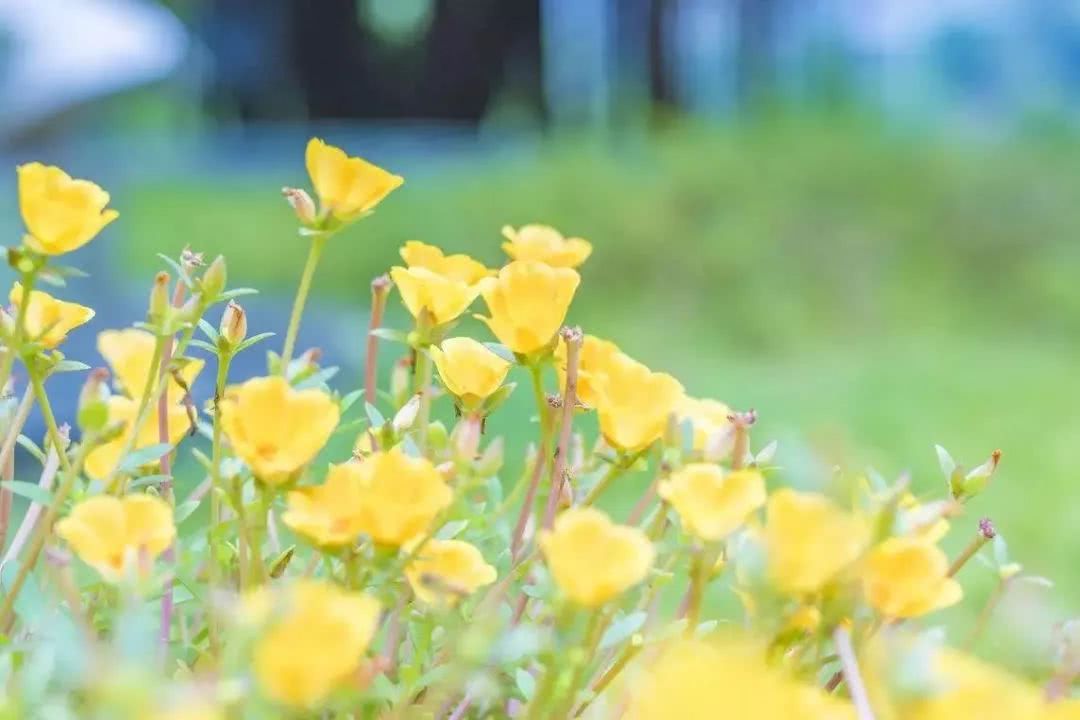
In the flower market, another naming system lurks, one that runs counter to science. These names have mysterious origins, and no one can say for sure where they come from, whether they were passed down by word of mouth or simply made up by the shopkeeper on a whim.
Let's dig into the proper Chinese names behind the commercial names of these plants. You might want to compare them and see which flower names are accurate and which were given rather on a whim.
Snow-on-the-Mountain
The four characters "Snow-on-the-Mountain" are likea clear spring in the hot summer, making people feel instantly and wonderfully cool, a very lovely name. The Chinese name is also quite fitting, calledSnow-on-the-Mountain (Euphorbia marginata), of the genus Euphorbia in the family Euphorbiaceae. Its top leaves are silvery white, contrasting with the green leaves below, just like snow on green mountains, living up to its name. It is often used as a floral material in arrangements.
Bride Flower
Originally a plant of the family Proteaceae from South Africa, its early Chinese name was Bride Flower or Pink Bride, but the namer later felt the word "bride" was too frivolous and renamed it Jiaoniang Flower. This reason is far too easy to poke fun at. That said, the Jiaoniang Flower has uniquely delicate pink blooms and indeed looks beautiful as a cut flower.
Lace Flower
A flower of the genus Daucus in the family Apiaceae. Lace Flower generally refers to wild carrot, because the flower cluster of wild carrot sometimes has a little red in the middle. It is also calledQueen Anne's Lace, though sometimes the flower cluster of the cultivated carrot is used instead. Who can blame them, since they are own brothers?
Heather
Here it is a general term for floral materials of the entire genus Erica, commonly called Heather. There are all sorts of varieties, very attractive,with small urn-shaped flowers hanging in strings along the branches, like little bells. They work well as cut flowers and dried flowers alike, delicate and charming.Some varieties can also be grown as potted plants, and they are not that difficult to grow. If you like them, you can buy some and give them a try.
Blue Lace Flower
The name "Xiwu" (Evening Mist) is said to come from the fact thatthe styles extend out from the densely clustered small flowers, giving the overall flower outline a hazy look, as if in mist, hence the name. When you see the flowers, there really is a bit of that feeling. It is a plant of the genus Trachelium in the family Campanulaceae. From the genus you can roughly guess its medicinal use. Indeed, you cannot judge only by appearance; practical value matters too. But in terms of looks, it is certainly very beautiful.
Chinese Lantern Flower
Chinese Lantern Lily, indeedthe flower lives up to its name, like a tiny palace lantern. It is also called Lantern Flower, of the genus Sandersonia in the family Colchicaceae. This genus contains only itself, and it is grown more in the Southern Hemisphere, especially in New Zealand.
Because its flowering period falls at Christmas, it is also calledChristmas Bells, both names quite interesting. Although the Chinese Lantern Lily is difficult to grow and is itself toxic, it is an internationally popular trendy cut flower, standing out as one of a kind.
Torch Flower
A plant of the genus Kniphofia in the family Asphodelaceae, with the Chinese name Torch Lily. Most of its names relate to the shape of the flower,resembling torches one after another. It is a plant native to South Africa, now used as a cut flower or grown in gardens. In some regions it can overwinter, and it has strong adaptability.
Multi-headed Feathertail
A very common herb, yet its Chinese name is quite poetic, calledFeather Cockscomb (Celosia argentea), a plant of the genus Celosia in the family Amaranthaceae. Though it is a wild weed, its flower spikes are very beautiful. When it comes to flower arranging, imported is not necessarily better; harmony and complementary charm are what make it interesting. Toshiro Kawase's "One Day One Flower" all comes from the wild, where true quality shows in the ordinary. Feather Cockscomb is just such a flower.
Balloon Cottonbush
It is actually a plant of the genus Gomphocarpus in the family Apocynaceae. This genus has several dozen species, and the common ones are generally the balloon fruit and the nail-head fruit. You can set aside the difference between the two for now. Itsplump, balloon-shaped follicle fruits are the real highlight. As for how the names Tangmian or Fengchuan Tangmian came about, it is hard to say. If you use it as a floral material, it will definitely be noticed at first glance, very interesting.
Giant Onion
In the end it is just a big scallion flower, of the genus Allium in the family Amaryllidaceae. Its Chinese name is also Giant Allium, or the transliterated name,Giant Onion. It is a perennial root plant. Besides being used as a cut flower, it is often mixed with other flowers in flower borders. It sends up a tall purple flower ball, very eye-catching.
Persian Jewel
This name is quite tacky, but the flower shape really is jewel-like, and so unique, deeply moving. The Chinese name is a bit ordinary,Love-in-a-Mist (Nigella), an herb of the genus Nigella in the family Ranunculaceae. Native to Europe, it is now cultivated quite a bit in China. The first time I saw it, I was captivated by its beauty.
Bouvardia
A rather strange name, for a plant of the genus Bouvardia in the family Rubiaceae. The genus Bouvardia is named after the name of the royal garden director of Louis XIII. It has an alias, "Crab Eyes,"with flower buds dotted here and there, shaped like a crab's two eyes ⟧55⟧. Bouvardia comes in red, pink and white colors, especially white and pink. It is often used in wedding bouquets, elegant and dignified, with a faint fragrance. Actually its flowers look more like mini goblets. I wonder what you think.. Bouvardia flowers come in several colors including red, pink, and white; the white and pink ones in particular are often used in wedding bouquets, elegant and graceful, with a faint fragrance. In fact, its flowers look more like miniature goblets, though I am not sure what you think.
Peruvian Lily
The name Peruvian Lily seems to come from the fact that itsflowers resemble daffodils or azaleas, and its stems and leaves resemble lilies. Either way, at least there was careful observation, which is commendable, not so much on a whim. Its Chinese name isSix-out Flower (Alstroemeria), of the genus Alstroemeria in the family Alstroemeriaceae. This name may be because it has six petals that open like a butterfly spreading its wings. But I always think of a line of poetry: "When six-petaled flying flowers enter the door, sit and watch green bamboo turn to jade branches," even though that is about snowflakes.
Snapdragon
Snapdragon of the family Scrophulariaceae, surely many people know it. It has wide uses too: ground planting, potting, cut flowers, hanging baskets, all sorts, in a riot of colors. Setting other things aside, cut-flower varieties mostly have long flower spikes with dense, elaborate blooms. Whether they look good is for you to say. But I wonder if you have ever seen its mature seed pods. That is what you would call a truly bizarre look.
Little Millet Fruit
Thankfully it is not called Huawei Fruit or Hammer Fruit, and it certainly cannot be called Apple Fruit, that would be too big. It is often used as an accent in floral materials, and is actually the fruit of a eucalyptus tree of the genus Eucalyptus. Once all the leaves are stripped off, it turns into this. It is hard to recognize once it has shed its coat.
Astilbe
It is not the spider Nephila, nor the jorogumo monster from Japanese stories, but a plant of the family Saxifragaceae, Astilbe. Different characters make a world of difference.The blooms are very girly, with panicles densely covered in brown curled long soft hairs, and the flower colors satisfy every girly heart, making very pink and sweet bouquets. But actually it is most beautiful as a garden plant, that moving patch of color.
Spiraea (Snow Willow)
This is generally seen in spring. The name Snow Willow also lives up to its name. It is actually the single-petaled Spiraea prunifolia or Spiraea thunbergii of the genus Spiraea in the family Rosaceae. The difference between these two is negligible, yet both are sources of Snow Willow floral material.When the whole plant blooms it is a breathtaking sight, and it is elegant as a cut flower too, except the flowers drop very easily, which is a headache.
Kangaroo Paw
When it comes to strangeness, this flower probably ranks near the top. Of the genus Anigozanthos in the family Haemodoraceae, it is an "oddity" from Australia. There are several common types, the yellow kangaroo paw and the long-flowered kangaroo paw, with odd and peculiar shapes. So, does it really look like a kangaroo paw? You decide.
Dancing Lady Orchid
A very fitting descriptive name,the flowers really look like a woman in a yellow dancing dress, beautiful and moving, very fun. Its Chinese name is Oncidium. There are many flowers of the genus Oncidium in the family Orchidaceae, all shaped like little dancing girls, in all sorts of little dance dresses. Some have fragrance, such as the mini Oncidium commonly seen in flower markets, which is very fragrant.
Bird of Paradise
From the above plants we can infer that many floral material names come from the shape of the flower. Bird of Paradise is the same, likea very elegant bird with a pretty crest on its head, very interesting. It is also called Strelitzia. If you know what a bird of paradise looks like, you will surely find it even more fun.
If you don't look, you won't know; the world is truly wonderful.
There are so many flowers in nature,
and floral materials are becoming ever more abundant.
Being able to name them when you see them makes it all the more delightful, doesn't it?
Days with flowers are never too bad.
If you also like growing flowers, then follow us!