Chili pepper growing secrets revealed: master these key points to grow chili peppers well
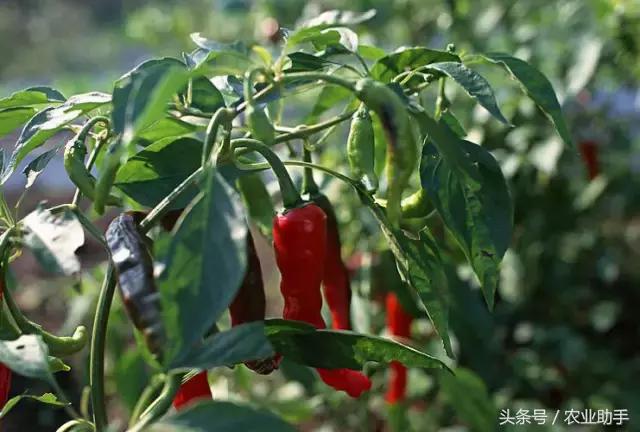
Chili pepper is one of people's favorite vegetables, containing relatively high levels of vitamin C and capsaicin. After eating it, it can remove dampness and dispel cold, promote blood circulation, and enhance resistance. Its fragrant spicy flavor can also stimulate the taste buds and increase appetite. Since it was introduced to China 300 years ago, it has been widely cultivated.
In recent years, as people's living standards have continued to improve, the requirements for chili pepper quality have also become higher and higher. Of course, to grow chili peppers well, understanding some of the growth characteristics of chili peppers is essential.
Biological characteristics of chili pepper
Root system:The chili pepper root system is not well developed and the main root is thick and strong, and the number of roots is also relatively small, so the root system does not grow quickly. The root mass is mostly distributed in the 20-25 cm plow layer, and the root system has weak regeneration ability.
Stem:Erect, with weak axillary bud shading tolerance and a relatively small plant canopy, suitable for dense planting. After flower buds appear at the top of the stem, the lateral buds below them sprout, forming two-forked or three-forked branches, and the fruit is borne at the branching points. These branches then branch again, continuing continuously, and the branches keep increasing.
Leaves:Simple leaves alternate, ovate or long ovate. 4-13 cm long, 1.5-4 cm wide, entire margin, apex shortly acuminate or acute, base narrowly cuneate, petiole 4-7 cm long.
Flowers:Mostly white; the flowers of Capsicum pubescens are purple. Chili pepper flowers are hermaphroditic and can achieve self-pollination, while the natural hybridization rate of chili peppers exceeds 10%.
Fruit:The fruit has a relatively large internal cavity, divided into 2-4 chambers by partitions formed by inward extensions of the raised inner fruit wall. The partitions are also called "fruit ribs" and are the part with the strongest chili pepper pungency.
Seeds:Flat, kidney-shaped, pale yellow or milky white, with a 1000-seed weight of 3-6 grams. The lifespan of the seeds is usually between 5-7 years, but the actual usable life is only 2-3 years.
Growth cycle of chili pepper
The growth cycle of chili pepper includes four stages: germination stage, seedling stage, flowering and fruit-setting stage, and fruiting stage.
Germination stage:From seed germination to the appearance of the first true leaf is the germination stage, generally about 10 days. During the germination stage, nutrients mainly come from the seed, and the absorption capacity of the young roots is very weak.
Seedling stage:From the appearance of the first true leaf to the appearance of the first flower bud is the seedling stage. It takes 50-60 days. The seedling stage is divided into two phases: before 2-3 true leaves is the basic vegetative growth phase, and after 4 true leaves, vegetative growth and reproductive growth proceed simultaneously.
Flowering and fruit-setting stage:From the appearance of the first flower bud to the fruit set of the first flower is the flowering and fruit-setting stage, generally 10-15 days. In this period, the contradiction between vegetative growth and reproductive growth is prominent. Mainly through measures such as controlling water and fertilizer and hoeing, the relationship between growth and development, vegetative growth and reproductive growth, and aboveground and underground growth is regulated to achieve balanced growth and development.
Fruiting stage:From the fruit set of the first chili pepper to the end of harvest is the fruiting stage, which lasts a relatively long time, generally about 50-120 days. The fruiting stage is dominated by reproductive growth and continues vegetative growth, with very large water and fertilizer requirements. In this period, water and fertilizer management should be strengthened, good cultivation conditions should be created, and vigorous growth of both vines and fruits should be promoted for continuous fruit set, so as to achieve a bumper harvest.
Environmental requirements of chili pepper
Temperature:The suitable temperature for chili pepper germination is 25°C; below 15°C, germination is difficult. During the plant growth period, the suitable daytime temperature is 22-28°C and the nighttime temperature is 15-20°C. Below 15°C or above 35°C, flowering and pollination are abnormal, often causing flower and fruit drop.
Light:Chili pepper is a short-day crop. Under 10-12 hours of light per day, flowering and fruiting are early and normal, but it can also adapt to longer daylight. It requires moderate light intensity; insufficient light will reduce the fruit-setting rate; direct strong light slows plant growth.
Water:The chili pepper root system is relatively weak, and it is neither drought-tolerant nor waterlogging-tolerant. It needs frequent water supply to grow well. However, the field must not accumulate water. When there is a small amount of standing water in the field, the plants will wilt, and in severe cases they will die in patches.
Soil:Chili pepper is not very strict in its requirements for soil conditions. Soil with higher terrain, good aeration, fertility, and convenient drainage and irrigation can be selected. Avoid choosing low-lying, water-accumulating plots, and avoid continuous cropping with Solanaceae crops.
Key technical points for chili pepper cultivation
Seed treatment
Sun-drying seeds:It can promote after-ripening of seeds, reduce seed moisture content, and improve the air and water permeability of the seed coat. It is generally done from 9 a.m. to 3 p.m. in sunny weather.
Soaking seeds:First pre-soak in room-temperature water for 1 hour, and rub off the mucilage on the seed coat with your hands, then soak the seeds in warm water at 55°C for 30 minutes. Then soak in clean water for 4 hours, remove the unfilled seeds, then soak in a 10% trisodium phosphate solution or 0.3% potassium permanganate solution for about 20 minutes, then place in 30°C warm water and soak the seeds for 9-12 hours, rub and wash, rinse clean, then remove and air-dry for germination.
Germination:The temperature should be maintained at 25-30°C. When 80% of the seeds have broken white, they can be sown.
Seedbed preparation
For seedbed selection, pay attention to a sunny and wind-sheltered location to ensure the temperature for seed growth. Generally, land that has not grown Solanaceae crops is selected as the seedbed.
Generally, decomposed farmyard manure, superphosphate, and potassium sulfate are selected, mixed evenly in a certain proportion, then 50% carbendazim wettable powder is added and mixed with the seedbed soil. Level the seedbed soil, then water it thoroughly in one application.
Sowing management
The sowing time of chili pepper is generally determined according to local weather conditions. After sowing the seeds, cover with fine soil to a thickness of no more than 1 cm, then cover with plastic film.
In the early stage, ensure a suitable temperature for the seeds to increase the emergence rate. After the seedlings emerge completely, adjust the growth temperature flexibly to avoid excessively high temperatures and seedling scorching.
In the later stage, strengthen seedling hardening to prevent the seedlings from growing too quickly. When the outside temperature rises, ventilate the seedlings in time.
The seedbed should mainly use base fertilizer and control topdressing. If the seedbed soil is not fertile enough and nutrient deficiency symptoms appear, apply 500 times diluted Sea Elf biostimulant (root application type) as a drench to alleviate it, choosing 10-12 a.m. on a sunny, windless day.
The diseases commonly occurring at the seedling stage are mostly damping-off and Rhizoctonia rot, which can be controlled by spraying thiophanate-methyl, etc.
Standards for strong chili pepper seedlings:The root color of strong seedlings is white, the main root is thick and strong, there are many fibrous roots, and the stem is short and thick. For seedlings with 10-12 true leaves, from the cotyledon position to the stem base is about 2 cm, the whole plant height is 18-20 cm, the stem diameter at the cotyledon position is 0.3-0.4 cm, the stem surface is green and flexible, the cotyledons remain green, the leaves are large and thick, the color is deep green, the petiole length is moderate, and the stems, leaves, and root system have no pests or diseases, no lesions, and no wounds.
Land preparation and transplanting
Generally, land that has not grown Solanaceae crops is selected for cultivation. It requires fertile, loose soil with convenient drainage and irrigation, preferably corn land or rice land.
Prepare the land 15 days before transplanting. When applying base fertilizer for chili pepper, slow-release fertilizers should be used, mainly organic fertilizer. Apply 5000-8000 kg of decomposed organic fertilizer per mu, 25-50 kg of superphosphate, 25-35 kg of potassium sulfate, or 30-40 kg of balanced compound fertilizer, as well as medium and trace fertilizers such as boron and zinc, to ensure sufficient nutrition for the chili pepper seedlings.