Detailed Explanation of Key Technical Points for Growing Zucchini (Summer Squash) in Greenhouses
There are two planting methods for zucchini. One is wide-and-narrow row planting, with wide rows at 80cm and narrow rows at 50cm, and plant spacing of 45-50cm; the other is equal-row-spacing planting, with row spacing of 60cm and plant spacing of 50cm, planting 2000-2200 plants per 666.7 sq m. After transplanting, if the temperature is low, promptly cover with small arched tunnels, and if necessary, add straw mats and other cold-protection measures.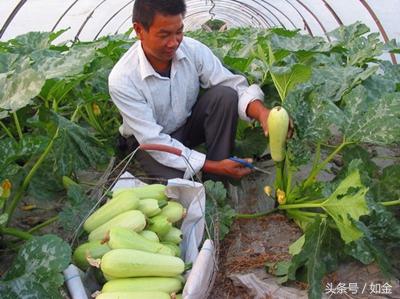 Cultivation Techniques" inline="0">
1. Temperature management. During the seedling-establishment stage after transplanting, do not ventilate; keep the greenhouse closed to raise the temperature and promote early rooting and seedling establishment. During the seedling-establishment period, the daytime greenhouse temperature should be maintained at 25-30°C, and at night at 18-20°C. After seedling establishment, lower the temperature appropriately, controlling the daytime greenhouse temperature at 20-25°C and nighttime at 12-15°C, to promote root development and benefit female flower differentiation and early fruit setting. After fruit setting, raise the temperature appropriately, maintaining 22-26°C during the day and 15-18°C at night, to promote fruit enlargement. After entering the peak fruiting period, as the temperature gradually rises, gradually increase ventilation and extend ventilation time; the maximum daytime temperature should not exceed 30°C. Cultivation Techniques" inline="0">
2. Watering. Generally, do not water during the seedling-establishment period. If watering at transplanting was insufficient, give one light watering according to soil moisture conditions. From after seedling establishment until the first fruit sets, control watering. Once the first fruit has set, water once and apply 20kg of microbial bacterial fertilizer per 667 sq m with the water. After entering the peak fruiting period, water promptly according to weather conditions and soil moisture, generally once every 7-10 days, each time applying 10-15kg of urea or compound fertilizer with the water. Try to water in the morning on sunny days, and after watering, pay attention to ventilation to reduce humidity; where conditions permit, use drip irrigation and subsurface irrigation under plastic film as much as possible.
3. Plant adjustment and flower and fruit retention. Since dwarf early-maturing varieties are used in spring protected cultivation, vine training and tying are generally not needed during growth; promptly remove old leaves, diseased leaves and yellow leaves during growth. In spring, due to low temperatures and the blocking effect of the facility, there are very few pollinating insects, and zucchini has poor parthenocarpic ability, so spring protected cultivation often suffers from flower drop or fruit abortion due to poor pollination. In production, 30-40ppm of 4-CPA (fruit-setting hormone) can be applied to the female flower stalk to retain fruit.
To increase zucchini yield, you can useRujin Cultivation-Specific Concentrate (stock solution), which helps set more fruit and reduce disease.
Rujin Bacterial Stock Solution Cultivation-Specific - Foliar Spray - Drip Irrigation ¥360 Buy