How to Grow Indian Jujube for High Yield? A Detailed Guide to Practical Techniques
Indian jujube is an excellent rare tropical and subtropical fruit. The fruit is rich in nutrients, crisp and sweet, and contains large amounts of vitamin C, calcium, phosphorus, vitamin B, carotene, and more. There is a saying that "eating three jujubes a day keeps you forever young." Because of its attractive fruit shape and its flavor reminiscent of apple, pear, and jujube, it also enjoys the reputation of "tropical little apple." Let us now take a look at the high-yield cultivation techniques for Indian jujube!
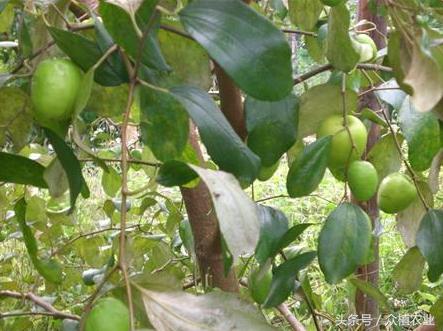 Cultivation Techniques" inline="0">
Growth Characteristics of Indian Jujube
Indian jujube exhibits a habit of continuous growth throughout the year. As long as the temperature is suitable, the terminal bud grows forward and side branches sprout accordingly. Every 3 nodes of growth produces a rib-like alternate branch, and on the branches a lower-level branch also alternates every 3 nodes. Eventually a trunk is formed in a hierarchical structure of branches: the trunk, primary branches (main branches), secondary branches, and third- and fourth-level branches (which are the main fruiting branches). Primary branches can grow to 2 m, producing an average of 16 secondary branches; secondary branches can grow to 12 m, producing an average of 8 third-level branches; third-level branches are about 60 cm long and can produce multiple fourth-level branches.
Fruiting Characteristics of Indian Jujube
The flower buds of Indian jujube differentiate in the current season (year), differentiate quickly, and are produced in large numbers, with flowers and fruit on the same branch. Flowers open during the day, beginning to open at 6-8 AM, fully open at 8-11 AM, and rarely opening after 12 noon. They are insect-pollinated flowers, relying on flies, bees, and other insects for pollination. Plants set out in the first year can flower in 70 days and can flower and fruit multiple times a year. From flowering to fruit maturity takes about 120 days. From April to December, flowering continues as the shoots grow, but flowers opening at different times have different fruit-setting ability. Flowers opening from April to June basically only bloom without setting fruit; flowers opening from July to August have a low fruit-setting rate and the fruit ripens in small amounts in November to December; flowers opening from September to October have a high fruit-setting rate, and the fruit ripens in large amounts from January to February. Looking at a single tree, the main fruit-bearing branches are the third-level branches, accounting for 90% of total fruit production, secondary branches account for 9.5%, and primary branches (main branches) account for only 0.5%.
Growing Conditions for Indian Jujube
1. Soil: Indian jujube is not strict about soil requirements, but slightly alkaline (pH 7.5) to acidic soil (pH above 6.0) is more suitable. Sandy loam is required, with deep soil layers and convenient drainage and irrigation.
2. Temperature: Indian jujube is a sun-loving plant and needs sufficient sunlight. The growing area requires an average annual temperature above 18°C (Yuanjiang 23.8°C), and the extreme minimum temperature should not be lower than 0°C. A large day-night temperature difference during the fruit enlargement period helps sugar accumulation. Suitable for cultivation below 1200 m altitude.
3. Water: Indian jujube has a well-developed root system and strong drought resistance. It can grow normally in areas with annual rainfall of 500 mm and relative humidity above 50%. During the flowering period, relatively high humidity is required; a relative humidity of 85% is favorable for pollination and fertilization. During the fruit ripening period, little rain and mostly sunny weather is required; otherwise, it easily causes heavy flower drop and fruit rot.
Planting Preparation for Indian Jujube
1. Digging Pits and Applying Fertilizer:Tree pits are required to be 1 m long and 1 m wide, 0.5 m deep, with one pit every 4 x 7 m, one plant per pit, and 16-33 plants per mu. After the pits are dug, apply 30-40 kg of decomposed farmyard manure and 0.5-1 kg of monocalcium phosphate or calcium magnesium phosphate per pit. Fertilizer should be applied in 2-3 layers, backfilling a layer of soil with each layer of fertilizer. When returning soil, put the subsoil down first, then the topsoil. All the soil dug out from above must be returned to the pit, piled into a mound 20 cm high and 1 m in diameter.
2. Variety Selection:Superior varieties must be selected for planting Indian jujube. A superior variety has 4 qualities: large fruit, fine and crisp flesh, high sweetness, and no astringency, with a slight acidity. The peel is thin, smooth, and glossy, yellow-green, with good taste and no peel sensation left after eating. The seed is small and the flesh is thick, with high soluble solids. It has strong resistance, especially resistance to pests and diseases. Moreover, Indian jujube is a cross-pollinated plant, so pollinator varieties must be configured. Any two varieties can serve as pollinators for each other, generally at a ratio of 6-8:1.
3. Planting Time:Apart from winter, Indian jujube can be planted in spring, summer, and autumn: spring from March to May, summer from June to July, and autumn from September to October. Planting from March to April is more suitable, and a good harvest can be obtained in the same year.
Planting Methods for Indian Jujube
1. Bagged seedlings:Place the seedling into the planting hole, gently cut away the packaging bag with a sharp knife, and try not to loosen the root ball. Then hold the seedling with one hand so that the root collar is basically level with the surface of the tree disk, and with the other hand use fine soil from the outer upper side toward the roots, firming it in layers.
2. Bare-root:Dig a small planting hole according to the length of the main and side roots, and let the main root and side roots spread naturally in layers. First, use broken soil to bury and fix the main root, then press and bury the side roots one by one in layers, and finally fill fine soil into the gaps formed by the main root and side roots, so that the fine soil fully contacts the root system.
3. Planting:When firming in layers, press gradually from the outside toward the trunk. It is most taboo to firm the soil right beside the main root at the beginning, or to tread too firmly with the feet, which causes poor aeration around the roots. When filling soil up to the root collar, water thoroughly to settle the roots, then fill broken soil to 2-3 cm above the root collar. Shape the tree disk into a dish shape about 1 m in diameter, then cover the tree disk with dry (rice) straw to retain moisture, lower temperature, prevent surface soil from crusting, and suppress weed growth.
4. Short pruning:Before or after planting, cut the seedling back at a height of 30-40 cm to serve as the trunk. Bagged seedlings generally need 2/3 of the leaves removed; bare-root seedlings should have all leaves cut off, leaving only the petioles. A layer of plastic film can also be wrapped around the stem to reduce water evaporation.
5. Management:After planting Indian jujube, if there is no rain, water once every 2-3 days until new leaves emerge and turn green. From planting until the first new flush emerges, do not rush to fertilize, especially not with high-concentration chemical fertilizer or manure water. Wait until the first new flush turns green and matures and the second new flush begins to emerge, then apply 3-5 L of 0.5% compound fertilizer solution more than 20 cm away from the trunk, or apply 20-30 g of compound fertilizer 20-30 cm from the trunk after rain, once every 10 days, for a total of 2-3 applications.
Fertilization for Newly Planted Indian Jujube
1. Base fertilizer:After the pit is dug, apply 30-40 kg of decomposed farmyard manure and 1-0.5 kg of phosphate fertilizer.
2. Topdressing:Topdressing with farmyard manure is usually done with 15-20% diluted urine water (about 25 kg per bucket of water plus 2-3 ladles of raw human and animal urine, or 3.5-5 kg).
3. Chemical fertilizer:Each time, apply 25-50 g of urea or compound fertilizer per plant. It can be applied as a liquid drench (concentration 0.4-0.5%), or evenly broadcast in a line ditch within the drip line of the tree disk (if after rain, no ditch needs to be opened).
Fertilization for Mature Indian Jujube Trees
1. Base fertilizer application:After rejuvenation pruning in February to March, open a ring ditch at the drip line of the canopy of each tree and apply 20-30 kg of poultry and livestock manure and 0.5 kg of phosphate fertilizer deeply. Fertilizing at this time and cutting roots helps regulate the balance of root-to-shoot ratio and promotes shoot growth.
2. Shoot-strengthening fertilizer:Shoot-strengthening fertilizer is mainly nitrogen fertilizer, with N:P:K = 2:1:1. One month after rejuvenation, new shoots begin to sprout, and new shoots continue to emerge from April to August. Therefore, from April to June, apply 1.5 kg of 15% compound fertilizer plus 0.5 kg of 46% urea per tree as shoot-strengthening fertilizer, preferably in three applications.
3. Flower-promoting fertilizer:Flowering and fruiting occur from September to October, so flower-promoting fertilizer is required in July to August, mainly quick-acting fertilizer, with a suitable combination of nitrogen, phosphorus, and potassium (2:1:2). Apply 0.5 kg of compound fertilizer, 0.2 kg of urea, 0.2 kg of potassium chloride (or potassium sulfate), 0.1 kg of magnesium sulfate, and 50 g of borax per tree, in two applications.
4. Fruit-strengthening fertilizer:Apply from January to December, with N:P:K = 2:1:4. Apply 1 kg of compound fertilizer, 0.25 kg of urea, 0.3 kg of potassium fertilizer, 0.1 kg of magnesium sulfate, and 50 g of zinc sulfate per 5 trees, in 3 applications. During this period, 0.2% borax plus 0.2% monopotassium phosphate can also be used for foliar spraying as an extra foliar topdressing.