Can you really count on all those functions of mite-removal vacuums for skin allergies?
A while back, Xiaolu broke out in lots of little red rashes on her back,
went to the hospital for a check-up,
and found out it was an allergy to dust mites and dust.
The doctor said some children whose coughs just won't go away,
have the same cause.
After looking up information on dust mites,
I realized I sleep with hundreds of thousands of dust mites every day...
So I felt I needed a mite-removal vacuum.
Today Xiaolu will chat with you about
1. Do you need mite removal?
2. Mite-removal vacuums have so many functions - which ones actually kill dust mites?
3. How do you choose a mite-removal vacuum?
Do you need mite removal?
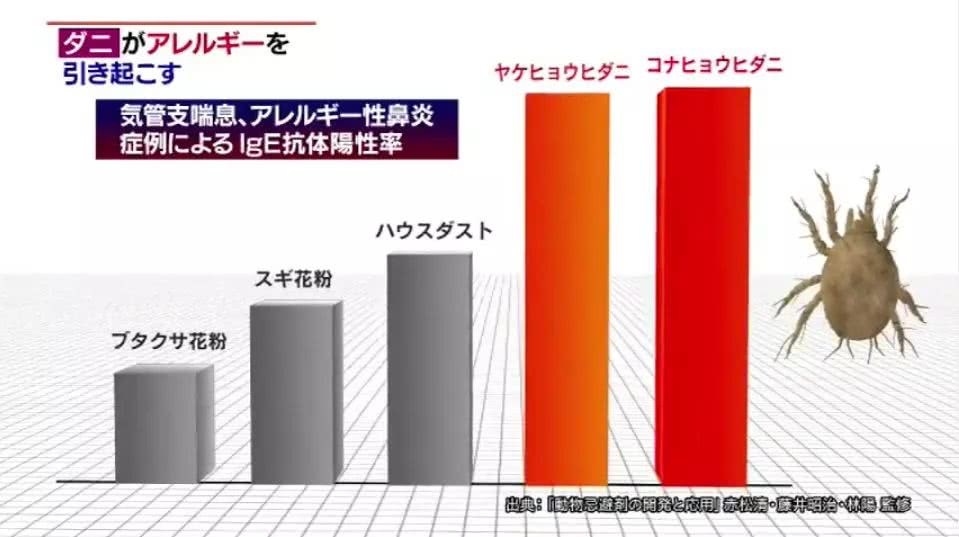
One in four people is allergic to dust mites.
If you have allergic dermatitis, allergic rhinitis or dust mite asthma,
80% of it is related to them.
A single dust mite can carry 12 kinds of allergens,
at best causing skin rashes, itching and enlarged pores,
at worst asthma, a cough that just won't go away, and rhinitis.
For children with an underdeveloped immune system
and people with an allergy-prone constitution,
the harm is even greater.
Some people say sunning your quilt is the best way to remove mites.
On the hottest days of summer, baking it in the sun for three or four hours
really can kill off most of the mites,
because dust mites are very afraid of high temperatures.
But the mites' droppings are still on the bedding,
"and the allergens have not been removed."
If you want to use the high-temperature method to remove mites,
you could consider using a dedicated quilt dryer,
and the effect will be more obvious.
Dust mites love warm, moist environments.
Right now the south is in the plum rain season,
so bedding must be damp and clammy,
and you can't even sun it.
Can you imagine how rampant they are in your bedding?
In summary,
if you have an allergic constitution,
if there are children at home,
or if you live in the south where you can't sun your quilts,
then a mite-removal vacuum is very useful for you.
Mite-removal vacuums have so many functions - which ones actually kill dust mites?
Many people think a mite-removal vacuum is just a vacuum cleaner that can suck the bed.
"Their core function is suction power."
The suction power of Dyson's mite-removal vacuum is 107000 revolutions/min,
and suction alone can remove 99.97% of dust mites.
But if your mite-removal vacuum's suction isn't as powerful as Dyson's,
you'll need other functions to help with mite removal.
Besides suction, the first thing to look at is the dust mite "beating function."
It can shake dust mites and dust out of the bedding.
The beating heads of mite-removal vacuums on the market
are mainly vibrating heads and roller brushes.
The vibrating head moves up and down,
and the larger the amplitude and area,
the better the effect.
But effective mite removal still requires strong suction to go with it.
This places high demands on the vacuum's hardware,
making the machine somewhat bulky,
and the noise a bit louder too.
The roller brush uses rotating beating,
with greater beating force and coverage area.
The downside is that the bristles may cause damage
to the surface fibers of the bedding.
There is fiberglass bristle as a substitute on the market,
but the effect is much worse.
The second most important thing is the mite-removal vacuum's "high-temperature hot air function."
Only when the bed temperature reaches above 60°C
and the humidity drops below 50% can mites be effectively removed.
A mite-removal vacuum whose heating temperature can't reach 60°C
can only reduce the humidity of the bedding,
so the mite-removal effect will be greatly reduced.
If you can't air out your bedding during the plum rain season,
a mite-removal vacuum removes mites while also making the bed drier,
so you can sleep comfortably even on rainy days.
The third most important thing is the mite-removal vacuum's "sealing."
Many people overlook this when buying a mite-removal vacuum.
If it "leaks while sucking,"
that's the same as moving the allergens to another place,
causing "secondary pollution."
The fourth most important thing is the mite-removal vacuum's "filter."
The filter mainly affects the lifespan of the mite-removal vacuum.
Most mite-removal vacuums now use "HEPA" filters,
which are finer than ordinary filters
and can firmly grab dust mites "by the scruff of their fate."
If your vacuum has a large 0.5 mm filter,
then what's sucked in on one side goes right out through the exhaust vent.
Xiaolu wants to remind everyone,
that although HEPA filters can be washed with water when cleaned,
washing them too many times will affect the gaps in the filter,
and the filtration effect won't be as good as before.
Many mite-removal vacuums claim
that the ultraviolet function can kill mites.
A laboratory in Japan did an experiment for this:
they shone ultraviolet light on dust mites for four hours,
and after four hours found that not many mites had died.
Using ultraviolet light to remove mites is pretty useless.
But using it to "sterilize" is still useful.
Overall, although functions like heating and ultraviolet light don't help much with mite removal itself,
they can still improve the overall sleep experience.
Like the mite-removal vacuum introduced below that's even more expensive than Dyson,
its overall experience is better than Dyson's.
Of course, there are also some purely gimmicky functions.
Xiaolu has seen some mite-removal vacuums use ultrasonic waves to remove mites,
but in an experiment by an American entomologist,
ultrasound is not much use for killing mites.
One pitfall is that
so much stuff sucked out of the bed
"is not all dust mites."
Most of it is dust, fabric scraps, cotton lint and so on.
Dust mites are very small,
hiding in the dust
and invisible to the naked eye.
How do you choose a mite-removal vacuum?
After saying so much about the key points for choosing,
what are the pros and cons of the well-regarded products on the market?
The selling point of the Dyson V7 Mattress
is its core performance: strong suction.
It has the strongest suction among mite-removal vacuums on the market,
Simple and brutal,
it cleans up dust mites entirely by suction.
It also has a dust-air separation function,
in short,
it allows small dust particles to settle into the dust bin,
thus extending the service life of the HEPA filter
However, many people also say,
they can feel its strong suction,
but they also feel their quilts and mattresses getting thinner and thinner...
Its price is around 2000.
Raycop RP series,
although its mite-removing suction is not as strong as Dyson's,
its auxiliary functions are very strong.
For the beating function, it combines a vibrating beating head with a rotating bristle brush,
so it does not damage the bed surface and can clean the bed more thoroughly.
Its hot air temperature can reach 70°C,
which can directly kill dust mites.
The ultraviolet function has a sterilization rate of 99%.
The overall experience is quite good.
Japanese housewives who have children at home use this model more often,
and when using it for children, they always want something more professional
The price of this RP model is around 5000.
Lexy mite remover B701,
its suction opening is very wide,
so the coverage area is large and cleaning is easy;
the suction is very strong.
Like Raycop, it uses an MIF filter,
and the MIF filter can be washed repeatedly,
but the HEPA cannot, as it is a consumable.
There are small wheels on the bottom,
so it is very easy to push.
The dust-device separation technology is also very well developed.
In terms of hard technology, it is not inferior to big foreign brands,
if you want a mite remover around 1000 yuan,
then this is the one.
Iris IC-FAC2C
is the mite remover most used by Japanese housewives.
The dust sensor is its biggest highlight,
when there are more dust mites, the sensor turns red,
and when it is cleaned up, it turns green,
so you can intuitively see whether the dust mites have been cleaned up.
The handle design is comfortable,
and it weighs only as much as a large bottle of drink,
so cleaning the whole bed with one hand will not make you tired.
It has a hot air function, but the airflow is relatively weak, making it a bit gimmicky.
This mite remover comes in corded and cordless versions,
the corded price is around 400 yuan,
and the cordless price is double that.
But after all, it is used to clean beds,
so the requirement for distance is not too high,
and the corded one is enough.
Puppy mite remover D607 is a domestic brand.
It weighs only 1.2 kg.
Its functions include high-temperature hot air and ultraviolet mite removal,
and a vibrating beating head.
From the data we just analyzed,
its high-temperature hot air is only 57°C,
so it needs a longer drying time to achieve the mite-removing function.
Ultraviolet can only play a sterilization role.
And the vibrating beating head is just "scratching an itch through a boot" for dust mites.
But its suction is still acceptable for products at the same price,
30000 rpm,
so it can still suck out a lot of dust.
But the number of dust mites is unknown.
It is only suitable for families whose requirements for mite removal are not too high.
Also in the 300 yuan range,
its overall performance is not as good as IRIS.
This article is original by Keyu Life Study Club, please indicate the source when reposting
For more Japanese-style home goods,
this week, Keyu Life held a prize event,
click to join the comment interaction for "Cool Summer Survival Private Goodies",
and you can get a free trial right for a sparkling water machine!