You can't just plant any tree in your yard: the first 3 protect the home, but never grow the 4th
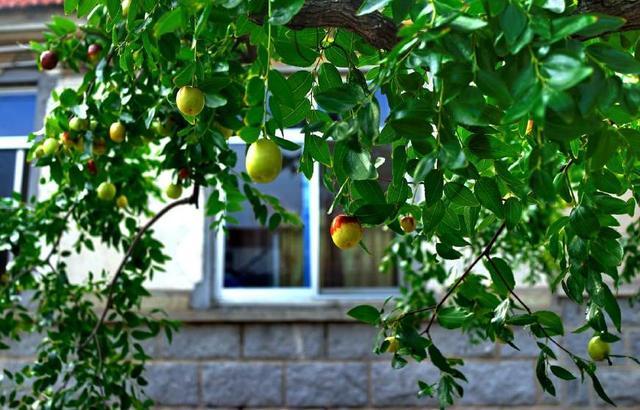
Speaking of planting trees in the yard, when I was a kid my family lived in the countryside, and we really did plant a few trees in our big yard. Mainly jujube trees and grapevines. Every household in the neighborhood planted them too, mostly jujube trees, and some people also planted a few pomegranate trees. Actually, there's a proper way to choose what trees to plant in a yard. The older generation all knows that you must be careful when planting trees at home, feng shui matters a lot!
So which trees can "protect the home"? And which trees must never be planted? Let's talk about it next~
1. Jujube tree (Ziziphus jujuba), symbolizing that "the family will produce talented people early on," can be planted.
Jujube tree care details:
The temperature during the jujube tree's flowering and fruit-setting period is 22-25°C. It is fairly drought-tolerant and waterlogging-tolerant, but during the flowering period it requires relatively high air humidity, otherwise pollination and fruit setting are hindered. So during the flowering period, many people carry water buckets on their backs to spray the jujube trees with water. In addition, the jujube tree is strongly light-loving and quite sensitive to light, yet planting it in a yard does not affect its growth. There's also another point: the jujube tree is easy to keep alive, and it adapts strongly to soil, tolerating poor and saline-alkaline soil. Generally, you can get a jujube tree to survive just by taking a cutting from a branch.
2. Pomegranate tree (Punica granatum), symbolizing "a house full of descendants," can be planted.
Quite a few people plant pomegranate trees in their yards, mainly because the pomegranate tree has very good symbolic meaning, and on top of that this fruit tree bears large and abundant fruit. The seeds inside the fruit are sweet, and both adults and children love them. I still remember that when I was little, my uncle's family had a pomegranate tree that grew even bigger than the jujube tree, and every year it bore a lot of pomegranates, always sending me a bagful!
Pomegranate tree care details:
The pomegranate tree likes a warm, sunny environment, and is drought-tolerant, cold-tolerant, and also tolerant of poor soil. In addition, it is not strict about soil, but sandy loam with good drainage is best for cultivation. Nowadays many people are starting to try growing pomegranate trees in pots on balconies, which is actually quite good. Although the fruit is not abundant, it's still enough for one or two people to eat.
3. Grapevine, symbolizing "many children and much fortune," can be planted
Planting a grapevine requires a trellis, but many homes have a wall in the yard directly facing the front gate, which in our area we call a "leaning-gate wall" - the name may differ from place to place. Guiding the grapevine with a trellis to climb directly onto the wall gives a great effect. The grapevine bears a generous crop of grapes every year. Although they aren't as sweet as those grown by professional grape growers, when you grow them yourself, eating them still gives you a real sense of achievement.
Grapevine care details:
Grapes have relatively high water requirements. In the early growth stage or vegetative growth stage, they need more water and can be watered every day. In the later growth stage or fruiting stage of the grapevine, the roots are weaker and need less water. In addition, to make the grapes bear larger fruit, you can also spray fertilizers such as borax, potassium dihydrogen phosphate and superphosphate.
4. Pear tree (Pyrus), symbolizing "family separation," must never be planted.
Almost no household in the countryside plants a pear tree, mainly because this tree has a bad symbolic meaning. Pear tree, "li" - separation. So even though a pear tree grown in the yard bears quite a lot of fruit, it is still best not to grow one. After all, we cannot ignore the issue of home feng shui!
That's all for sharing the feng shui knowledge about planting trees. Thank you for reading!