How to grow Achimenes? A detailed guide to care methods
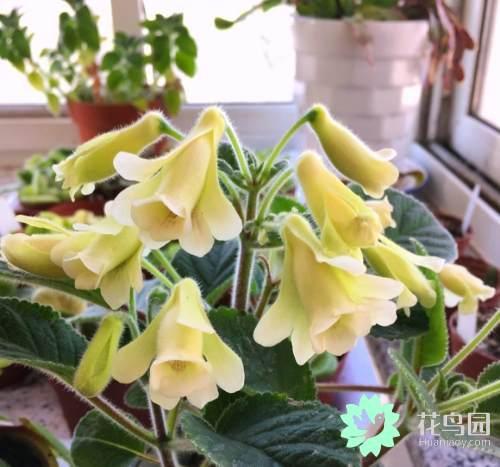
Achimenes, like its close relatives gloxinia and African violet, is deeply loved by people in Europe and America, and is often used as a starring plant for summer ground cover or hanging baskets.
Achimenes is native to Central and South America and belongs to the Gesneriaceae family of perennial herbaceous plants. The plant height is about 10-50 cm, and the plant form comes in 2 types, upright and trailing. The leaf color ranges from light green to dark green, oblong, with serrated edges. Flowers emerge from the leaf axils, the corolla is tubular, the flower diameter is about 3-8 cm, and the flower colors include white, purple, deep red, pink, blue, orange, yellow and so on. Achimenes is a long-day flowering plant, and the flowering period is from late spring to autumn. It has scaly rhizomes underground; when dormant in winter the above-ground parts wither, and it overwinters by means of the rhizomes, then sprouts new shoots again when the weather warms up in spring.
Generally, when planting from rhizomes, you can do so in April-May when the weather warms up and the rhizomes begin to sprout, planting the rhizomes upright or parallel to the soil surface and covering with about 1.5 cm of soil. The growing medium needs good drainage; you can use potting soil mixed with perlite and vermiculite. The growing location needs bright indirect light; mature plants can accept direct light, and you only need to avoid strong sun exposure. If you want the plant to grow more densely (especially hanging basket varieties), you can pinch off the tips when the new shoots break through the soil surface and grow their 2nd or 3rd pair of leaves, encouraging more new shoots to grow. The suitable growing temperature is about 15-21°C at night, with daytime temperatures above 21°C.
During the growing period, do not let the plant go short of water, otherwise it will be pushed into early dormancy and the underground rhizomes will not be able to form. After autumn begins, the plant stops flowering, and the branches and leaves slowly wither and enter the dormant period. At this time you need to reduce watering to encourage the rhizomes to develop, and avoid excess water causing the rhizomes to rot. When the above-ground parts have all withered, you can dig out the rhizomes, store them in a transparent plastic bag with some slightly moist vermiculite added to retain moisture, and place them in a cool place, then take them out and plant them after the rhizomes sprout in spring; you can also leave the rhizomes in the original pot, but you need to move it to a cool, rain-sheltered place, and the potting soil only needs to stay slightly moist, so do not water often.
It can be propagated from rhizomes, cuttings or seeds. For rhizome propagation, spring is the suitable time; divide the rhizomes into several sections and plant them separately, or break the rhizomes apart, and each scale can grow into one plant. In addition, when Achimenes encounters stress, it also grows propagation buds in the leaf axils, and you can also bury the propagation buds in the soil and they will grow into new plants; for cuttings, spring and summer are the suitable time; take each section of stem with 2 or more nodes, remove the leaves of the lowest node, then insert it into the medium, keep the medium moist, and it will root in about 1 week; the suitable time for sowing is March-May, the suitable germination temperature is about 25°C, the germination period is about 21-30 days, and the seeds are positively photoblastic and do not need to be covered with soil.