How to Plant Bowl Lotus Seeds? A Detailed Guide to the Complete Planting Method
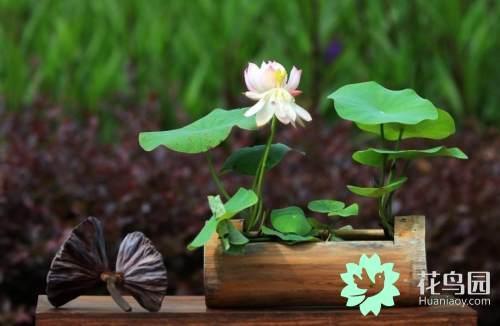
Many flower lovers start growing bowl lotus from seeds, and without experience it is hard to get them to bloom in the same year. Today the editor will explain how to grow bowl lotus.
Key Points for Growing Bowl Lotus
1. Sowing Time:Lotus seeds have no dormancy period; as long as the water temperature can be kept above 16°C, they can be sown in all four seasons. Under suitable temperature and light conditions, lotus seeds take 50-60 days from sowing to flowering in spring and 60-80 days in autumn.
2. Seed Treatment:The outer shell of lotus seeds is hard and dense, so before soaking the seeds you must make an artificial opening. One end of the lotus seed has a small pointed tip, and the other end has a small concave dot. Rub the end with the small concave dot on rough concrete until it breaks, or use pliers to crack a small opening. Be careful not to crush the embryo, and do not remove the shell.
3. Soaking Seeds to Speed Up Germination:A summer water temperature of 20°C-30°C is very suitable for lotus seed germination. Depending on the number of seeds, use a bowl or basin to hold water, just enough to submerge the seeds. Place it indoors and change the water twice a day; germination can occur within 1 week. After sprouting, place it in a sunny spot, increase light, and do not let it lack water. After 2 weeks, fine roots and 2-3 tender young lotus leaves grow. When the leaves are coin-shaped and the root system has formed, they can be transplanted.
4. Transplanting the Sprouted Seedlings:Choose a bottomless ceramic pot or plastic flowerpot with a diameter of 18cm-30cm, and add half a
pot of garden soil or river-pond mud free of chemical pollution. Add water and soak it two weeks in advance, and do not fertilize. When transplanting, press the fine roots of the young lotus seedling into the mud, one plant per pot. After transplanting, add an appropriate amount of water, just enough not to submerge the small lotus leaves.
5. Autumn and Winter Management:2-3 weeks after transplanting, when it enters the peak growth period, if the leaves turn yellow, you can apply a small amount of nitrogen, phosphorus, and potassium compound fertilizer, applying dilute fertilizer frequently. Lotus likes warmth and light, and cannot tolerate shade. When the outside temperature is below 16°C, growth slows, and it should be moved into a sunlight greenhouse.
Bowl Lotus Planting Process
First: learn to distinguish the two ends of a bowl lotus seed.
The seed coat of a lotus seed is very thick. For smoother germination, simple treatment is needed. First, please distinguish the two ends of the bowl lotus seed: one end has a small protrusion, and the other end has a small concave dot. The end to treat is the one with the concave dot.
Second: treat the end with the concave dot
Generally speaking, there are many ways to treat the end with the concave dot. The conventional methods usually include:
1. Rub off the seed coat on concrete;
2. Crack it with pliers;
3. Cut off a small piece of the seed coat with a sharp knife.
You can also first drill a small hole at the concave spot with an awl, soak it in water for a period of time, and then use scissors to cut off a small piece of the seed coat! Be careful not to drill too deep, and do not drill into the kernel inside!
Below is a lotus seed that has already been drilled with an awl↓
Then: soak the treated seeds in water
Use a small box, a plate, or just any container to soak the treated seeds in water.
Notes:
1. If the temperature is low, you can use a thermos cup with 30-degree warm water. If the temperature is above 20 degrees, you can soak them indoors or outdoors.
2. Change the water twice a day; I usually change it once in the morning and once in the evening;
3. The water only needs to submerge the seeds;
4. The higher the temperature, the faster the germination. Generally above 20 degrees, germination takes 3 days to one week.
For lotus seeds that have been soaked in water, the hard skin can easily be peeled off by hand. Peeling off no more than one third of the seed coat helps the seeds sprout sooner.
After peeling, continue soaking in water.
On the fifth day, the green sprout head is visible.
From the seventh day on, put it in the sun every day. In addition, prepare the pot for planting lotus, fill it with soil, add water, and soak it well. After 9 days, the first floating leaf is about to unfold and the second leaf also appears. On the tenth day, the first floating leaf unfolds, and the lotus seed also begins to take root.