Cultivation Methods and Care Tips for the Song Mei Cymbidium goeringii
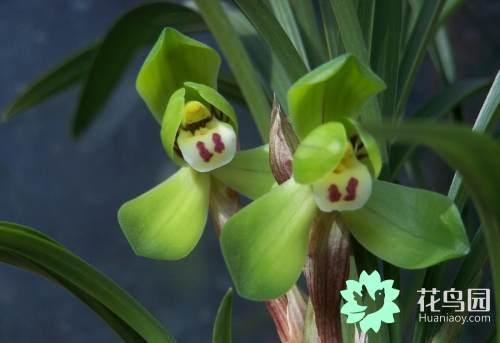
Song Meiis a traditional famous variety of Chinese Cymbidium goeringii and the representative cultivar of the plum-petal flower type, with the full name Song Jinxuan Mei. Because Song Mei's floral quality is unmatched and it stands out among Cymbidium goeringii, it has been chosen as the head of the "Four Great Heavenly Kings" of Cymbidium goeringii and praised as the "King of Cymbidium goeringii," with extremely high ornamental value. Now let us take a look together at the cultivation methods for the Song Mei Cymbidium goeringii!
Song Mei's Growth Habits
Song Mei is a horticultural variety and is suitable for planting in an environment with good air circulation. It is shade-loving and averse to direct sunlight, likes moisture and is averse to dryness, and grows best at 15°C to 30°C. Growth is poor above 35°C. Severe cold below 5°C will affect its growth vigor, and at this time the orchid is often in a dormant state. If the temperature is too high combined with exposure to the sun, leaf scorching or withering will appear within one or two days. If the temperature is too low and it is not moved indoors in time, frost damage will occur. Cymbidium goeringiiSong Meihas fleshy roots and is suitable for sandy loam rich in humus. Drainage performance must be good, and leaf mold or mountain soil with more humus should be selected. Slightly acidic loose soil or iron-containing soil is suitable, with a pH value of 5.5 to 6.5.
Song Mei's Propagation Methods
1. Division:After one or two years of cultivation, Song Mei can sprout many new shoots. When the number of plants reaches 6 or 7, division can be carried out, generally once every 2 or 3 years. In spring and autumn, select plants with more than 6 or 7 plants, take them out of the pot, gently pat the bottom of the pot, pour out the orchid roots, being careful not to damage the new roots, use a brush to brush off the old soil on the roots, find the places where the gaps between the pseudobulbs are relatively large, carefully break them apart, use scissors to trim dead roots and rotten roots, then soak in 800 times dilution of 40% thiophanate-methyl or chlorothalonil for 1 hour, then rinse with clean water, air-dry, and when the roots turn white and soft they can be planted.
2. Sowing:Song Mei seeds are extremely fine, and there is only one incompletely developed embryo inside the seed, so the germination capacity is very low. In addition, the seed coat does not easily absorb water, so sowing by conventional methods cannot germinate it. Therefore, orchid mycorrhizal fungi or artificial culture medium are needed to supply nutrients for germination. For sowing, it is best to select fruit that has not yet split open, sterilize the surface with 75% alcohol, take out the seeds, soak them in 10% sodium hypochlorite for 5 to 10 minutes, take them out and rinse them 3 times with sterile water, then sow them in a culture bottle containing culture medium, then place them in a dark culture room and keep the temperature at about 25°C. After they germinate, move them into the light and they can form protocorms.
3. Tissue culture:First cut 2 to 3 cm growth buds from the roots of orchid plants cultivated for 2 or 3 years, rinse them with running water for 20 minutes, and in a sterile tissue culture room at 22 to 25°C, remove the outermost 1 to 2 bracts, then soak them in sodium hypochlorite solution for 15 minutes to sterilize. Then peel them off and cut them into 2 to 5 mm stem tips, inoculate them onto the prepared culture medium, and move them to the culture site. After 3 to 4 months, rhizomes will emerge, continuously proliferate, and then shoot induction and rooting are carried out. When the test-tube plantlets grow to 5 to 8 cm and have 2 or 3 roots, they can be transplanted.
Song Mei's Cultivation Methods
1. Growing medium:Preparing a growing medium with complete nutrition is the foundation for promoting healthy growth and flowering in Song Mei. The preparation of the growing medium should focus on air permeability, drainage, and nutrients. You can use 25% finely washed peat, 20% kiryu stone, 15% Senton soil, 10% willow bark, 15% snake wood, 5% Maifan stone, and 10% brick granules. Using this growing medium to grow orchids allows them to adapt to the pot quickly, grow healthily, bloom well, and have a strong fragrance.
2. Pot selection:For Song Mei, the best pot is a fired tall bucket-shaped clay tile pot, or a tall bucket pot made of sesame sand from Yixing. The pot should not be too large; as long as the orchid roots can spread out in the pot, that is enough. It is most suitable to grow about 6 plants per pot, and the orchid plants should combine old, middle-aged, and young together, so that flowers can be seen every year. Remember that new pots must be soaked in water (to remove firing heat) for more than 2 days, and old pots must be washed clean and disinfected before use.
3. Light:Morning sunlight is most beneficial to Song Mei's growth, and the earlier the better. It is best if it can shine on the orchid plants as soon as dawn appears. This is because morning light is the main factor affecting orchid growth and flowering, and orchids are most active in photosynthesis in sunlight before 10 a.m. So if conditions permit, it is best to place Song Mei in a place with morning light, exposed to 2 to 3 hours of sunlight each day, which is very beneficial to growth and helps it bloom every year.
4. Ventilation:A good ventilation environment is a necessary condition for growing Song Mei well, and placing Song Mei in a well-ventilated environment is very important. Especially in the hot and stuffy weather of summer, Song Mei must be placed in a cool and ventilated place. In the northern Henan region, as long as it can pass the summer safely, it can be said that orchid growing is already half successful. Ventilation can provide fresh air to the orchid plants, accelerate photosynthesis, reduce the occurrence of pests and diseases, and promote healthy growth of the orchid plants.
5. Watering:Watering is the key to success or failure in growing Song Mei well. The ancients said, "To make friends, make friends with their hearts; to water flowers, water their roots," and "Orchids like rain but fear accumulation, like moisture but dislike wetness, like dryness but avoid parching."
① The amount of watering should be determined according to many factors such as the size of the pot, the growth condition of the orchid plants, the quality of ventilation conditions, the coarseness of the growing medium, and the temperature.
② Watering should not be done at fixed times. You should often observe the dry and wet condition of the growing medium, grasp the timing of watering, water when dry, and water thoroughly when watering.
③ The temperature of the water used for watering orchids should be as close as possible to the temperature inside the orchid pot, and the temperature difference should not be too large, especially in summer and winter.
④ For year-round watering, use clean natural precipitation (rainwater, snow water). It is best not to use tap water, and polluted water must be strictly avoided.