Why Strawberries Became the Dirtiest Fruit and Vegetable: A Full Analysis from Garden to Table
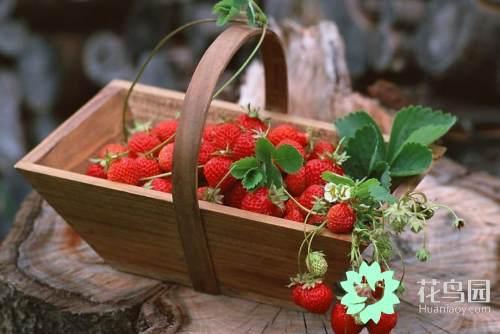
A single strawberry can be eaten in a thousand ways.
The source of tartness on ice cream, the bright red garnish on pudding, even a single strawberry sitting there on its own is extremely tempting.
Some people like its texture, some like its shape, it could be said to be the darling of all.
However, a foreign ranking poured cold water on everyone, crowning strawberries with the title of "dirtiest fruit and vegetable."
The American environmental organization Environmental Working Group (EWG) released a "pesticide residue" list.
The data on the list came from the U.S. Department of Agriculture, based on test results of pesticide residues on 38,800 common agricultural products.
However, EWG used the number of pesticide residues as the main criterion for listing the rankings.
Strawberries, with an average of 5 pesticide residues and a maximum of 22, topped the "dirtiest" list for three consecutive years.
EWG, a nonprofit, nonpartisan environmental organization
This honor is actually undeserved; using the number of pesticide residues as a standard is not rigorous.
When discussing pesticide residues on fruits and vegetables, talking about quantity without discussing dosage is completely unreasonable.
The list's angle being "unusual" does not necessarily mean EWG is spreading rumors and causing trouble; in the news originally published on CNN, it was also mentioned that they had compiled the pesticide dosages, so perhaps it is more a case of the media misinterpreting it.
Besides, strawberries are not entirely wrongly accused.
The delicate image of strawberries is deeply rooted in people's hearts, and in reality they are indeed very fragile.
They have no hard shell, and their rich moisture and sugars make them more likely to attract various insects and fungi.
They have not yet had time to adapt to the harsh natural environment, so in industrial cultivation, pesticide use is indeed the norm.
After all, strawberries have only a short 400-year history of artificial hybridization.
As early as the first century AD, Roman poets mentioned strawberries in their poems; at that time, strawberries were still just ordinary ornamental plants.
The edible history of wild strawberries may go back even further; Native Americans in the Americas had a method of making strawberry cakes.
But wild strawberry fruits are small and lacking in flavor, completely different from today's strawberries.
The bright red appearance of wild strawberries is still eye-catching and always attracts many animals to "taste" them.
This is also one of its survival strategies; the strawberry flesh we commonly eat is just the enlarged receptacle.
The little white granules attached to the surface* are the real seeds; they travel through the animal's intestines to the ground and take root and sprout.
With the help of animals, they had more opportunities for natural crossbreeding, and finally fruits with a flavor that moved humans appeared.
*A troublesome piece of trivia: the little white granules can only be considered achenes; the seeds are contained inside. The red flesh of the strawberry that we eat cannot be considered the fruit; it should be considered the receptacle, so although strawberries look like berries, they should be aggregate achenes.
It was not until the Middle Ages that strawberries moved from the wild into European gardens.
The Virginia strawberry from North America was one of the first 3 varieties to enter.
As a rare and delicious variety, the Virginia strawberry came from the United States to Britain in the early 20th century.
The omnipotent British gardeners began cultivating new varieties, and the number of varieties surged from 3 to 30.
Virginia strawberry plant
The most important turning point in history is closely connected to a French spy.
In 1714, a spy from the French intelligence service, ordered by King Louis XIV, went to Chile to gather intelligence.
He was responsible for investigating the enemy's fortifications in Latin America. He worked extremely efficiently and even brought back 5 extra "captives."
On the way home, he did his utmost to keep the 5 "captives" safe, treating them no less well than honored guests.
Amédée-François Frézier
When he escorted them before the king, this "top-secret intelligence" obtained through countless hardships truly stunned everyone.
They were 5 strawberry seedlings from Chile, and they were even more welcome than other intelligence.
It is said that this spy could attain his current status entirely because his ancestor was granted a title for presenting delicious fruit to the king at a banquet.
He regarded it as his philosophy of life: delicious fruit is a hundred times more valuable than national secrets.
Chilean strawberry, also called beach strawberry because it was found on the beach
Although this spy did not gain wealth and honor, strawberries ushered in their spring.
The Chilean strawberry had qualities lacking in other varieties: it had fewer but larger flowers and could produce larger fruits.
It was just that the Chilean strawberry was not cold-tolerant, and it was difficult to grow it away from the mild coastal climate.
Coincidentally, the Virginia strawberry, which had arrived in Europe earlier, was quite cold-tolerant.
Because of mixed planting, the female Chilean strawberry and the male Virginia strawberry produced a completely new offspring: the pineapple strawberry.
The pineapple strawberry combined all the advantages of both, with large, plump fruit, cold resistance, delicious flavor and bright color, and it immediately became popular throughout Europe.
Under cultivation by the omnipotent British gardeners, pineapple strawberries bloomed everywhere, and to date have evolved into more than 2,000 varieties.
The biggest difference between modern strawberries and wild strawberries lies in their chromosome composition.
Most wild strawberries are diploid or tetraploid (musk strawberry is hexaploid), while hybrids are mostly octoploid or decaploid*.
Generally speaking, polyploid plants are larger than diploid ones, including the previously mentioned Virginia strawberry, Chilean strawberry, and pineapple strawberry, all of which are octoploid.
It can be said that the octoploid is the culmination of strawberries, and since then all edible strawberries have been inextricably linked to these three.
*Note: The haploid chromosome number of all strawberry genes is 7, so diploid means 14 chromosomes, tetraploid means 28 chromosomes, and so on.
China introduced strawberry varieties somewhat later.
In 1915, an overseas Chinese of Russian nationality introduced "Victory Strawberry" from Moscow.
But strawberries truly flourished when they began to be cultivated as a cash crop in the 1950s.
Coincidentally, at about the same time, French chemists announced the success of research on organophosphorus agents, and pesticide development entered the "high-efficiency" era.
Resistance to pesticides also rose year by year
For strawberry cultivation, this was undoubtedly good news.
The fragility of strawberries has always been a difficulty in strawberry industrialization and is also the reason prices remain high.
The widespread use of pesticides completely changed the strawberry industry, and it was also the beginning of the application of 22 types of pesticides.
Extreme perishability is also a characteristic of strawberries
For example, the application of forchlorfenuron (scientific name chlorfenuron) can make strawberries appear plump.
For cash crops, the bigger the size, the better, and forchlorfenuron can promote fruit enlargement, so it is used in the cultivation of many fruits and vegetables.
Of course, forchlorfenuron does not affect our health.
On one hand, the acute oral toxic dose in mice is 4,918 mg per kg of body weight, making poisoning in humans quite difficult.
On the other hand, forchlorfenuron degrades relatively quickly; 24 hours after spraying on plants, 60% has already degraded.
Forchlorfenuron
However, in a 2001 experiment, it was found that applying forchlorfenuron affects the total acid content of strawberries, making them either more sour or bland and tasteless.
In fact, proper flower and fruit thinning can also produce larger fruits.
The method is simple: appropriately remove flowers and fruits from the plant so that nutrients concentrate in the remaining fruits, but yield is bound to be affected.
Quality, or yield, that depends on personal choice.
The dilemma of forchlorfenuron is only one part of pesticide use on strawberries.
What truly affects the harvest, however, is how to flexibly use fungicides and insecticides.
Throughout its life, a strawberry faces many deadly diseases. During the seedling stage, it is necessary to prevent red stele root rot and anthracnose, and during full bloom it is also necessary to prevent pests such as thrips...
Any single disease or pest infestation can reduce a farmer's hard work to nothing.
Red stele root rot
For example, red stele root rot is jokingly called "strawberry cancer" by farmers.
This disease is caused by infection with the host-specific strawberry Phytophthora, causing the root system to darken and soften, and the root stele to turn reddish-brown and rot.
The underground roots dry up, and the aboveground leaves turn yellow and wilt. The worst part is its contagiousness; if no measures are taken, it can destroy an entire planting area within a few cultivation cycles.
In 2007, a survey in Yichun City, Jiangxi, showed that its incidence rate had reached as high as 20%-40%.
Perhaps you may think that, strictly speaking, if one type of damage corresponds to one type of pesticide, are 20 types too many?
In fact, there is always competition between pathogens, pests, and pesticides.
When we take antibiotics for a cold, we also worry about superbugs appearing; when pesticide use is overly uniform, "super pests" naturally appear.
Using multiple pesticides against one disease is simply one strategic approach.
In fact, in Australia, strawberry cultivation has indeed achieved non-pesticide control.
Integrated pest and disease management strategies are adopted in the field, using non-pesticide control methods such as natural enemies to manage possible diseases.
For example, Pseudomonas fluorescens can deal with red stele root rot, with an inhibition rate on par with pesticides, reaching 59%.
As early as 1996, Australia had already achieved 90% of farmers adopting non-pesticide control strategies.
But this method is not easy to promote in China.
China's agricultural conditions determine a farming model dominated by smallholders, and the greatest problem is the difficulty of intensive management.
Currently, organic crops are priced artificially high. If there is profit to be made, how could no farmers try it?
But persisting in organic cultivation still requires the right timing, place, and people.
If neighboring farmers apply large amounts of pesticides, it is inevitable that pests and diseases will be driven into the organic fields. At such times, what choice should be made?
In fact, in the process of traditional greenhouse strawberry cultivation, most of the pesticides used are highly efficient and low-toxicity or easily decomposed.
Because strawberry fruits are fragile, in order not to affect the fruit's appearance, most pesticides are applied before flowering.
Moreover, 5-6 days after pesticide spraying, decomposition is already nearing completion, and the residual concentration on the fruit is extremely low.
As long as pesticide residues do not exceed the national standard*, quantity cannot be used as a reference basis.
The title of "dirtiest fruit and vegetable" is mostly just intimidating to laypeople.
*Note: China's current pesticide residue limit standards have become increasingly complete, stipulating a total of 3,560 maximum residue limits for 387 pesticides, basically covering common pesticide use on common cash crops, and there is no problem using it as a safety reference.
The market always has contradictory demands for agricultural products: it wants to get rid of pesticides, and it also wants good quality at a low price.
Agriculture is developing, and perhaps this can be achieved in the not-too-distant future.
But will something be sacrificed? For example, the pure fresh flavor of fruit.