The water lily, a sleeping beauty in the water, survives just by being tossed in water, simple and easy to grow, with a flowering period of half a year
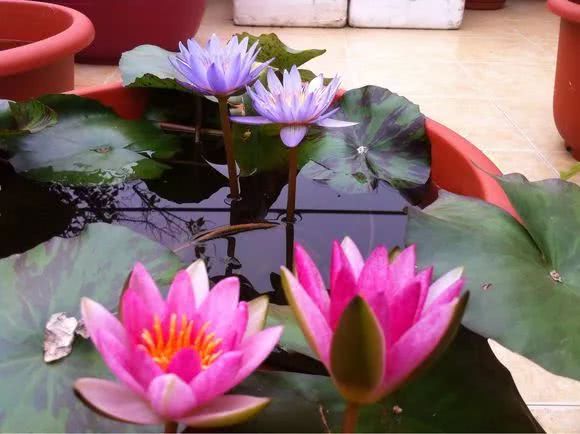
In summer, the most common flower in water is the lotus, but lotus plants are too big, and few homes have that much space. In fact, water lilies and bowl lotuses are both flowers very suitable for growing at home, with beautiful blooms, delicate and elegant! Water lilies are easy to care for, basically the kind that survives as soon as it is tossed in water. Bowl lotuses are a bit harder, so let's take a look together!
“
Water Lilies and Bowl Lotuses
-Water Lily-
In many places, the water lily, like the lotus, symbolizes holiness and beauty, and is often used as an offering to goddesses. It can be said to be a sacred thing, emerging unstained from the mud. Water lilies are widely distributed and, compared with bowl lotuses, are more tolerant of cold and heat, and easier to care for, so even beginners can grow them well.
Now water lilies can be seen in quite a few places, especially in parks and the landscaping of some public areas. The flowers are large and beautiful, floating on or rising above the water surface, usually opening by day and closing at night. Paired with rocks, they are plain and elegant, exquisite and unique, full of charm.
To grow water lilies, you can directly buy root sections with buds, which sprout and grow very quickly. Find some slightly clayey soil rich in humus; you can use a mix of garden soil and loess. Soil that is too sticky or too loose is not very suitable for water lily growth. After burying the root sections, you can spread a layer of sand on top, and the water will quickly clear. You can also use a large pot with a smaller pot inside, which makes management easier.
Water lilies like strong light and can be grown in full sun. If they can receive 7 to 8 hours of light each day, there will be many flower buds and continuous blooming. Lack of light not only leads to poor growth, but also very few flowers.
Water lilies cannot be short of water, especially in summer when water evaporates quickly, so be careful to replenish it. In autumn, water lilies enter dormancy, and it is enough to keep shallow water in the pot.
25 to 30°C is the most suitable temperature for water lily growth and development, and weather with alternating rain and sunshine is even more favorable for their growth. In spring, they can sprout at 8-10°C, and in summer water lilies are fairly tolerant of heat and sun; as long as the water is not allowed to run out, there is generally no big problem.
Before potting water lilies, you can put some base fertilizer at the bottom of the pot. One month after potting, you can wrap some cake fertilizer or slow-release fertilizer in paper and tuck it into the soil a little away from the plant's roots. After seeing flower buds, you can also apply a small amount of monopotassium phosphate, either wrapped in tissue and buried at the bottom of the pot, or mixed into a 0.1% aqueous solution and sprayed on the leaves. If the base fertilizer is sufficient, it is recommended not to apply additional fertilizer, to prevent burning the seedlings.
In Japan, a small pond planted with water lilies is known as Monet's Pond,
as beautiful as in the paintings
Water lilies grow very quickly; planted in March, they begin to bloom in June-July. Compared with bowl lotuses, they are tough and easy to grow, and much less difficult. Friends who like lotuses might as well start with water lilies to practice.
-Bowl Lotus-
The bowl lotus, as the name suggests, is a lotus variety that can be grown in a bowl, a small-sized flower variety. It can produce small lotus flowers around 5cm across, dainty and exquisite, with outstanding grace.
Bowl lotuses bloom in summer. If paired with some small bowls and pots of artistic shape, they are extremely elegant and charming when in bloom.
In ancient times, bowl lotuses were exclusive to the nobility and high officials. With economic development, more and more bowl lotuses have become popular among flower lovers. Bowl lotuses are elegant and are loved by many flower enthusiasts.
Bowl lotuses can be sown from seeds or grown from purchased lotus rhizome cuttings. However, there are many fake seeds on the market, and many people pass off vegetable lotus seeds as bowl lotus seeds; even professionals find it hard to tell the difference between the two. If it is not a particularly familiar seller, try to buy mature seedlings or rhizome cuttings.
When growing from seed, it takes 50-60 days from sowing to flowering in spring. First, use pliers or gardening shears to cut a small opening at the pointed end of the seed, then soak it, changing the water every day. After it softens, peel off about half the seed coat. Wait for small white roots to grow; when they are about one centimeter long, they can be buried in soil. Ordinary garden soil will do; it is best to soak it for a few days first, pour off the water it releases, and then add some clean water. Bury the small bowl lotus seedling with fine roots into the pot soil, add water so the leaves float on the surface, and after that it grows very quickly. Be careful not to let the water run out.
Growing from rhizome cuttings is even more convenient. Bury them directly into the flower pot: push aside a bit of soil, protect the terminal bud, hold the tail end of the rhizome and gently place it into the soil at a downward slant. The terminal bud must be completely buried, with the leaves left above the soil surface. Cover with soil, covering all terminal buds, side buds and the rhizome body, leaving only one rhizome tail at the mud surface.
Bowl lotuses like an environment with plenty of light, and they like warmth but cannot tolerate cold. They grow well at 23°C-30°C, and flowering requires above 28°C. After 2 or 3 standing leaves have emerged, appropriate top dressing is needed. You can use a straw inserted into the pot soil and drop a few granules of slow-release fertilizer at the edge of the pot; be sure not to overdo it. In summer, water whenever the water in the pot is not full, making sure it never runs out. Weeds and duckweed in the pot not only rob nutrients but also hinder the view, so remove them promptly.
Bowl lotuses are elegant and beautiful. Compared with water lilies, they are somewhat more difficult. If you like them too, grow a pot! Show this to flower lovers who need it!
If your pothos or copperleaf grass has yellow leaves and is wilting,
don't rush to throw it away
come and try this life-saving method
and it will soon be bursting with growth!
Show this to flower lovers who need it!