Grown in rural areas, it yields 4,000 jin per mu and sells for 4 yuan per jin, making it a great project for getting rich
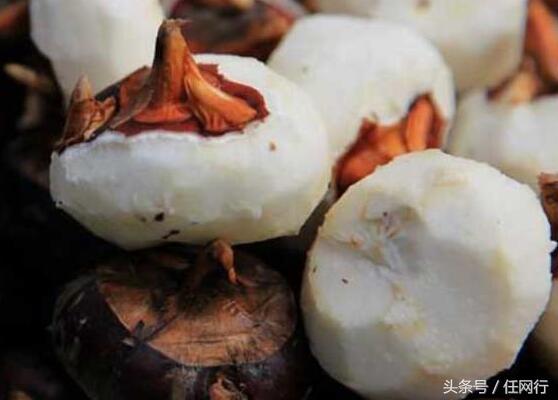
Water chestnut, scientific name Eleocharis dulcis (bí'qí), also known as Chinese water chestnut. It is a shallow-water perennial herb of the genus Eleocharis in the sedge family, with its corms eaten as a vegetable. The skin is purple-black, the flesh is pure white, and it is sweet, juicy, crisp and delicious. Since ancient times it has had the reputation of being the "snow pear underground," and people in the north regard it as the "ginseng of Jiangnan." It gets its name because its shape resembles a horse's hoof and also a chestnut. The water chestnut can be eaten as a fruit or counted as a vegetable, and is a popular seasonal delicacy. Research shows that regularly eating water chestnuts can prevent lead poisoning, phlegm-heat cough, lymphatic tuberculosis and essential hypertension, and can also prevent and treat pregnancy edema, acute and chronic nephritis complicating pregnancy, hepatitis complicating pregnancy and other ailments, making it a food that pregnant women must eat during pregnancy.
Zhongshan Street in Guangxi is the famous "Water Chestnut Street" of Guilin, Guangxi, named because every year in late winter and early spring, when water chestnuts come to market, the whole street is filled with locally grown water chestnuts. At five or six in the morning, growers from nearby townships pull in bag after bag of water chestnuts to trade here, making it very lively.
As for when the people of Guilin began widely planting water chestnuts, there is no way to trace it. But the land here is fertile, the mountains and waters are beautiful, and the temperature difference between day and night is large; these factors all cater to the preferences of water chestnut growth. The water chestnuts produced are large, tender, sweet and juicy, crisp without fiber, and of excellent quality, with the "Runing water chestnut" of Runing Town being the most famous. Runing Town's existing water chestnut planting area has already exceeded 10,000 mu, making it not only Guangxi's largest water chestnut production base, but also one of the locals' main sources of income.
The water chestnuts planted by farmer Uncle Wang have a plant height of 100-120 cm and a spread of 20 cm. The corm is flat and round, 2.4 cm high and 4 cm in transverse diameter, with a thick and strong terminal bud; the two side buds often stand side by side, hence the name "three masts." The skin is reddish-brown, the flesh is white, and a single one weighs 30 grams. It is mainly eaten fresh, but can also be cooked or processed; it has relatively high sugar content, crisp flesh and excellent quality. It grows vigorously and has strong lodging resistance. From June to July, corms are used for seedling propagation; the seedling stage is 25 days, the growth period is 130-140 days, and the yield is 1,500-2,000 kg per mu.
Planting water chestnuts is not troublesome; digging them up is troublesome, so choosing the land is very important. Many farmers who plant water chestnuts end up having to give up because the mud layer is too deep and the digging cost is too high, suffering huge losses. Normally 1 mu of field requires 20 labor-days. On rainy days it is muddy and cannot be dug, and in bad weather, a whole family of four or five people may spend more than a month digging 1 mu of land. Winter is originally the season for digging water chestnuts, but for the sake of storing the water chestnuts without spoiling and harvesting them conveniently, Uncle Wang waited until June, when the land was dry and easy for picking, and took the whole family, old and young, to dig water chestnuts in the field while the weather was good.
Uncle Wang explained that in recent years domestic water chestnut prices have been relatively stable. From June to July, corms are used for seedling propagation; in the short time of a 25-day seedling stage and a 130-140 day growth period, the yield can reach as high as 1,500-2,000 kg per mu. Apart from some that spoil and some that cannot be found, at least 1,700 kg can still be harvested per mu, and the wholesale price can reach 4 yuan per jin. The expenditure on pesticides and fertilizers for each mu of water chestnuts is 1,000 yuan, while the labor cost for digging water chestnuts is about 2,000 yuan. Through variety improvement, water chestnut planting has increased yield by 500 kg per mu, raised the large-size rate by 10%, and increased income by about 1,500 yuan per mu. In the past two years, relying on the ten-plus mu of water chestnuts he grows himself, Uncle Lei has earned more than 100,000 yuan a year.
The booming water chestnut industry has also driven the development of rural tourism in Runing Town. Water chestnut digging contests, food festivals... This place has become one of the destinations for Guilin tourists' self-driving trips on holidays and weekends. Uncle Wang, a farmer from Runing Village, said: "Now I can make money just sitting at my doorstep."
Renwangxing Mobile Marketing System - making mobile marketing simpler............