Panax notoginseng is so expensive - is growing it profitable? My 6-year journey of building a Panax notoginseng farm
The main production area for Panax notoginseng is southeastern Yunnan. Over the years it has become famous throughout the country and abroad, known as "not even gold can replace it," and also praised as the "king of ginsengs and divine herb of the south." Its health value is extremely high. So do farmers actually make money growing Panax notoginseng?
At 35 years old this year, I have been growing Panax notoginseng in Yunnan for almost six years. The best years of my life have been devoted to this unremarkable little tuber. During this time, Panax notoginseng has put me through all kinds of hardships, and I have also tasted the joy of harvest. Only those who have truly worked in agriculture can understand all the ups and downs.
My family's Panax notoginseng farm is in the mountains of Yunnan at an altitude of 2000 m.
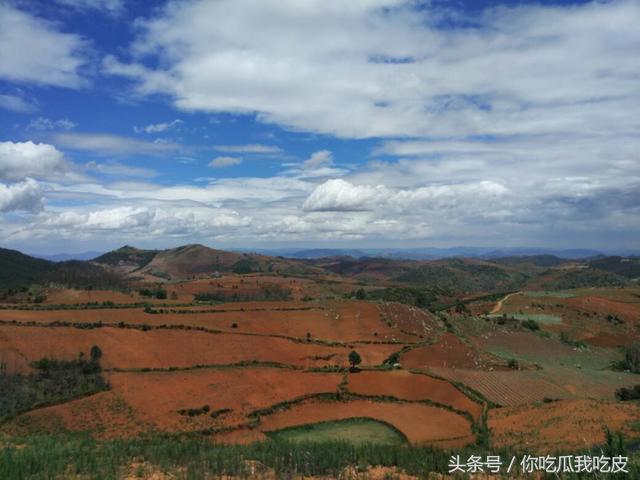
The air in Yunnan is very good. This blue sky is beautiful, right.....
This is fertilizing in the field. Panax notoginseng seedlings are very tender, so any fertilizer that lands on the leaves must be blown off with a machine, otherwise the seedlings will burn.
Starting in 2014, the market price of Panax notoginseng plummeted, from 400-500 per jin at its lowest falling to 40-50 per jin in 2015..... Truly painful! In 2015, my entire Panax notoginseng farm made me lose about one million yuan, spitting back all the money earned in the previous two years, and I was back to square one.
But Panax notoginseng is a truly precious medicinal herb, and its effects are real, unlike maca, which has little effect and relies entirely on hype, with its price falling all the way from several thousand yuan to just a few dozen yuan..... As the health-preserving effects of Panax notoginseng, especially its therapeutic effects for middle-aged and elderly people with poor sleep, prevention of the "three highs," and even treatment of cerebral thrombosis, stroke, and internal bleeding, gradually became understood by ordinary people, the price of Panax notoginseng rose again. Although it has not reached the highest point, at least we notoginseng farmers will not lose money.
This also strengthened my confidence to keep going with Panax notoginseng, to grow high-quality Panax notoginseng. On a small scale, it means making more money; on a larger scale, it means helping ordinary people escape illness and enjoy life!
This is the three-year-old Panax notoginseng I planted the year before last. It has already emerged, and in a few more months, around October, it will be ready for digging. (Panax notoginseng must be cultivated for three years before it can be harvested.)
So is growing Panax notoginseng profitable now? Let me briefly explain it to everyone.
Let's calculate based on the current market price for general-grade goods. General-grade goods are Panax notoginseng that has just been simply trimmed and sun-dried after digging, still with soil and dust on it (transactions of several hundred to over a thousand jin). The current market price is about 130-150 yuan per jin. Taking an ordinary grower managing 10 mu of land as an example, over three years the minimum cost input per mu is 25,000, and self-management does not even include labor costs. The output from 10 mu is generally 2000 jin-2500 jin of dried Panax notoginseng, (not counting risk; if disease occurs, yield can be halved or even completely lost).
Price and yield are both calculated at the best: 2500 jin * 150 - input 250000
Calculated this way, the gross profit is only 125,000 yuan. You should know this is under last year's situation of a big price increase, and it is the output of three years. A couple managing Panax notoginseng fields for three years still has not accounted for pests and diseases or the risk of price drops. Do you still think it is profitable?
Let me show everyone the external environment of this year's Panax notoginseng farm.
Alright, that is all for the introduction. If you like it, click follow, leave comments, and with your support I can better provide more information about farmers, rural areas, and agriculture!