Symptoms of banana flea beetle and comprehensive control solutions
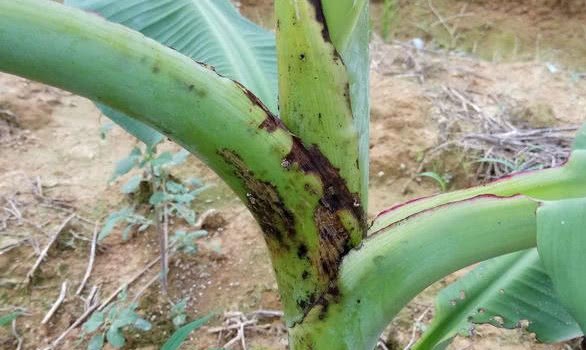
Bananas are one of the best-selling fruits, and they generally grow in tropical and subtropical regions. They are a fruit variety that symbolizes a region, and they are also a fruit that many fruit growers prioritize for planting.
With the recent rise in temperature, the situation for flea beetle control remains fairly serious. It is understood that April to June is the peak period of flea beetle damage, and with their increased resistance to pesticides, banana growers should pay attention to prevention.
I. Symptoms of banana flea beetle
Damage sites.
When the pest occurs, the symptoms are adults eating leaves and larvae eating roots.
Damaged crops.
It mainly damages cruciferous vegetables, and also damages solanaceous, cucurbit and legume vegetables.
II. Occurrence pattern of banana flea beetle
It generally occurs when the temperature is 24-28°C, because egg hatching has certain temperature requirements, and high temperature and high humidity promote the occurrence of the pest.
III. Control methods for banana flea beetle
Agricultural control
The variety layout can be arranged reasonably, and the soil can be deeply plowed and sun-dried before sowing, which can change the living environment and reduce the severity.
Chemical control - chemical agent reference
2.5% deltamethrin microemulsion (moderately toxic) use 20-40 ml/mu spray
40% chlorpyrifos microemulsion (moderately toxic) use 1500-2000 times dilution spray
300 g/L chlorantraniliprole·thiamethoxam suspension concentrate (slightly toxic) use 27.8-33.3 ml/mu spray or root drench
40% fipronil·pyridaben suspension concentrate (moderately toxic) use 24-30 ml/mu spray
20% acetamiprid·pyridaben microemulsion (moderately toxic) use 20-25 ml/mu spray
15% pyridaben microemulsion (moderately toxic) use 75-100 g/mu spray
25% thiamethoxam water-dispersible granules (low toxicity) use 10-15 g/mu spray
45% malathion emulsifiable concentrate (low toxicity) use 80-110 ml/mu spray
20% cypermethrin·dichlorvos emulsifiable concentrate (low toxicity) use 50-75 g/mu spray
28% insecticide·acetamiprid wettable powder (low toxicity) use 30-40 g/mu spray
22.5% cyhalothrin·acetamiprid wettable powder (low toxicity) use 20-30 g/mu spray
42% acetamiprid·pyridaben wettable powder (moderately toxic) use 40-60 g/mu spray
10% cyantraniliprole dispersible oil suspension concentrate (slightly toxic) use 24-28 ml/mu spray
25 g/L bifenthrin emulsifiable concentrate (low toxicity) use 120-140 ml/mu spray
I think there is no need for the editor to say it; everyone knows that banana cultivation requires not only good orchard management but also good disease and pest control, and flea beetle is a common disease of bananas, so everyone must prevent it in advance to avoid serious economic losses. economic losses.