Add this to your Clivia and it will root in three days, grow new leaves in 10 days, and you will never have to worry about blooming
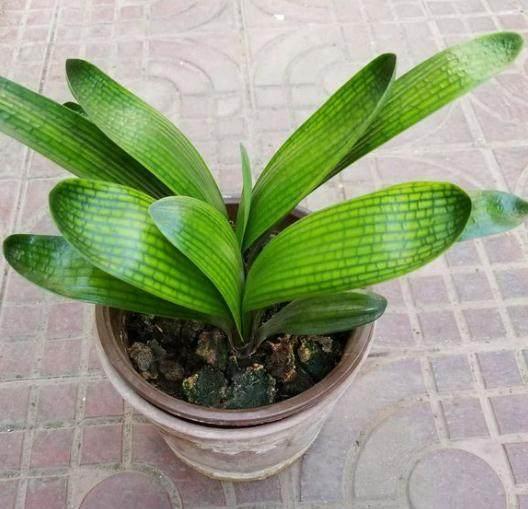
Getting a Clivia to bloom is not hard, as long as you master a few little tricks for caring for it. These days many flower lovers buy a small Clivia plant at the flower market, usually with two or three leaves. At this stage the Clivia should be cared for with extra attention, because the care given early on determines whether it can grow well and whether it will bloom smoothly later.
A Clivia is only at its most beautiful after it blooms, showing its value as a flowering plant. The key to growing flowers well lies in trying things with care. The little tricks for growing Clivia shared today are all summed up by flower lovers, and they are very practical! I hope they can be of help to flower lovers growing Clivia.
Image above from: Clivia Tieba, flower lover: Shang Shan Ruo Shui
Apply monopotassium phosphate fertilizer to Clivia
The reason for applying monopotassium phosphate to Clivia is that it is a fast-acting phosphorus-potassium compound fertilizer, containing 51.7% phosphorus pentoxide and 34.6% potassium oxide. Phosphorus fertilizer can make the stems and branches of trees tough, promote flower bud formation, make flowers large and brightly colored, and enable trees to grow and develop well, send out more new roots, and improve cold and drought resistance. Used on flowers such as Clivia and Christmas cactus, it can make the plant's leaves thick and solid, force flowers, force buds, burst out with many leaves and bloom abundantly.
Fertilization method:
1. Spraying foliar fertilizer: first dissolve the monopotassium phosphate, in a certain ratio, generally 1-2 grams of monopotassium phosphate then add water to 1 kg. When spraying, it is recommended to do so in the morning or evening. Also, remember to rinse the Clivia leaves the next day after spraying.
2. Mix with water and water the flowers directly: take an appropriate amount of monopotassium phosphate, mix with water and water the flowers. This method will not burn the newly emerging leaf buds or flower buds, so it is relatively safe, and it is recommended to use the water-mixed watering more often. Just keep the mixing ratio consistent with the one above.
Source: Clivia Tieba, flower lover: Yu Qing Wang Zi
After being fertilized with monopotassium phosphate, the Clivia will show relatively strong growth; generally a Clivia with two or three leaves will root and sprout new buds in three to five days. Fertilizing two to three times a month can keep the Clivia's leaves glossy green and bright. Yellow leaves and dry tips will not appear. In addition, long-term use of monopotassium phosphate fertilizer is somewhat different from ordinary barnyard manure, chicken manure and other organic fertilizers; compound fertilizer acts more directly. And it can effectively prevent Clivia from "stuck arrows."
The image above is a Clivia with stuck arrows from Clivia Tieba flower lover: namanja.
There are many reasons for Clivia getting stuck arrows. Apart from problems with watering, light and temperature, the main reason is still a lack of fertilizer and nutrients. This causes the arrow to fail to shoot out. So from now on, flower lovers should fertilize more to prevent stuck arrows. At this time in summer, it is the dormant period of Clivia, and its demand for fertilizer is not very high. Before blooming in autumn, that is when it needs a large amount of nitrogen, phosphorus and potassium fertilizer. So remember this first: do not fertilize now. And with the weather hot now, if the arrow shoots early, the blooming period later will be shortened.
Source: Clivia Tieba, flower lover: hgq2008
What kind of flower pot is suitable for growing Clivia?
Clivia usually comes with a pot when first bought, but it is only a plastic pot. However, plastic pots are not breathable, which is not good for the growth and development of Clivia. So it is best to change to a breathable clay pot or ceramic pot. Now is not a suitable time to repot. It is advisable to wait until autumn or next spring. The temperature is just right then, and after repotting and changing the soil, the Clivia's root system will also adapt to the new environment more easily.
That is all for sharing the care knowledge about Clivia!
If you find it useful, remember to like and share it!