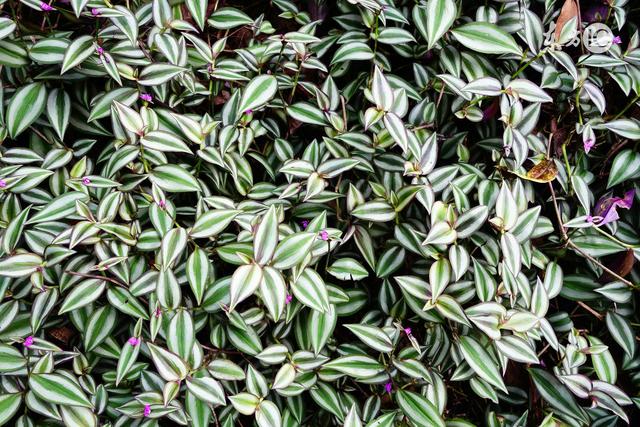
How do you grow Tradescantia zebrina so it grows lush and full?
Tradescantia zebrina aliases - variegated inch plant, hanging spiderwort, inch plant, water inch plant. Place of origin: originally from Mexico, now cultivated in every region of the world. A detailed introduction follows:
1. Soil selection: Tradescantia zebrina is not strict about soil or soil pH, has strong adaptability, and tolerates poor soil fairly well, yet it grows best in fertile, loose, well-draining soil.
2. Planting: (1) Choose five or six healthy, sturdy Tradescantia zebrina stems (plant the five or six together when potting), cut them into small sections 10-15 cm long, and keep the 2 leaves at the top.
(2) Insert the stems into the potting soil to a depth of about 1/3 of the total stem length, then water thoroughly.
(3) Place the pot in a shaded spot for about half a month; once roots form, normal care can begin.
3. Light: Tradescantia zebrina likes a sunny environment and also likes partial shade, and it fears intense direct sunlight and long exposure. Throughout its entire growth process, the sunlight should not be too intense; diffused light is best, otherwise the leaves are easily scorched and their color becomes pale and lacks luster; however, it is also not suitable to keep it in too dim an environment for a long time, otherwise the plant tends to grow leggy, the internodes lengthen, and the markings on the leaves decrease or disappear, affecting its appearance.
4. Temperature: Tradescantia zebrina likes warmth and cannot withstand cold; the suitable growing temperature is 15-25°C. In winter it must be moved indoors to overwinter, and the indoor temperature must not be below 10°C.
5. Fertilizing: Tradescantia zebrina does not have high fertilizer requirements, and fertilizer can be applied in appropriate amounts according to the specific growth condition. When the stems and vines first begin to grow, apply a low-concentration liquid fertilizer once every half month; during the growing season, apply liquid fertilizer once every 2-3 weeks, and at the same time apply phosphorus fertilizer and potassium fertilizer 2-3 times, to promote the growth of branches and leaves and make the leaf surface fresh and glossy.
6. Watering: (1) Tradescantia zebrina likes a humid environment; in daily care the potting soil should be kept moist, not too dry, otherwise the old leaves at the lower part of the plant easily dry up, turn yellow, and drop.
(2) During the growing season the plant has relatively high humidity requirements; besides watering once a day, water should also be sprayed frequently on the leaf surface and around the plant to promote faster growth of branches and leaves.
(3) When the plant is in its dormant period, pay attention to controlling the amount of watering.
7. Pest and disease control: Tradescantia zebrina rarely suffers from diseases or pests.
8. Pruning: (1) Tradescantia zebrina grows quickly under suitable environmental conditions, so during the growing period appropriate pinching, pruning, and adjusting measures should be taken on the vines according to specific needs, so that their distribution is even and the shape is graceful.
(2) In daily care, pay attention to pinching to encourage the plant to sprout new branches and make the plant full.
(3) The roots of Tradescantia zebrina live longer than its leaves; as the stems and vines grow longer and longer, the leaves at the base gradually dry up, turn yellow, and drop. At this point, the overly long branches and leaves should be cut off to encourage new buds and new branches to sprout from the base.
(4) After two years in a pot, all the old vines should be cut off, and when changing the pot in spring, the fibrous roots outside the root ball should be trimmed to encourage it to sprout new stems and vines and roots.