How do you tell the difference between these two diseases on tomatoes?
Gray mold and leaf mold are two common diseases in tomato production, both caused by fungi. Friends who do not grow tomatoes often may find these two diseases similar and hard to tell apart, so here we share the differences between them and their control methods.
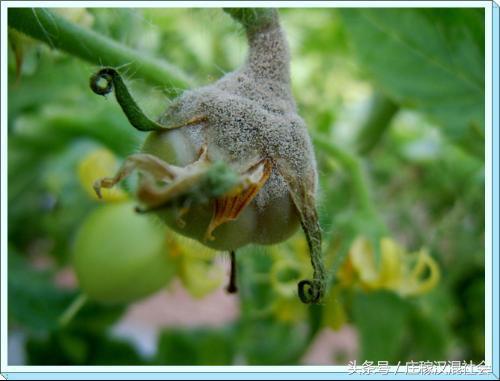
Gray mold
Differences in damage characteristics:
Tomato gray mold can damage flowers, fruit, leaves and stems.FruitInfected green fruit shows the most severe symptoms, with the disease starting from the residual flowers and the receptacle, then spreading to the fruit or the fruit stalk; the skin turns grayish-white and water-soaked, then softens and rots, and the rotting fruit grows a gray mold layer; after the fruit loses water, mummified fruit forms. Leaf spots mostly expand inward from the edge in a V shape, initially water-soaked and light brown, with irregular edges and alternating light and dark concentric rings, growing gray mold, and in severe cases the leaves die. When stems are infected, small water-soaked spots appear first, then develop into long oval or elongated stripes, and under high humidity a grayish-brown mold layer grows and the plant gradually dies.
Tomato leaf moldMainly damages leaves, and sometimes also damages stems, flowers and fruit. When leaves are infected, irregular or oval light yellow spots appear on the leaf surface. On the underside of the leaf, a white mold layer first forms, and it also joins together into patches, with the color changing from white to grayish-purple or dark green.
The disease conditions for the two are not quite the same. Tomato gray mold has strict humidity requirements and is prone to occur under high humidity; tomato leaf mold is prone to occur under high temperature and high humidity.
Leaf mold
Differences in control measures:
Control measures for gray mold: Strengthen ventilation management, water appropriately during the disease period, and prevent condensation. After the disease occurs, promptly remove diseased fruit, diseased leaves and side branches, and burn or deeply bury them. Apply chemicals at key stages: the first time before transplanting, spray seedlings with 50% procymidone wettable powder at 1500 times dilution. The second time, carry the chemical when dipping flowers: add 0.1% of 50% procymidone wettable powder to the prepared 2,4-D or 4-CPA dilution for flower dipping or smearing, so that the flower organs carry the chemical. The third time, apply the chemical one day before watering to promote fruit growth. In the greenhouse, at the early stage of tomato disease, use 3% huimeijing, a smoke agent, at 2250 g per hectare, or spray 45% chlorothalonil and fumigate overnight, once every 7 to 8 days. In addition, at the early stage of disease, spray 50% procymidone wettable powder at 1500 times dilution.
Control measures for leaf mold: Ventilate at the right time, control watering, and drain moisture promptly after watering; plant at appropriate density and prune and remove side shoots in time; apply less nitrogen fertilizer and more phosphorus and potassium fertilizer; organic fertilizer must be composted at high temperature. Before transplanting, fumigate the greenhouse: for every 100 sq m use 250 g sulfur powder plus 500 g sawdust, mix well, divide into packets, light them, and close the greenhouse overnight. At the early stage of disease, spray 50% carbendazim or thiophanate-methyl wettable powder at 500 times dilution, or wuyi mycin (BO-10) aqueous solution at 100 to 150 times dilution, or 2% kasugamycin liquid at 200 mg/L, once every 7 to 10 d, spraying 2 to 3 times in succession.