Expert growers share pesticide application tips, practical experience worth learning
Tianbao Agricultural Technology Service Platform: a professional social service platform built for agricultural input distributors, agricultural cooperatives, planting bases, family farms, sightseeing garden growers and more.
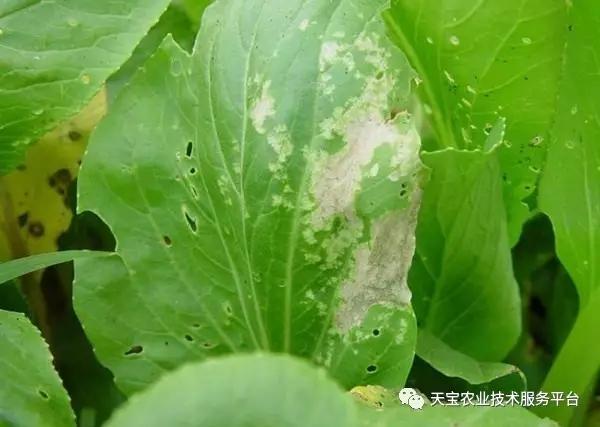 1. Chlorothalonil: cannot be mixed with alkaline pesticides such as lime sulfur, for example propanil, Bordeaux mixture, lime sulfur mixture, etc.
2. Carbendazim: can be mixed with general fungicides, but when mixed with insecticides or acaricides it must be used immediately after mixing, and it should not be mixed with alkaline agents.
3. 64% Sandoz (oxadixyl plus mancozeb): made from a mixed formulation of oxadixyl and mancozeb, it has systemic translaminar and contact action, controls downy mildew family and white rust family, is stable on crops and not prone to causing phytotoxicity, and various crops have high tolerance to Sandoz, so it will not cause phytotoxicity. Sandoz combined with agricultural streptomycin is prohibited during the cucumber seedling stage.
4. Oxadixyl: has very high efficacy against pathogens of the downy mildew order, with protective and curative action and a long residual period. Mixed with mancozeb, its efficacy is higher than when mixed with folpet or copper preparations, such as 64% oxadixyl plus mancozeb wettable powder (Sandoz).
5. Tomato gray leaf spot: for every 667 sq m, 200 g of 15% Keljunling smoke fungicide (Sumilex plus chlorothalonil) can be used for fumigation treatment.
6. How to use pesticides to control tomato leaf mold: (1) Broad-spectrum fungicides: such as chlorothalonil (Daconil), iprodione (Rovral), thiophanate-methyl, etc. The advantages of this type of agent are: broad disease-control spectrum, safety, low price and good preventive effect. The disadvantages are: poor curative effect. Therefore, they should be used before disease onset, or used together with agents that have outstanding curative effects. (2) Azole agents: such as myclobutanil (Systhane), triflumizole (Trifmine), difenoconazole (Score), etc. Their advantages are significant curative effect, low dosage, strong systemic action and long residual period; their disadvantage is that a large dosage will inhibit crop growth. If the number of consecutive applications exceeds three times, it is very likely to cause tomato leaves to become smaller, harder, more brittle, blackened and so on, so they should be used with caution, and especially in winter low-temperature periods they should be used even less, with the exception of Score. When using this type of agent, it can be combined with some growth regulators, such as brassinolide (Shidayuan, Yunda 120, etc.), cytokinins and so on, to reduce the side effect of inhibiting tomato growth.
(3) Antibiotic agents: such as kasugamycin, polyoxin, Nongkang 120, etc. The advantages of these agents are: safety, broad spectrum, strong systemic action and outstanding preventive effect, but their curative effect is relatively poor. Based on the characteristics of the above agents, when using agents to control tomato leaf mold, the following applications should be made: when leaves have no lesions or the incidence rate is below 5%, broad-spectrum fungicides, or Score, or antibiotic fungicides can be selected, and they can also be mixed for use. When the incidence rate is above 5% and there is a trend of spread, azole fungicides should be selected. Of course, they need to be used together with plant growth regulators such as brassinolide and cytokinins. When the disease is especially severe, the method of mixing azole agents with broad-spectrum agents or antibiotic agents can be used for comprehensive control.
7. Amistar: azoxystrobin. Amistar has a very broad fungicidal spectrum and is effective against most pathogenic fungi in the four major groups of disease-causing fungi: Ascomycota, Basidiomycota, Deuteromycota and Oomycota. Treating multiple diseases with one agent is a prominent feature of Amistar. Its mode of action differs from existing fungicides, its activity is high, and at present the resistance of pathogens to Amistar is relatively weak. Its strongest advantage is preventive and protective action, not its curative action.
Its preventive and protective effect is from more than ten times to several tens of times that of ordinary protective fungicides, while its curative effect is almost not much different from ordinary systemic curative fungicides. Therefore, to give full play to the effect of Amistar, it must be used before disease onset or in the early stage of disease onset. When Amistar is used in the severe stage of disease, the disease-control effect will not be significantly different from that of other systemic fungicides. In order to give full play to the disease-prevention and yield-increasing effects of Amistar, according to experience from various places, the most suitable times to use Amistar are the following three periods: first, at the seedling stage on seedbeds; second, before flowering; third, in the early stage of fruit growth. Sufficient spray water volume is also an important factor in ensuring the effect of Amistar. In Shouguang, generally a 50-60 m long greenhouse at the mature plant stage (tomato, cucumber, eggplant, sweet pepper) needs at least 4 sprayer tanks of water (120 jin), and an 80 m long greenhouse needs 6-7 sprayer tanks of water. The concentration used is all 1500-fold solution (add 1 packet of Amistar per sprayer tank of water), with an interval of 10-15 days between each spraying, for 2-3 consecutive sprays. Amistar is generally used alone, and this must be noted.
8. Kocide: belongs to copper hydroxide, and its trade names also include Guanjuntong, Fenghuan, Landun, etc. On vegetables it can be used to control bacterial diseases. Because of its strong protective action, it can be used before disease onset to control fungal and oomycete diseases. Because it is inorganic copper and also alkaline, it can only be mixed with organic fungicides that are structurally stable, such as chlorothalonil, etc. It cannot be mixed with acidic agents. It is also not suitable to mix with agents containing metal ions or foliar fertilizers. It is also not suitable to mix with thiram, thiophanate-methyl, carbendazim, diethofencarb and so on that undergo chemical reactions when mixed, and mixing should also be avoided with those that produce sedimentation, coagulation and other colloid-destroying phenomena after mixing. For those not yet clear, a test should be done first before determining, so as to avoid phytotoxicity.
9. Zineb: can control diseases caused by many fungi, but its effect on powdery mildew is poor. For controlling tomato early blight, late blight, leaf spot, leaf mold, anthracnose and gray mold, and eggplant Phytophthora blight, brown streak disease and so on, note that Cucurbitaceae vegetables are sensitive to zinc, so the concentration must be strictly controlled when applying and must not be too high.
10. Propineb: is a broad-spectrum, fast-acting protective fungicide. Other name: Antracol. For controlling Chinese cabbage downy mildew, cucumber downy mildew, and tomato early and late blight, propineb is a protective fungicide and must be sprayed before disease onset or at the initial stage. It must not be mixed with copper preparations or alkaline agents.
11. Cymoxanil: its mechanism and characteristics mainly prevent pathogen spores from germinating, and it also has a killing effect on pathogens that have invaded the host. It has protective, curative and systemic action, and is effective against downy mildew and blight. Used alone, cymoxanil has a short efficacy period; mixed with protective fungicides such as propineb, it can extend the residual period. Suitable crops include cucumber, grape, pepper, potato, tomato and so on. Targets of control include downy mildew and blight and so on.
12. Dimethomorph: other Chinese name: Acrobat. Widely used for controlling vegetable downy mildew, blight, seedling damping-off, tobacco black shank and other diseases caused by fungi of the oomycete class in the phylum Heterokontophyta, with systemic activity.