Pomelo Cultivation, Management, and Shaping and Pruning Techniques
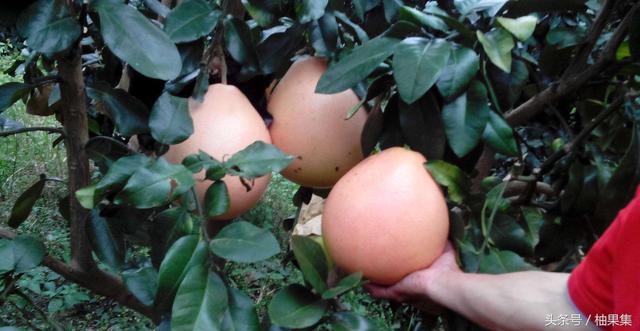
Pomelo leaves resemble those of mandarin and tangerine, but the petioles have broad wings, and the lower leaf surface and young branches have short fine hairs. The flowers are large and white. The fruit is large, spherical or nearly pear-shaped, lemon-yellow in color; the flesh is white or red, divided into segments that separate easily, with a pleasant tart flavor. Among the many autumn fruits, the pomelo is arguably the largest, generally weighing over 1 kg. It ripens around the 15th day of the 8th lunar month each year, has thick skin and stores well, generally keeping for three months without losing its fragrance, which is why it is called the "natural fruit can." The pomelo's round shape symbolizes reunion, making it a fitting fruit for festivals. More importantly, the Chinese word for pomelo, "you," is homophones with "you" meaning blessing and protection, so the pomelo represents protecting one's children and is regarded as having an auspicious meaning. Eating pomelo during the New Year symbolizes wealth and prosperity filling the home; "you" (pomelo) is homophones with "you" (to have), and a big pomelo means having plenty, removing bad luck and bringing good fortune for the new year. The world's four famous pomelos: Wendan pomelo, Pingshan pomelo, Shatian pomelo, and Siam pomelo.
I.Planting
On fertile, relatively well-watered land or sites with good water source conditions.
1,Planting time
Generally, spring and autumn rainy seasons are suitable. Spring from late February to late April; autumn from mid-September to mid-October. Where conditions permit, planting can also be done in other seasons, but not under conditions of low winter temperatures and summer drought.
2,Planting density
Row spacing of 4×4 m or 4×5 m, generally about 40 plants per mu, or dwarfed high-density planting of 50-60 plants per mu.
3,Planting method
① Before planting, dig a large pit 1 m square, apply plenty of organic fertilizer and an appropriate amount of phosphate fertilizer as base fertilizer, and backfill soil to 20-30 cm above the ground.
② When planting, gently place the seedling into the hole, plant with loose fine soil, press the fine soil around the root ball firmly by hand, and keep the graft union exposed above the ground.
③ After planting, shape the basin mound to 20 cm above the ground and water thoroughly to settle the roots.
II. Soil cultivation
1,Deep plowing and hole expansion to mature the soil.
Deep plowing to improve the soil and mature the soil must begin from the establishment of the orchard and expand year by year. For young trees, dig ring-shaped trenches outside the planting hole and plow deeply year by year. In mature pomelo orchards, deep plowing in strip trenches can be done around the outer edge of the canopy, about 0.5-0.7 m deep and wide, with layered burying of green manure and other organic and inorganic fertilizers; deep plowing can be rotated every other year, every other row, or every plant each year.
2,Plant green manure extensively to use and nourish the land.
Plant green manure extensively to cover the ground; in summer it prevents erosion, lowers soil temperature, increases air humidity and suppresses weeds, while also increasing soil organic matter and improving soil fertility. If intercropped with legumes, vegetables, etc., it can also increase early returns; their stems and residual leaves can be used as cover and turned into the soil to increase soil organic matter.
3,Intertillage and earthing up.
Intertillage should be combined with weed control, generally 3-4 times per year, that is, after fruit harvest in winter, and in summer or autumn combined with sowing and intercropping each once. The intertillage depth is 10-15 cm (when combined with intercropping and sowing, it should be appropriately deeper), shallower the closer to the trunk to avoid damaging large roots. Earthing up is best done before the dry season arrives or after fruit harvest in winter. On gentle slopes, earth up once every 3-4 years; in places with steep slopes and severe erosion, earth up once every other year.
III. Fertilization
Young trees are small with young tender roots, so frequent light applications are suitable, 5-6 times a year. For fruiting trees, generally 4 applications are needed, namely the revival fertilizer, bud-promoting fertilizer, fruit-stabilizing fertilizer, and fruit-strengthening fertilizer.
1,Revival fertilizer (base fertilizer)
Apply before and after fruit harvest; the amount applied accounts for half of the annual fertilizer application. Apply large amounts of slow-release fertilizers such as green manure, compost, barnyard manure, and cake fertilizer, together with quick-acting nitrogen and phosphate fertilizers.
2,Bud-promoting fertilizer (pre-flowering fertilizer)
Generally carried out in February-March; this fertilizer should be mainly quick-acting nitrogen fertilizer, mainly using human and animal manure, appropriately combined with urea.
3,Fruit-stabilizing fertilizer
Apply quick-acting nitrogen and phosphate fertilizers half a month before the June fruit drop; decomposed human and animal manure may be used, and a 1% superphosphate extract may be sprayed.
4,Fruit-strengthening fertilizer
Apply in mid-to-late June, using quick-acting nitrogen fertilizer and phosphate-potassium fertilizer.
IV. Pomelo shaping and pruning
1. The trunk height for pomelo should be 40-60 cm, and a total of 5-6 main branches should be cultivated. The biological characteristics of pomelo trees differ from other sweet oranges and red tangerines: the tree vigor is strong, the tree body is short, and the fruit is large, after which most or all of the fruiting mother branches are on the outside of the canopy. We must understand these characteristics in order to master pruning techniques.
2. Fruiting mother branches: the shoots that produce fruiting branches are called fruiting mother branches. Fruiting mother branches can be roughly divided into three types:
1. Small lateral branches growing from large lateral branches. Such branches grow weakly and cannot extend out of the canopy as nutrient branches. After continuing to grow for 2-3 years, they produce leafless fruiting mother branches and bear fruit after shooting;
2. Leafless branches. Such branches do not have sufficient nutritional conditions for flowering and sprouting, and generally do not flower and bear fruit until the third year;
3. Flower- and fruit-dropping branches (commonly called blind-eye branches). They have no sprouted buds, and flower and bear fruit the following year.
3. Pomelo fruiting branches are formed from a bud at the tip of the fruiting mother branch or several nearby buds. Fruiting branches are divided into leafy fruiting branches, fruiting branches with both flowers and leaves, and leafless fruiting branches. One flower or at least one flower; fruiting branches with no inflorescence and few-leaf inflorescences are the best.
4. The purpose and significance of shaping and pruning in pomelo planting are to make the outside of the canopy well ventilated and light-transmitting, so that the fruiting mother branches inside the canopy are well nourished, resulting in more fruit and good quality.
5. The principles of shaping and pruning in pomelo planting are to keep the outside open while the inside is not empty, prune heavily at the top, prune lightly on all sides, prune heavily at the core, and prune lightly on the outside.
6. Methods of shaping and pruning in pomelo planting: take care to preserve the relatively weak leafless branches on the lateral branches outside the canopy, as these are excellent fruiting mother branches; those with vigorous vegetative growth and overly dense branches and leaves should be pruned heavily, while those with weaker vegetative growth should be pruned lightly;
7. Timing of shaping and pruning in pomelo planting and the branches that should be cut: after fruit harvest, cut off the upward vertical and downward-hanging branches within the canopy, and remove withered branches, diseased and pest-damaged branches, hidden branches, and heavily overlapping and crossing branches. Summer pruning: in winter, remove some overly dense and overly vigorous new shoots, thin out overly dense weak branches, and shorten excessive growth.
To learn more about honey pomelo, you can visit the Pinghe Guanxi Honey Pomelo Industry Network (http://gxmycy.99114.com/), a professional online trading platform for honey pomelo, providing honey pomelo price information for honey pomelo buyers nationwide. There are also honey pomelo franchisees from all over the country, and it can also provide everyone with popular honey pomelo wholesale information. It is a B2B platform not to be missed for brand promotion in the honey pomelo industry.