2017 No-Till Direct-Seeded Rice Cultivation Series Part 5: Getting to Know Paddy Field Weeds
Arriving at the field, the seedlings were not growing as well as I had imagined. The field was full of weeds, and the ditch had no water left. I went to the field to pull weeds, to observe and get to know them. They have no one to manage them, yet their vitality grows ever more vigorous; their self-management ability is extraordinary - sprouting, growing, reproducing. No one pulls their weeds, fertilizes them, or picks off their pests; not many people praise them, admire them, or care for them. They grow quietly, blooming and fading, year after year, becoming ever more vibrant.
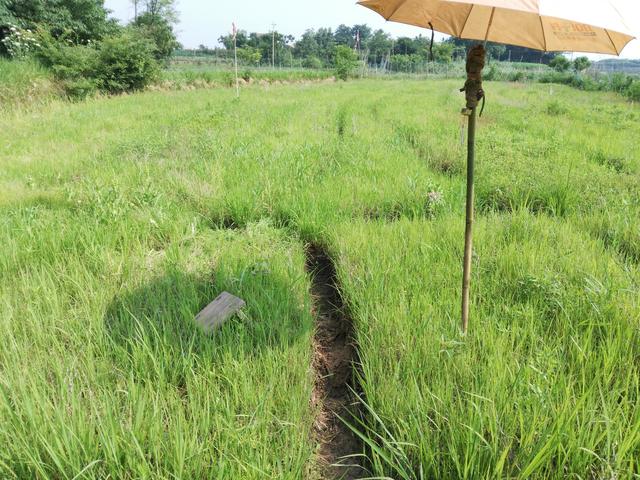
Weeds and Seedlings Growing Together
Whether under sun and dew, raging storms, or scorching heat, whether in fertile or barren soil, they always grow tenaciously right where they are. Relying on the soil beneath them and their own resilience, they take root and expand the ground beneath them, doing their part to clothe the earth in green and providing a living space for tiny creatures. They sprout and root from the soil, sending the sunlight, rain, and natural essence they absorb deep into the soil. Soil and weeds promote each other and advance together, nurturing more life.
Cutting Grass in the Paddy Field
With direct-seeded rice grains, the rice seedlings growing in the paddy field keep company with various weeds and grow together. They can learn from each other, learning from these weeds' extraordinary vitality and self-management ability, and receive training in the natural environment. Rice grown this way will have vitality and self-management ability just like the weeds.
An Independent Water Source in the Surrounding Ditch
Simulating nature, learning from nature, and growing crops with natural no-till, direct-seeding methods - the people doing this are also receiving a different kind of training. It is not about doing nothing, but about using nature's favorable aspects to develop agricultural production and thereby transform nature. Digging ditches and channels in the field to store natural rainwater, with weeds growing thick on the field ridges and banks, creates a good natural environment for frogs and other creatures.
Freshly Cut Grass
Using conventional farmer-saved seeds, maintaining the soil structure of alternating furrows and ridges in the field, and creating a micro-terrain with hills and water, (without tilling) only clearing ditches, without spraying herbicides, sealants, or applying pesticides, chemical fertilizers, or hormones, the soil is free from the invasion of various external substances and can freely breathe sunlight and rain, allowing the soil to exert its own natural energy. Various biological species can fully grow on such soil.
Seedlings Grown from Rice Seeds Broadcast at Will During Grain Rain
The various organisms growing on this land breathe and grow freely and naturally, and are therefore healthier, and their vitality is outstanding too.
From the four paddy fields, I discovered the ideal form, and they will be the ideal paddy fields of the future.
Winter grass withers, seedlings grow. No tilling the field, no pumping water. No weeding, no spraying. Ecological field, bird paradise. Catching insects to eat, busy delivering manure. Seedlings dense, frog stage. Frog catchers, return empty-handed.
Plantain (Plantago asiatica) Among the Rice Seedlings
The weeding task is still great. During the grass-cutting process, I got to know several kinds of Chinese medicinal herbs: Mantianxing (Gypsophila oldhamiana), Ebushicao (Centipeda minima), Litoucao (Viola japonica), Cheqianzi (Plantago seed), Shuiwugong (Kyllinga brevifolia), and Xiangfu (Cyperus rotundus). The vast fields are a great school, a school without textbooks. Learning from nature is a highly comprehensive discipline. Here one can not only train oneself and identify herbs, but in the future also gather and prepare herbal medicines oneself to treat illnesses; in production practice, research the ideal paddy field - simple and easy, and high-yielding too.
Soybeans Broadcast at Will on the High Ridges
Look, in the field where last time I cut grass on the ridges, cleared the ditches, and broadcast soybeans at will, how vigorously these soybean seedlings are growing! These are soybean seeds that have been through three years of direct-seeding training; they already possess a natural spirit and wildness. Broadcast at will, they grow wherever they land. By next year, the weeds will have become the weaker group. By next year, direct-seeded paddy fields will have even more practical experience. In the not-too-distant future, the ideal paddy field will surely be realized.