Large rural succulent agave blooms only once in its lifetime, yet its toxic sap can be brewed into fine liquor
These days succulents are popular to grow in rural areas too, simply because they stay green all year round and are plump and lovely. In some farmers' homes you will find a large succulent that looks like aloe but is bigger than aloe - it is the famous "agave".
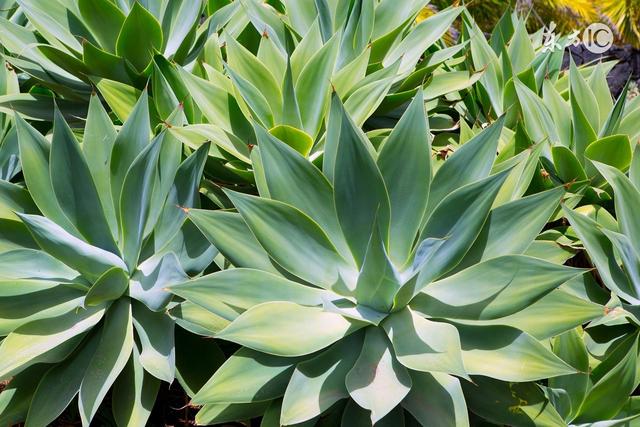
The agave could be called an oddity among succulents: it blooms only once in its lifetime, and its sap is toxic yet can be brewed into fine liquor. It is precisely this distinctiveness that makes it seem all the more noble and coolly elegant.
The agave is a perennial evergreen plant of the Asparagaceae family, also known as dragon's tongue palm and sisal hemp. It originated in Central America and became known to the world through the fame of agave liquor, and nowadays its traces can be found even in small rural courtyards.
In its place of origin, the agave takes about 60 years to bloom once, with a flower spike reaching about 7 m long, and because blooming exhausts the energy it has accumulated over decades, it generally withers and dies soon after flowering. The agave does not bloom easily, but it propagates easily; in rural areas today it is generally propagated by division or cuttings, and can be said to "root as soon as it is stuck in".
The agave's leaves are thick and fleshy, and breaking a leaf releases a large amount of sticky sap. It should be noted that the agave's sap is toxic, and if it accidentally touches the skin it causes a strong burning sensation.
What truly made the agave famous worldwide is the agave liquor brewed from the sap of its bulb. Agave liquor is the national drink of Mexico, and it has a history of over a thousand years in the Central American region. The agave is juicy and rich in sugar, making it extremely suitable for fermentation into liquor; later, after European colonists introduced distillation to the Americas, agave liquor became higher in alcohol content and mellower in taste, and gradually became popular around the world.
Today more and more agaves are grown in our rural areas, because of their ornamental value: placing an agave in a courtyard or a living room is noble and imposing, and it can also purify the air.