New soilless cultivation technology becomes a new highlight for increasing farmers' income
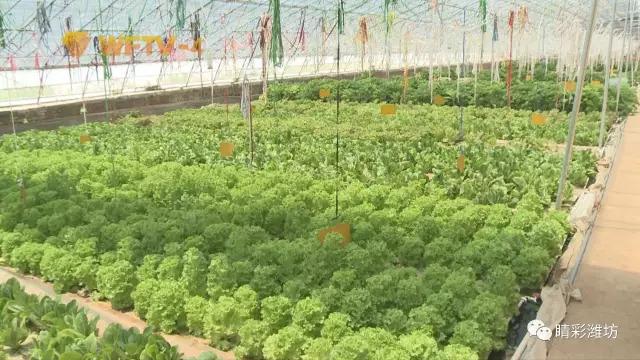
Walking into the vegetable planting base of the Phoenix Ridge Fruit and Vegetable Cooperative in Bunan Tou Village, rows of hydroponic vegetables are neatly arranged, with purple and green plants interlaced and particularly eye-catching. The prepared biogas slurry flows in from one side through planned pipes, is absorbed as the vegetables grow, and then flows out from the other side, creating a vibrant scene inside the greenhouse.
So-called soilless cultivation means using the new soilless "hydroponic" technology during the cultivation process, with not a single grain of fertilizer applied, not a single drop of pesticide sprayed, and not a single grain of soil used. Now all their vegetables are grown with nutrient solution, including green-leaf and purple-leaf romaine lettuce, purple cabbage and other vegetables. This not only improves land utilization but also saves effort in management.
At present, summer vegetables are in the peak marketing season, and vegetable prices are continuously falling. Tomatoes on the market cost about 1.5 yuan per jin, while tomatoes in the planting base cost 6 yuan per jin, yet are still in short supply.
It is understood that Bunan Tou Village has a total of 296 households and 1,121 people. The whole village has 1,470 mu of cultivated land, mainly sandy soil. Village director Wang Jiangtang told us that three years ago this place was still wasteland, and villagers could only grow wheat, corn and other crops on this sandy land, with a per capita annual income of around 10,000 yuan.
In 2010, in order to strengthen the village collective economy and increase farmers' income, Bunan Tou Village successively established four rural cooperatives to develop soilless cultivation planting, and established the Phoenix Ridge Fruit and Vegetable Professional Cooperative. In a small village of 1,121 people, this formed an industrial development pattern in which the village collective economy, cooperative economy, and household contract management developed together. Taking the development of organic vegetables and melon and fruit planting as its platform, relying on the aquatic vegetable base, and cooperating with food export enterprises, the cooperative realized a one-stop service system integrating agricultural planting, agricultural product processing, and sales in the village, achieved integrated industrial development, and drove farmers to employment and prosperity. Today, the village's per capita income is more than 30,000 yuan, and the village's elderly also have a stable income.
At present, the cooperative has developed 160 member households, built 37 greenhouses, and has more than 600 mu of melon and fruit planting area. It has uniformly registered the "Quanziya" trademark and obtained national organic food certification. Bunan Tou Village has also become a well-known advanced village and has been rated as a provincial demonstration village for the construction of a "Rural Civilized Homeland" and a municipal-level civilized village.