Detailed Explanation of the Key Technical Points of Grape Cultivation
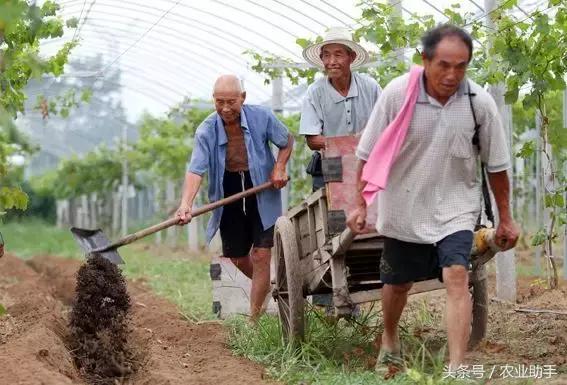
Although grapes are a vine fruit tree, they have a well-developed root system, many canes and large leaves, vigorous growth, high fruit yield, and a long lifespan, so their nutrient requirements are relatively high as well.
Fertilizer, as the main source of nutrients for grapevines, is indispensable in production and is the foundation for normal growth of the vine and the production of high-quality fruit.
Fertilizer Requirements of Grapes
Characteristic of Stored Nutrients
Grapes are perennial vines that store large amounts of nutrients in their roots and canes. These stored substances are transported back from the leaves to the branches and root system in late summer and early autumn, and in early spring are mobilized from the storage organs to new growth points, supplying the needs of continued bud differentiation and budding in the early growth stage, as well as the growth and development of shoots and leaves.Therefore, stored nutrients play an important role in ensuring a robust vine, high and stable yields.
Relatively Large Fertilizer Demand
Grapes grow vigorously, with luxuriant branches and leaves and a large fruit load, so they demand relatively more soil nutrients.Data shows that for every 100kg of fruit produced, a grapevine needs to absorb 0.3~0.6kg of pure nitrogen, 0.1~0.3kg of phosphorus pentoxide, 0.3~0.65kg of potassium oxide, 0.1kg of magnesium, and 0.05kg of sulfur from the soil.
Relatively Large Potassium Fertilizer Demand
Grapes are a typical potassium-loving fruit tree, requiring large amounts of potassium throughout the growing season,and their demand ranks first among the three major elements, far exceeding other fruit trees, at 1.7 times that of pears and 2.25 times that of apples. Under general production conditions, the ratio of nitrogen, phosphorus, and potassium required by grapes is 1:0.5:1.2.
Relatively Sensitive to Calcium
When calcium is deficient, grape leaves become lighter in color, the interveinal areas and leaf margins of young leaves turn chlorotic, the growing point at the shoot tip dies, flowers wither, sugar accumulation in fruit is low, firmness decreases, fruit is unsuitable for transport, fruit cracking is frequent, quality is poor, new roots are short and thick, plant growth is slow, and yield is low.Therefore, calcium fertilizer should be applied in a timely and reasonable manner in production to improve grape yield and quality.
Stage-Specific Fertilizer Requirements
The elements and quantities required by grapes differ across the various growth and development stages throughout the year.For example, a large amount of nitrogen nutrition is needed from budding to flowering, a sufficient supply of boron fertilizer is needed during flowering, large amounts of phosphorus and potassium are needed during berry development and flower bud differentiation, calcium nutrition is needed during fruit ripening, and a certain amount of nitrogen nutrition is still needed after harvest.
Current Problems in Grape Fertilization
Long-term Reliance on Chemical Fertilizers, Severely Insufficient Organic Fertilizer
Long-term heavy application of chemical fertilizers can cause soil compaction and deterioration of soil quality, reducing the organic matter content, microbial activity, and humic acid content in the soil, thereby lowering the utilization rate of chemical fertilizers.
Long-term application of only chemical fertilizers, without organic fertilizer or with only a small amount, will lead to increasingly poor fruit quality, worse fruit coloration, weaker flesh flavor, widespread occurrence of physiological diseases, decreased fruit storability, and a lower rate of premium fruit.
Overemphasizing Nitrogen Fertilizer, Neglecting Potassium Fertilizer
Excessive application of nitrogen fertilizer can seriously affect the absorption of calcium, potassium, and other elements by grapes, leading to nutritional imbalance in grapes, non-plump buds, thin and large leaves, shoots that cannot stop growing in time, difficulty in flower bud formation, increased physiological diseases, reduced quality, decreased vine resistance, and induced massive outbreaks of diseases such as sour rot and powdery mildew.
Potassium plays a catalytic role in the metabolic processes of grapes, can promote photosynthesis, regulate the opening and closing of stomata, reduce plant transpiration, and improve resistance; potassium plays a very important role in the process of fruit quality formation, promoting fruit enlargement, increasing sugar content, promoting coloration, and improving quality. However, insufficient use of potassium fertilizer will weaken the vine's growth vigor, reduce resistance, weaken new shoot growth, cause early cessation of growth, cause leaf margins to lose green and turn yellow and often curl upward, then gradually turn brown and scorch, leading to premature leaf drop.
Emphasizing Major Elements, Neglecting the Application of Medium and Trace Elements
Grapes are a perennial fruit tree; once planted and established, they remain for many years. In the fertilization process, fruit growers often only focus on supplementing major elements such as nitrogen, phosphorus, and potassium, and rarely apply medium and trace element fertilizers.
This often leads to soil nutrient imbalance, low fertilizer utilization rate, severe deficiency symptoms, increased physiological diseases, declining grape quality year by year, and difficulty in raising the premium fruit rate. Therefore, when fertilizing, attention should be paid not only to timely supplementation of major elements but also to appropriate supplementation of medium and trace elements.
Uncertainty and Arbitrariness in Fertilization Timing
The fertilizer requirement period of fruit trees is closely related to the growth rhythm of the tree. Fruit growers often determine fertilization timing based on human factors rather than in conjunction with the fertilizer requirement patterns of grapes; this not only fails to achieve the purpose of fertilization but may also cause losses in production.
In recent years, orchard application of base fertilizer according to schedule is often delayed until spring, so that the base fertilizer effect cannot be brought into play in time for use by the vine during its peak fertilizer requirement period, and the fertilizer effect is delayed, promoting vegetative growth so that new shoots cannot stop growing in time or sprout again, inhibiting reproductive growth, and affecting the vine's growth and fruiting the following year; moreover, excessive vegetative growth of the vine will reduce the nutrients transported to the fruit, affecting fruit yield and quality.
Improper Soil Fertilization Methods, Reduced Fertilizer Utilization Rate
In soil fertilization, the depth of soil fertilization and the distance from the root system should be well controlled. When fertilizing, a certain amount of fertilizer should be spread over a larger area, fully mixed with the soil, and fertilization should be combined with irrigation.
If fertilizer is applied too shallowly, it is easily leached away, causing waste of fertilizer; if applied too deeply, it is too far from the root mass and cannot be effectively used by the plant, also reducing fertilizer efficiency.
If the fertilizer is not mixed evenly with the soil, local concentration will be too high, causing root burn, affecting plant growth, reducing yield, and even leading to plant death.
Four Major Principles of Grape Fertilization
Combination of Organic and Inorganic
Grape fertilization must be based on increasing organic fertilizer application and reducing chemical fertilizer input.Increasing organic fertilizer application can raise soil organic matter content, improve soil physical, chemical, and biological properties, enhance soil water and fertilizer retention capacity, strengthen soil microbial activity, and promote increased chemical fertilizer utilization rate.
In addition to the amount applied, attention should also be paid to the form and type of organic fertilizer application.For example, combining straw return, planting green manure, etc., with the application of farmyard manure and commercial organic fertilizer can better build soil fertility and achieve high yield, high quality, and sustainable development.
For orchards with relatively serious soil problems, in addition to increasing organic fertilizer application, Sea Elf biostimulant (root application type) should also be used in conjunction to improve soil physical and chemical properties.
Base Fertilizer as the Mainstay, Skillful Application of Topdressing
Generally, base fertilizer should account for 50~70% of the total fertilization amount. Specific fertilization should also be based on factors such as soil fertility, tree age, growth vigor, and yield, adopting a combination of root application and foliar spraying.
Under normal circumstances, follow the principles of applying more to large trees and less to small trees; more to weak trees and less to strong trees; more to trees with more fruit and less to trees with less fruit.
Combination of Major, Medium, and Trace Fertilizers
Nitrogen, phosphorus, and potassium, the three major element fertilizers, should be applied in larger amounts; medium and trace element fertilizers should be applied in appropriate amounts; chlorine-containing compound fertilizers and nitrate nitrogen fertilizers should not be applied; and farmyard manure with poor fertilizer efficiency should be applied in larger amounts.