Beijing resumes cultivation of old-flavour vegetables to preserve traditional tastes
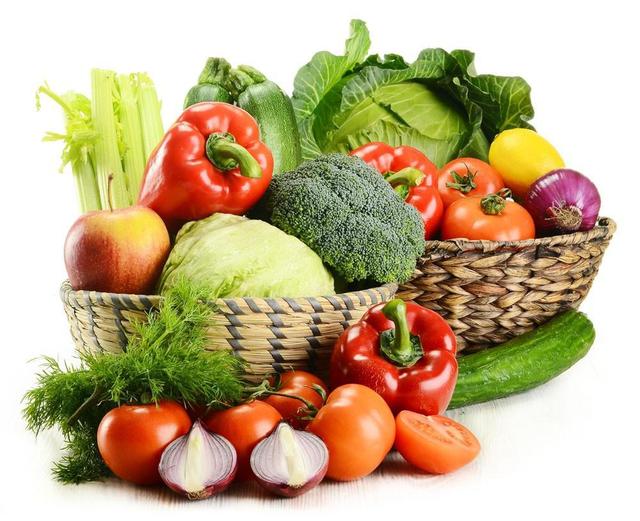
Faced with the dazzling array of vegetables on the dinner table, more and more residents are beginning to miss the old flavours they remember. Reporters recently learned that the lineup of old-flavour vegetables already restored to cultivation in the city has gained new members: six-leaf eggplant, seven-leaf eggplant, nine-leaf eggplant, and persimmon-cake winter melon - 4 kinds of old-flavour vegetables in total are expected to return to residents' dinner tables this year. In addition, varieties such as two-tassel radish, which is crisp in texture and suitable for making pickles, are also in the next stage of exploration and restoration.
This year, Chaoyang District planted 200 mu of old-flavour vegetables, and plans to expand to 300 mu next year. Recently, reporters saw at the Beijing Jingchao Garden Agricultural Development Center that several vegetable greenhouses there grow old-flavour vegetables. Greenhouse No. 1 grows Beijing autumn cucumber, Greenhouse No. 2 grows Beijing spiny cucumber, and another 3 greenhouses respectively grow the newly introduced six-leaf eggplant, seven-leaf eggplant, and nine-leaf eggplant. In front of each vegetable bed is a sign stating the eggplant's place of origin and characteristics. The seven-leaf eggplant is named for the eggplant emerging at the seventh leaf. Inside the greenhouse, eggplants poke their heads out from between the leaves, with green tops and deep purple, almost black, around the calyx, already grown to the size of a fist. "Its flesh is delicate, crisp and tender, with a fragrant taste. It is the best ingredient for the old Beijing famous dishes braised eggplant and boiled salted eggplant. Some experts have verified that the 'qie xiang' that Granny Liu ate when she visited the Grand View Garden in 'Dream of the Red Chamber' was made with seven-leaf eggplant," introduced Cao Hua, a vegetable expert at the Municipal Agricultural Technology Extension Station. The six-leaf eggplant is early-maturing, afraid of heat but not of cold; the nine-leaf eggplant matures late, afraid of cold but not of heat; while the seven-leaf eggplant is afraid of neither cold nor heat and has the best quality. "These 3 kinds of eggplant are currently grown at vegetable bases such as Jingchao Garden, Xiedao, and Xiangjulou in Changping District. Their cultivation and harvesting follow the seasons, allowing residents to have eggplant for 9 months of the year." The persimmon-cake winter melon restored this time is named for its flat, round shape like a persimmon cake, and has a rich flavour. Testing has shown that its mineral and vitamin content is relatively high. From May to July and September to October each year, persimmon-cake winter melon is at its best quality, with a yield of up to 2500 kg per mu. Mutton simmered with winter melon made from it is a famous old Beijing dish, and stuffed winter melon is also very distinctive.
Liu Shiyong, section chief of the Urban Agriculture Section of the Chaoyang District Crop Farming and Livestock Breeding Service Center, introduced that since 2012 Chaoyang District has been introducing old-flavour vegetables such as mosaic-leaf xinlimei radish, small walnut-veined cabbage, and apple-green tomato. This year it also introduced persimmon-cake winter melon on a small scale. "Many people call to look for them. Before the vegetables are even ripe, people are already waiting to pick them." Liu Shiyong said that these old-flavour vegetables are currently grown at Xiedao, Nonggengyuan, Zhongnong Chunyu, Jingcheng Liyuan, and Jintianmao Planting Park.
This year, the city has restored more than 1000 mu of old-flavour vegetables to cultivation. Cao Hua introduced that the exploration and restoration of old-flavour vegetable varieties in the city has now lasted 8 years. In 2009, the mosaic-leaf xinlimei radish, which has a cultivation history of over a hundred years in the city, was restored. This radish has thin skin, crisp flesh, and abundant juice, with bright red flesh. Testing has determined that its content of vitamin C, riboflavin, iron, and other nutrients is even higher than that of pears, hence the saying "radish beats pear." It was once a tribute item for the Qing court. After that, from 2010 to 2011, the city successively restored large walnut-veined cabbage and small walnut-veined cabbage. The leaves of these two cabbages are covered with wrinkles like walnut shells, but the leaves are tender with few stalks, taste fresh and sweet, have little fibre, are easy to cook, and are cold-resistant and easy to store. However, because their yield is relatively low, the newly promoted hybrid cabbages later surpassed them. From 2012 to 2015, at a frequency of one to two varieties per year, the city successively restored varieties such as Beijing spiny cucumber, apple-green tomato, Beijing autumn cucumber, whip-pole red carrot, and five-colour leek. From last year to now, six-leaf eggplant, seven-leaf eggplant, nine-leaf eggplant, and persimmon-cake winter melon have been successfully restored, and 50 mu have already been replanted. To date, all districts in the city have increased their restoration of old-flavour vegetables. Among them, Xiangjulou in Changping District grows varieties such as persimmon-cake winter melon; Shunyi District grows six-leaf eggplant, seven-leaf eggplant, persimmon-cake winter melon, apple-green tomato, and others; Panggezhuang in Daxing District also grows seven-leaf eggplant and apple-green tomato, and plans to plant mosaic-leaf xinlimei radish in the next crop; at the Jinfu Yinong planting base in Tongzhou District, varieties such as apple-green tomato and Beijing autumn cucumber are grown, and mosaic-leaf xinlimei radish and others will be planted in the next crop.
Chinakiwifruitindustry network (www.51qiyiguo.com), which adopts an "Internet + industry" approach, centered on Wugong kiwifruit and reaching kiwifruit upstream and downstream enterprises nationwide, integrating industry resources to form a national focus center for the upstream and downstream of a single product industry. It provides information services for the ecological supply chain of kiwifruit cultivation, processing, and sales, driving the industry's online upgrade.