Wheat direct subsidies end at the end of June; these 3 types of people cannot get the subsidy
At present, wheat harvesting in the north and south has entered its final stage. We already know that this year's minimum purchase price for wheat is 1.18 yuan. Besides the price, farmers are also concerned about another important issue: when will wheat planting subsidies be paid?
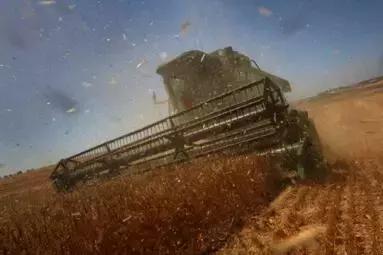
Before answering this question, let us first go over some basic knowledge about wheat subsidies.
Wheat planting subsidies fall within the scope of direct grain subsidies, referred to as "direct grain subsidies." They are subsidies directly granted by the state finance authorities, according to the actual grain planting area, to farmers in major grain-producing areas (Hebei, Inner Mongolia, Liaoning, Jilin, Heilongjiang, Jiangsu, Anhui, Jiangxi, Shandong, Henan, Hubei, Hunan, Sichuan). Farmers in the remaining provinces do not enjoy direct subsidies.
Many people may think that the subsidy goes to whoever farms the land, right? Wrong! The target of grain subsidies is the land contractor, not the cultivator. That is to say, unless otherwise clearly specified, grain subsidies belong to the contractor. Whoever holds the contract rights gets the subsidy. On the contrary, if the contract clearly states who the subsidy belongs to, then that is a different matter.
Because grain planting is affected by different local climates, the timing of grain subsidy payments also varies from place to place. Generally speaking, in the North China Plain area, subsidies are paid around June, while in the south, because planting starts earlier, payments begin from March to May. Some farmers in certain areas become anxious when they do not see the payments for a long time. Actually, there is no need for this. The state clearly stipulates that payments will be completed by July at the latest.
Grain subsidies are mainly paid through a one-card system or in cash. The specific subsidy amount varies according to different crops. For example, for wheat, some areas give 60 yuan/mu, while others give 125 yuan/mu. The specific amount depends on the standards and policies implemented locally. Different regions have different subsidy amounts.
However, not everyone can get the wheat planting subsidy. The following 3 situations, or rather 3 types of people, cannot get this subsidy:
01
Farmers who have transferred their land out
Some farmers, because they need to go out to work, transfer their land to large-scale grain growers. Previously, these farmers could receive subsidies, but after the transfer, the subsidy target has been changed to the farming household that holds the farmland contract rights, so farmers who have transferred their land out can no longer enjoy the corresponding subsidy.
02
Farmers who grow wheat on reclaimed wasteland
Wheat grown on reclaimed wasteland cannot receive subsidies. This is because the land contract rights or use rights do not belong to the individual. In other words, only farmers who enjoy land contract rights are entitled to wheat subsidies. Therefore, farmers who grow wheat on reclaimed wasteland cannot enjoy this subsidy. In addition, if you reclaimed the land without authorization, you may also be held legally responsible.
03
Farmers whose land is abandoned and not cultivated
Similar to the first point, if someone goes to work in the city and buys a house there to settle down, but still has land in the countryside, and because they do not return for a long time the land is abandoned and not cultivated, nor transferred to other growers, then they also cannot receive subsidies. Moreover, if the land is abandoned for a long time, the village collective can take the land back.
Have you received this year's direct wheat subsidy? Friends who meet the conditions but have not yet received it should keep a close eye on it and can go to the local village committee for detailed consultation.