Want succulents to fill out the pot? Add these to the bottom of the pot for a loose, airy mix
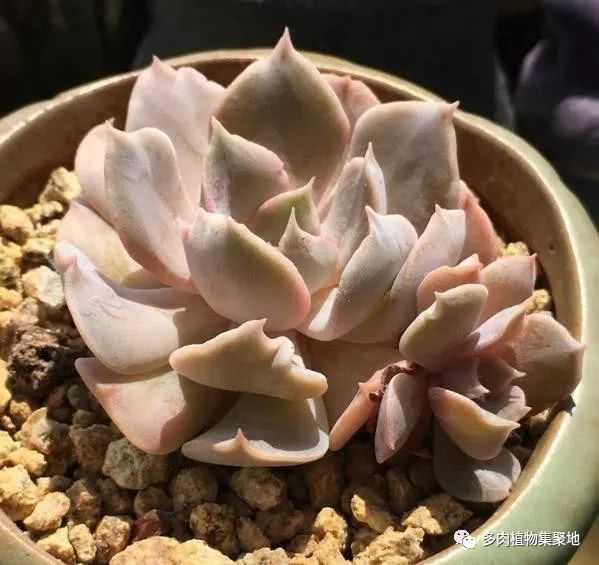
How do you grow succulents fast? During the growing season, place succulents where they get long hours of sunlight rather than the strongest light. To supplement light for your plants, extend the lighting duration rather than boosting light intensity just because the light is weak. If you want succulents to fill out the pot and grow more and more, first you have to keep them alive and healthy with a good root system. When it comes to soil, it must be well aerated and highly free-draining. At this point you can line the bottom of the pot with some larger-particle growing medium, such as the widely used large expanded clay pebbles, plus some free airy materials you don't need to buy, like broken bricks and tiles or various nut shells, all of which are excellent airy, free-draining materials.
In fact, there is no such thing as the most ideal succulent soil mix, only a mix that suits your own succulents. Being able to achieve a loose, airy texture, good drainage, a certain granular structure, and being sterile and pest-free all make it suitable for succulent growth. In succulent pots lined with nut shells, the roots of the succulents inside grow very well developed and robust, and the nut shells also contain some nutrients that are gradually released to feed the plant as it grows. Peanut shells, walnut shells and the like, placed at the bottom of the pot, can get succulents to quickly grow more new roots, and the effect is really quite good.
Plant ash can promote rooting, suppress pests and diseases, and also serve as fertilizer. In my experience it works very well and is worth recommending. You can mix soil according to how well developed the succulent's root system is. Although succulents like granular soil, when it comes to the ratio you should still follow the principle of "small particles for small seedlings, large particles for large plants." If the air humidity in your area is high and there is a lot of rain, then increase the proportion of grit; conversely, if you are in a dry, low-rainfall area, then use more water-retaining medium (peat, etc.) and less grit.
How do you grow succulents big, big, big in a big pot? The next most effective method is to switch to a slightly larger pot. Repotting gives succulents space, which is also very good for helping them grow larger or form clusters. A pot about twice the width of the succulent's crown is suitable; be sure to avoid one that is too small or too large. Too small and it struggles to grow; too large and watering becomes a hassle. How amazing is switching to a bigger pot? Basically, for varieties from the same period, in order: Blue Bird, Tang Yin (Kalanchoe luciae), Aeonium arboreum 'Zwartkop', and Haworthia cymbiformis. These are some tough, easy-to-grow varieties that are very suitable for planting in large pots and letting them do their own thing. Some people grow succulents in garden soil, and the succulents they grow end up fast-growing and large. The main reason is that garden soil contains a lot of nutrients. If you want succulents to grow fast and large, a base fertilizer is still quite necessary.
The ancestors of succulents grew in arid regions. Their roots could not absorb water for long periods, so to survive their stems and leaves gradually became thick and fleshy, sustaining life on the water stored inside them. That is why, with too much water, they will just keep growing taller and taller in one direction, and that directly causes leggy growth. Only after water control, once they get the idea that water is scarce, will succulents use their leaves to store water at the next watering, and only then will the leaves become thick and plump. Of course, during this period you also need to combine it with plenty of sun exposure. Summer temperatures are very hot. You all know what summers in Jiangnan are like: muggy and humid, with especially many thunderstorms. Once drenched, it is immediately blazing sun again, which is a major taboo for succulents! If the water droplets on the leaves are not blown off right away, they act like a magnifying glass and scorch the succulent's leaves! Therefore, in summer you must provide shade and shelter from rain.
Preventing leggy growth: some gardening friends always have many questions about watering succulents. Those who have grown them for some years know that, in fact, as long as succulents are within their growing season, you can water them quite boldly and confidently. Of course, for beginners, being careful and cautious is certainly safer. Many people understand the principle of "better dry than wet": succulents given little water will not die of drought, at most they will just look a bit worse for wear, but giving too much water can very likely drown them. This idea has also led gardening friends to widely believe that the natural habit of succulents is to "prefer drought."
This is a gathering place for succulent lovers, sharing succulent care tips. You are welcome to follow and join the conversation.