Was the secret of cultivated ginseng planting rooted in the Qing Dynasty or after the Reform era?
Starting from the Qianlong period, in order to make up for the shortage of wild ginseng resources, another workaround quietly emerged among the common people: artificially cultivated ginseng was mixed in to pass as wild mountain ginseng when paying the official ginseng tribute. So how exactly did people discover the secret of cultivating ginseng?
In the 8th year of Jiaqing, a farmer from Shandong named Wang Lizhi sold all his belongings and came to Jilin. Through an introduction from a fellow townsman, he found the local contractor Hao Bingchun. As introduced a few days ago, a contractor was a person selected from the relatively well-off diggers when the imperial court issued ginseng permits each year. At that time, to claim a ginseng permit, besides the two taels of relief silver provided by the government, one also had to prepare 200 taels of silver oneself as the cost of entering the mountains to harvest ginseng.
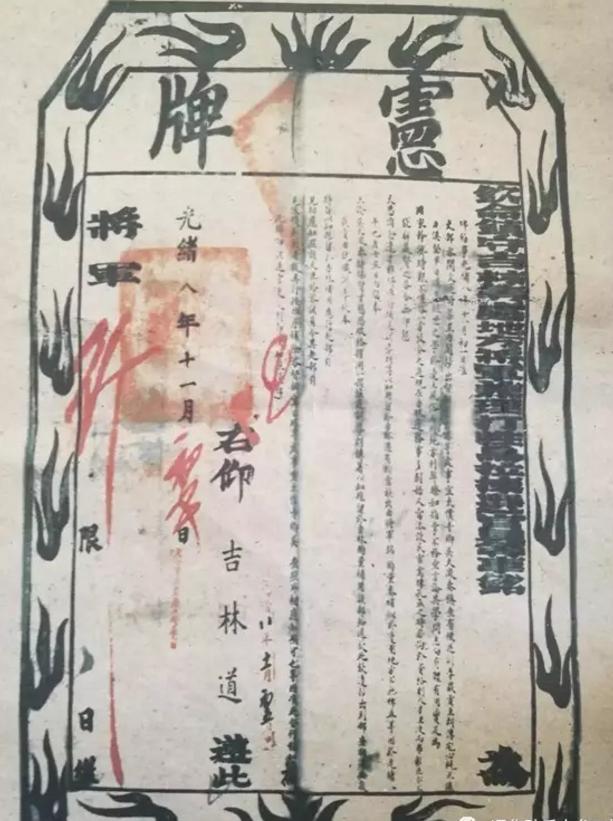
The contractor Hao Bingchun led Wang Lizhi to claim a ginseng permit from the government with 200 taels of silver. With the permit obtained by exchanging all his belongings, and with the four diggers allotted to each permit, Wang Lizhi resolutely walked into the vast forest sea of the Changbai Mountains.
After setting up camp at Xiaoyingzi in Weihe Mountain, and with guidance from a fellow townsman, Wang Lizhi cleared a patch of ginseng land around the shack. After a bit of camouflage, he quietly planted there the ginseng seedlings he had found in the forest. Wild ginseng is a perennial herb with quite high requirements for its ecological environment, and it needs a long growth cycle before it can grow large enough for medicinal use. After the mountain harvesters entered the mountains, they could not find ginseng every day. Even if they found some, it was far from enough to meet the amount required for the official ginseng tribute. In addition, ginseng dug in spring and summer has too much sap and high starch content, making it very difficult to meet processing standards. Therefore, after diggers found ginseng seedlings, most would dig them up together with the soil and cultivate them around the shack. Only after White Dew in autumn would they dig them out to pay the official ginseng tribute.
Although the mountain ginseng dug back had not left the primitive forest, cultivating it was still extremely difficult. On clear days, it had to be protected from direct sunlight, and on cloudy and rainy days, it had to be covered to avoid waterlogging. After a year of hard work, Wang Lizhi had already planted nearly a hundred ginseng seedlings. One day, Wang Lizhi again led everyone into the forest to search the mountains. Suddenly, after a burst of lightning and thunder, the originally clear sky was followed by a downpour like pillars. Looking at the soaked ginseng patch, everyone was burning with anxiety. A few days later, the rain passed and the sky cleared, and the hundred or so ginseng seedlings had all been rotted by the heavy rain. After some rescue efforts, in the end only two good ginseng plants remained, not even enough to pay the official ginseng tribute. However, this failure allowed Wang Lizhi to accumulate experience in cultivating ginseng.
After the ban on ginseng cultivation was lifted during the Guangxu period, large-scale ginseng cultivation began in the Fusong area. After nearly a hundred years of development, the number of artificially cultivated ginseng gradually surpassed that of wild ginseng, and artificial ginseng cultivation and growing has continued to this day........
If you like my sharing, you can follow my Toutiao account Shenwa Goudan.
Shenwa Goudaner has always had a wish: to share the ginseng culture and health knowledge accumulated over many years in the Changbai Mountains of Northeast China with every friend, so that everyone can learn more about the magical ginseng, and so that every Chinese person can enjoy the most authentic and most natural Changbai Mountain ginseng food.