Citrus moss is prone to outbreaks in June; with such serious harm, how should it be prevented and controlled?
This article is original by Dashengshou Citrus Plant Protection (dfsganjuzhibao). Reproduction is declined without permission. However, sharing to Moments is welcome.
As an economic crop in the south, citrus is grown in hot and rainy areas, which provides favorable conditions for the growth of citrus moss.Combined with the large-scale use of low-quality foliar fertilizers, moss damage began to spread.
Moss was originally a secondary disease, but with the expansion of citrus planting areas in regions with good water and heat conditions such as Guangxi,many fruit growers do not take moss seriously. Some even think that a little moss growing on the tree trunks is good, making the orchard environment look nice.As a result, the opposite happened, and citrus growth was seriously affected.
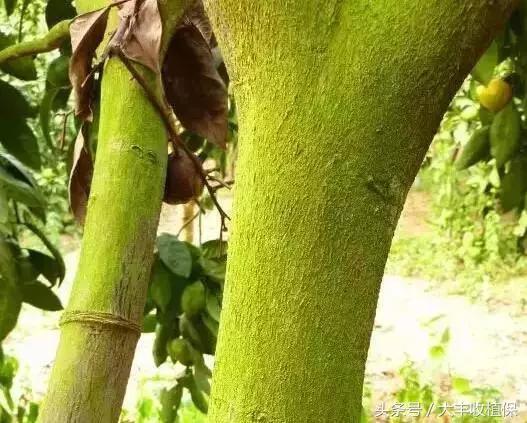
Figure 1 Trunk moss
Moss: an algae that grows extremely fast
Moss is a parasitic algae that attaches to branches and trunks with rhizoids and absorbs water and nutrients from the host. It likes high-temperature and high-humidity environments,mainly attaching to branches and trunks. In severe cases, it spreads to leaves and the surface layer of soil at the roots.
Figure 2 Moss damage on old trees
Harm: it cannot be explained in just a couple of sentences
Affects photosynthesis
Once moss spreads to the leaves,it affects the tree's photosynthesis, blocks stomata, and reduces nutrient accumulation. Moss also competes with fruit trees for water and nutrients, causing tree vigor to weaken.
Figure 3 Moss covering leaves
Affects the effectiveness of pesticide application
Moss also covers the tree surface like a film,affecting the effectiveness of pesticides and foliar fertilizers after spraying.
Figure 4 Affects the effectiveness of pesticide application
Increases diseases and pests
In addition, moss also provides a hotbed for the spores of some fungal diseases to harm fruit trees,and corners between branches covered by moss become hiding places for pathogens and pests.
Figure 5 Spread of disease
Reduces marketability
If moss is too severe and spreads to the fruit,it reduces the fruit's marketability and makes it impossible to sell at a good price.
Figure 6 Harm to fruit
Indirect harm cannot be ignored
Having covered the direct harm to the tree, the indirect harm is also great, becausemoss on the surface layer of soil also affects water infiltration and soil gas exchange.
Figure 7 Affects water infiltration and soil gas exchange.
Which orchards are prone to moss damage?
Orchards neglected by managers
As mentioned earlier, some managers do not take moss seriously, and some even think it is quite good for moss to grow on trees, ultimately causing moss to get out of control.
Figure 8 Moss out of control
Dense, shady orchards with high humidity
Dense, shady orchards with high humidity, and orchards with aging trees and weakened tree vigorare also prone to moss outbreaks.
Figure 9 Dense, shady orchard with high humidity
Outbreak period: high-temperature and high-humidity period
Moss outbreaks are likely in summer and autumn.Moss has two peak outbreak periods, respectively March to May and September to October. These two periods have the best water and heat conditions,and are also the periods when citrus shoots are most important but the most foliar fertilizer is sprayed.
Figure 10 Moss outbreaks are likely during high-temperature and high-humidity periods
Correctly handling moss damage
According to the growth characteristics of moss, reducing dense and humid environments, pruning reasonably, and clearing the orchard in time can reduce the occurrence of moss.
For moss that has already appeared, the following agents can be used (source: Dajudali, recommended by Denghuo Lanshan Cu)
Strong oxidants:Chlorobromoisocyanuric acid, peracetic acid;
Inorganic copper preparations:Copper hydroxide, cuprous hydroxide, copper hydroxychloride;
Algicidal fungicides:Bromothalonil, thiamethoxam;
Sulfur-containing pesticides:Ethyl allicin, amobam; (pay attention during the young fruit stage)
Other substances:Mineral oil, ammonium bicarbonate, plant ash, sodium abietate.
Add the Dashengshou Citrus Plant Protection WeChat account (dfsganjuzhibao) to learn more citrus planting techniques.