Only four techniques are needed for high-yield peppers, summarized from ten years of growing experience
I often receive inquiries from farmers about high-yield pepper techniques and growing methods, so today I have summarized for farmers the four points that must be paid attention to for high-yield peppers.
These four high-yield pepper techniques are a summary of my experience over many years and will absolutely help you.
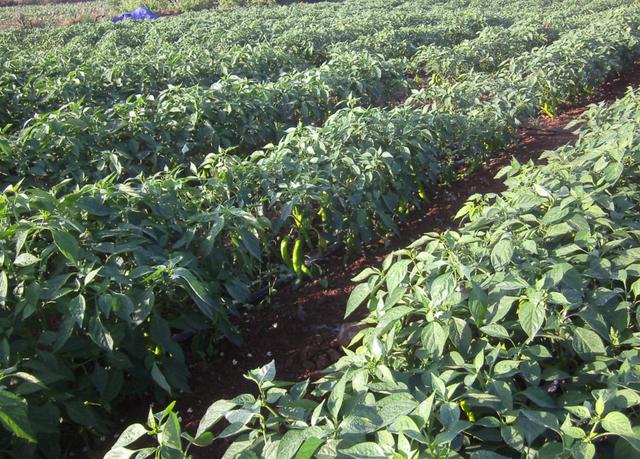
(1) Not paying attention to pepper crop rotation
Many farmers do not pay attention to pepper crop rotation and grow peppers in the same field year after year, causing various pathogens to accumulate in the soil, making pepper diseases more serious year by year and causing large numbers of pepper seedlings to die and pepper roots to rot. Some farmers even reached the point of not daring to grow peppers.
Reasonable crop rotation is the foundation of high-yield peppers.
Peppers belong to the Solanaceae family, so it is best to rotate them with non-Solanaceae crops, such as cruciferous crops, legumes, gramineous crops, and onions, garlic, and similar crops.
Do not rotate peppers after continuous cropping with tomatoes, eggplants, tobacco, potatoes, melons, and other vegetables; the field should not have grown such crops for at least three years.
The best preceding crop for pepper rotation is onion or garlic. The soil-borne pathogens of peppers will be killed by the root exudates of onion and garlic vegetables. The nutritional characteristics and fertilizer absorption ratios of onion and garlic vegetables also differ from those of peppers, so nutrients can complement each other, especially trace elements.
(2) Not paying attention to pepper fertilization techniques
Many farmers do not pay attention to pepper fertilization techniques. In fact, when the pepper variety grown is the same and the management conditions are the same, the amount of fertilizer applied, the types of fertilizer, and the ratios of various nutrient elements determine the growth condition of the pepper plants as well as the yield, quality, and the timing and length of the harvest period.
(3) Farmers plant peppers too densely or too sparsely when transplanting
If peppers are transplanted too sparsely during cultivation, the pepper plants cannot close the rows during the hot season, which easily causes pepper viral disease and pepper sunscald, and also directly leads to low total pepper yield and low returns; if peppers are transplanted too densely, especially when planting density is too high in protected cultivation, it easily causes poor ventilation and light penetration in the pepper field, leading to excessive field humidity and causing various pepper diseases.
Therefore, reasonable close planting of peppers is an important measure for achieving high pepper yields. When planting at a reasonable density, the specific characteristics of the pepper variety being grown should be considered. For example, if the pepper variety has tall plants and a large spread, it should be planted appropriately sparsely; if the pepper plant type is short and compact, it can be transplanted more densely.
(4) Farmers growing peppers do not pay attention to water quality and irrigation techniques
Peppers are vegetables that do not tolerate waterlogging. After flooding, large numbers of pepper seedlings die, which is an important cause of low pepper returns. The most common incorrect irrigation method is flood irrigation.
In pepper cultivation, improper irrigation and drainage can cause yield decline and reduced returns. Especially when irrigating pepper plots with a relatively large slope, low-lying pepper plots are prone to root suffocation or infection with Phytophthora blight and then die, while peppers at the upper water head are prone to viral disease due to drought and suffer yield reduction.
For farmers growing peppers, scientific irrigation should pay attention to the following points.
1. Peppers should be irrigated with a small amount of water; avoid flood irrigation.
2. In the rainy summer season, drainage ditches should be made, and water must not accumulate in the pepper field. Drain promptly after rain; the standard is that the water in the beds is gone when the rain stops.
3. Do not irrigate peppers at the early flowering stage, to prevent flower and fruit drop and excessive vegetative growth; during the peak fruit-setting stage, irrigate peppers frequently with a small amount of water to keep the ground moist. In particular, after topdressing peppers, irrigate to promote stem and leaf growth and fruit enlargement.
4. When the temperature is high, irrigate peppers in the morning and evening to lower the soil temperature. When the temperature exceeds 30°C, irrigation at noon is strictly prohibited.
5. In places where water sources are scarce or economic conditions allow, farmers growing peppers can lay drip irrigation pipes and use drip irrigation techniques. Drip irrigation has advantages such as reducing soil nutrient loss, effectively lowering humidity in the pepper field, reducing disease occurrence, saving water resources, and improving pepper yield and quality.
To learn more about agricultural techniques, please click "Learn More" for agricultural technique consultation!