Grape freeze damage is hard to manage and causes heavy losses for growers; three methods to teach you how to reduce losses
In northern regions, grape freeze damage is one of the commonly occurring natural disasters, occurring almost every year. In exceptional years, such as when low winter temperatures arrive early, extreme temperatures are too low, low temperatures last a long time, or late frost damage occurs, grapes suffer very serious damage, causing enormous losses.
Grape freeze damage is divided into two types: dormant-period freeze damage and growing-period freeze damage
Grape dormant-period freeze damage mainly occurs at the roots and the trunk near the ground. Its obvious symptoms are that grape vines sprout late or do not sprout; sometimes they sprout late or do not sprout, and sometimes after sprouting new shoots the new shoots gradually die back shortly afterward, while some new shoots appear as yellow leaves; some show dead upper branches while many new branches sprout from the part near the ground. When the trunk near the ground is cut open, the phloem turns brown to dark brown, and the cambium is damaged or necrotic.
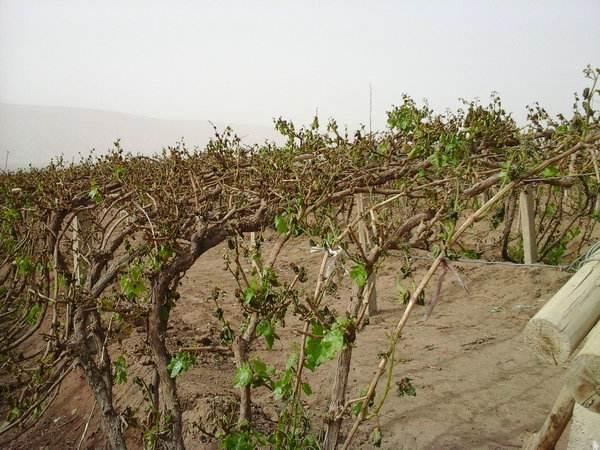
Grape freeze damage
Grape growing-period freeze damage mainly occurs during the tender shoot growth period. If strong low temperatures occur after sprouting, the tender shoots turn dark brown and die.
Late soil burial after taking the grapes down from the trellis, or a relatively thin soil layer, is the main cause of grape dormant-period freeze damage. An excessively large grape fruit load, early defoliation, and relatively low nutrient accumulation in the tree body can worsen the severity of grape dormant-period freeze damage. For young grape trees, excessive fertilizer and water, overly vigorous branch growth, and insufficient lignification make them prone to grape freeze damage.
Grape freeze damage
Solutions: 1. Apply the technique of promoting early growth and controlling late growth in grapes to promote vine maturity: before mid-July, supply nitrogen fertilizer and water to promote more branches and leaves; after mid-July, apply more phosphorus and potassium fertilizer, control water, and pinch off growing tips early to promote branch maturity.
2. Increase the accumulation of stored nutrients in the tree body: for example, appropriately control the fruit load; harvest at the right time to reduce nutrient consumption; after harvest, strengthen fertilizer and water management, promptly prevent and control pests and diseases, extend the period of leaf photosynthesis, and increase nutrient accumulation.
High grape yield
3. Strengthen preventive measures against low-temperature cold damage: before a cold wave arrives, irrigate and spray water on the leaves to prevent cold through increased humidity and reduce cold damage; when the cold wave arrives, take heating and humidifying measures. After taking the grapes down from the trellis, bury them with soil in time to protect against cold, and appropriately increase the thickness and width of the soil cover to improve the cold protection effect.
The above are solutions for grape freeze damage, for reference only. If you have better solutions, you can leave a comment in the comment section below.