How do you grow hydrangeas well? These five key elements you need to master
1. Growing environment:
Tips: More sunlight is recommended in autumn, winter and early spring; better to provide shade after flowering
Hydrangeas are shade-tolerant plants. With less than one hour of sunlight, they can still bloom, but the flowering branches will be thin and long, and prone to lodging. For the same variety, in an environment with sufficient sunlight, the branches are thick and sturdy, and the flowers are large and vividly colored. In addition, the softness or hardness of hydrangea branches is also related to the variety. Some varieties are naturally drooping by nature, suitable for planting in raised flower beds, letting the branches droop naturally and creating a different viewing angle.
2. Keep moist: Tips: Fertile, slightly moisture-retentive soil and a larger flower pot
Hydrangeas do not have high requirements for soil, but because hydrangeas have lush branches and leaves, they need a relatively large amount of water, especially starting in April, when water transpiration is fast. To ensure they do not become dehydrated before the next watering, the medium needs to be slightly moisture-retentive, or the flower pot needs to be a bit larger. Generally, a 1-gallon pot, counting from rooted cutting to planting, can be used for half a year; after that, a flower pot of at least 5-7 gallons is needed. If the flower pot is small, it is recommended to control the plant shape when pruning. When the temperature is relatively high, it is recommended to water twice a day, avoiding watering on the flowers; when flowers and leaves are wet and then exposed to strong sun, it can easily cause sunburn.
3. Pruning after flowering: Tips: Complete pruning before the end of August, avoid pruning too late, which affects flowering
Most hydrangeas bloom on old branches, so pruning must be completed before the end of August. In this way, the new buds that sprout will undergo flower bud differentiation in autumn and winter, and only then can they bloom the following year. When pruning, pay attention to cutting off spent flowers, cutting off aged branches, and shortening branches according to the need to control plant shape. If the planting site is large enough, leave more branches. The Endless Summer series and panicle hydrangea are varieties that bloom on new branches, so when pruning, you can be more ruthless.
4. Key points for fertilizing: Tips: Apply liquid fertilizer regularly, and apply additional fertilizer once each in autumn and winter
Hydrangeas have a relatively large demand for fertilizer, but fertilizing requires careful attention. Because flower buds differentiate in autumn and winter, generally the first fertilizing is in October, mainly with compound fertilizer (also called slow-release fertilizer, such as Osmocote, Miracle-Gro, Magamp, etc.). The second fertilizing is around January, mainly with organic fertilizer (such as fermented cow manure, chicken manure fertilizer, etc.; raw fertilizer is not recommended). Around sprouting in March, apply liquid fertilizer once every 1-2 weeks, and it is recommended to directly use flowering fertilizer (liquid fertilizer with high phosphorus and potassium content).
5. Changing color: Tips: Flower color is affected by many factors, including soil pH, variety, sunlight and temperature
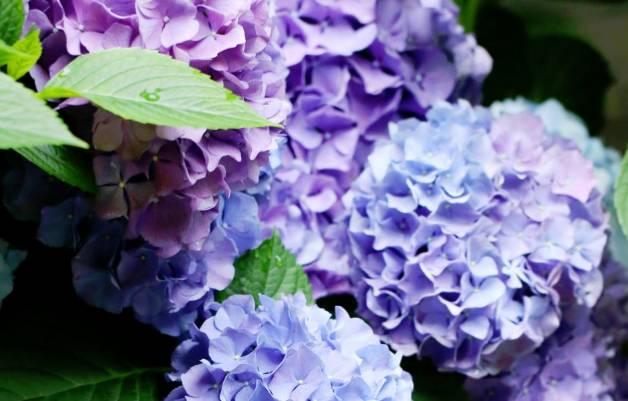
Generally speaking, acidic soil produces blue flowers, alkaline soil produces red flowers, and neutral soil produces mixed colors. You can adjust the soil pH as needed to make hydrangeas bloom in the color you like. However, color adjustment needs to be done early; adjusting color during flower bud differentiation in winter is most effective. There are many types of color-adjusting agents, and they are also easy to buy. However, color adjustment is not the only effective method. In the same flower bed, it is still very common for blue and pink to bloom at the same time. In addition, from the early to middle and late stages of hydrangea blooming, the color changes at each stage. Even if you do not adjust the color, you can still enjoy its different shades.