Seeds said to help with weight loss are all the rage abroad, yet China doesn't grow them at all
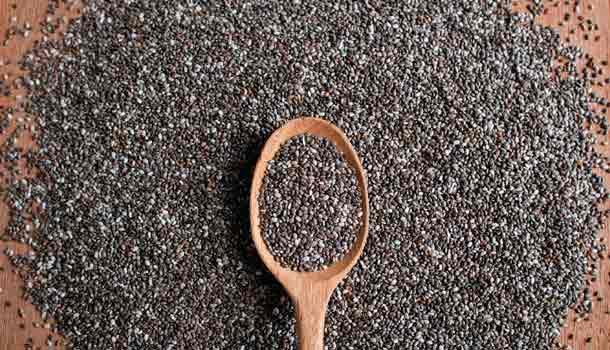
Recently a novel thing has appeared around us - chia seeds, which look pretty much like sesame seeds. Many claims say they're nutritious and that eating them can help you lose weight. Quite a few friends came to ask me about them after seeing this.
What are chia seeds?
Chia seed, also known as strange seed or European sage seed, is the seed of Salvia hispanica in the Lamiaceae family, a member of the mint family.
Chia seeds originated in southern Mexico and Guatemala, with records of people eating them dating back to 3500 BC. Legend has it that Aztec warriors relied on chia seeds to replenish their strength when out hunting and fighting.
At present, chia seeds are used in many countries, such as Mexico, Argentina, Chile, New Zealand, Japan, the United States, Australia and Canada. In China, chia seeds have been approved as a new food ingredient. However, they are hardly grown in China and can only be imported.
How nutritious are they?
Analysis of the nutritional composition of chia seeds found that the content of crude fat, crude protein and dietary fiber in chia seeds is 34%, 23% and 27% respectively, making it a typical food high in fat, protein and dietary fiber.
Chia seeds are also very rich in polyunsaturated fatty acids, such as n-3 fatty acids. We all know that this kind of fatty acid has health benefits for the cardiovascular system and the brain.
Chia seeds are also relatively rich in microorganisms and minerals. It can be said that this seed is a food with fairly high nutritional value.
Can eating chia seeds help with weight loss?
In recent years, because the nutrition field encourages the public to eat more nuts and seeds to get good fats, this has driven a wave of seed-based diets. Many claims say that chia seeds are rich in dietary fiber, and that eating them can increase satiety and help with weight loss. Some European and American countries even call them "magic seed", and they are increasingly popular among dieters. Can chia seeds really help with weight loss?
The dietary fiber in chia seeds can be as high as about 30%. After dietary fiber enters the digestive tract, it absorbs water and expands, which can increase satiety, make you naturally eat less, and also help slow the rise in blood sugar. This is also the basis of its weight-loss legend. But reality may not be so rosy.
Judging from current verification experiments, there is not enough evidence to confirm that eating chia seeds can make people lose weight. In fact, quite a few studies have found that they can increase satiety and reduce appetite, but have no effective weight-loss effect. In 2009, a controlled trial had 90 obese patients eat chia seeds. Unfortunately, the researchers did not find that chia seeds made any obese person actually lose weight. In 2017, a study examined 77 obese patients with diabetes, adding some chia seeds to their diets. The results found that after half a year, those who ate chia seeds lost 1.6 kg more than those who did not eat chia seeds. However, there were also many interfering factors from other foods in this study, so the conclusion is still very preliminary, and it cannot yet prove that eating chia seeds will definitely help with weight loss.
Why is that? One important reason is that the fat content in chia seeds is also very high. As mentioned earlier, the fat content in chia seeds is as high as more than 20%, not much less than dietary fiber. And there is also more than 30% protein, so the energy in chia seeds is not low at all. Two large spoonfuls of chia seeds contain nearly 140 kcal. Although eating them can increase satiety, it also increases energy intake. If you eat them often and in large amounts, the energy intake is no joke, and wanting to rely on them for weight loss is just wishful thinking.
Are chia seeds worth eating after all?
Although, as an emerging food, how great chia seeds' health benefits are still needs time and experience to tell. However, as a seed, chia seeds still have high nutritional value, and they are convenient to eat and also have a pleasant aroma. They can be used with some foods, and at the very least can be used as a fragrant sesame-like seed.
References:
1.http://www.nhfpc.gov.cn/sps/spgg/201408/dc45891b39194f6d9091fc38096e1d42.shtml
2. Rong Xu, Tao Ningping, Li Yuqi, et al. Analysis and Evaluation of the Nutritional Composition of Chia Seeds [J]. China Oils and Fats, 2015, 40(9):89-93. DOI:10.3969/j.issn.1003-7969.2015.09.024.
3. Kang Ye, Wang Jingfa, Peng Zhangzhi, et al. Research Progress on the Health Functions of Chia Seeds [J]. Journal of Kunming University, 2016, 38(3):117-121. DOI:10.14091/j.cnki.kmxyxb.2016.03.026.
4.Nieman DC, Cayea EJ, Austin MD, et al. Chia seed does not promote weight loss or alter disease risk factors in overweight adults. Nutr Res. 2009 Jun;29(6):414-8.
5.V Vuksan et al. Salba-chia (Salvia hispanica L.) in the treatment of overweight and obese patients with type 2 diabetes: A double-blind randomized controlled trial. Nutr Metab Cardiovasc Dis 27 (2), 138-146.
----------------
Author: Ruan Guangfeng, Director of the Science and Technology Department of the Food and Nutrition Information Exchange Center, 2016 Health Toutiao Account, member of the expert group of the China Food Rumor Refutation Alliance, deputy director of the Guokr Foodie Research Institute, contracted author of a Toutiao account, and columnist. WeChat public account: ruanguangfeng.
Welcome to follow and gain more useful, substantial and reliable food knowledge. For reprints, please contact my WeChat public account.