How to grow Exochorda racemosa? Detailed guide to cultivation methods and precautions
Exochorda racemosa (pearl bush) is a deciduous shrub native to Henan, Jiangxi, Jiangsu and other places in China. It can be used as a landscaping material, and it is also edible and rich in nutrients, with certain health benefits. It is a multi-purpose flowering plant with fairly strong adaptability. Below, Qinnong.com introduces the cultivation methods for Exochorda racemosa.
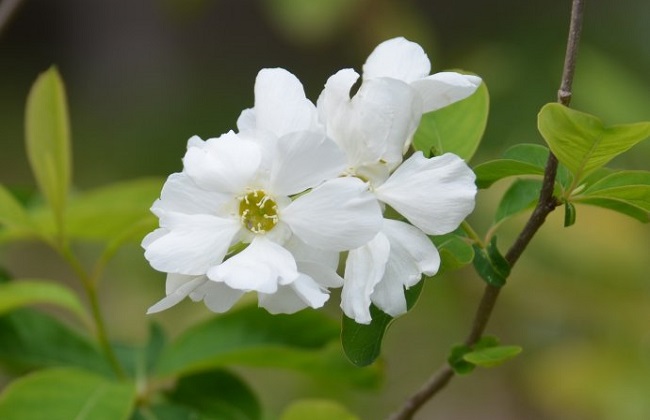
I. Growth habits of Exochorda racemosa
Before introducing the cultivation methods, let us first get to know the growth habits of Exochorda racemosa. Exochorda racemosa likes sunlight and is fairly tolerant of partial shade; it is drought-tolerant and also has a certain degree of cold hardiness. Its requirements for soil are not very high either. It mostly grows on shady slopes at lower altitudes. Let us take a closer look at its cultivation methods below.
II. Cultivation methods for Exochorda racemosa
1. Pot and soil selection
Exochorda racemosa can be grown in the open ground, or potted as a bonsai for ornamental viewing. For potting, you need to choose a flower pot of appropriate size according to the plant's growth, then fill it with soil. First place some broken tiles at the bottom of the pot as a drainage layer, then fill the mixed substrate on top of the drainage layer. You can choose garden soil, coarse sand, furnace slag or leaf mold for mixing, and add some decomposed organic fertilizer to the soil as a base fertilizer.
2. Light and temperature
Exochorda racemosa likes sunlight, can tolerate partial shade, has strong adaptability, and can tolerate cold. The suitable temperature for its growth is between 16°C——28°C; take care that it is not too hot and stuffy in summer. Light should be moderate, ensuring enough light for its growth, but be careful to avoid strong direct sunlight; the light intensity can be adjusted manually.
3. Watering and fertilizing
Exochorda racemosa grows vigorously, with abundant flowers and lush leaves, and is very beautiful, which requires good water and fertilizer management. During its cultivation, water and nutrient consumption is relatively high, so it needs appropriate watering to stay moist and avoid the soil becoming too dry. Basically, during the growing period, it needs watering once or twice a month. Fertilizing needs to ensure sufficient nutrients, adjusted according to its growth needs. For example, before flowering you can apply some phosphorus and potassium fertilizer, and during overwintering you can apply some fertilizer to ensure it gets through the winter.
III. Precautions for cultivating Exochorda racemosa
1. Propagation
Exochorda racemosa can be propagated by sowing seeds, or by cuttings and layering. Seed propagation is mainly done in autumn sowing, while cuttings and layering both require selecting suitable branches.
2. Pruning
Exochorda racemosa is a woody plant with abundant branches and leaves, and proper pruning is beneficial to its growth. Pruning is best done during its bud differentiation period, as it has less impact on the tree shape. When pruning, take care to remove overly dense branches, overly long branches, as well as dead and diseased branches; after flowering, the faded flowers need to be pruned off.
3. Pests and diseases
The main diseases of Exochorda racemosa are powdery mildew, sooty mold and brown spot, and the main pests are aphids, scale insects, red spider mites, as well as large bagworm moths and yellow stinging moths. When pests and diseases break out on Exochorda racemosa, measures need to be taken promptly for prevention and control.
The above are the cultivation methods for Exochorda racemosa brought to you by Qinnong.com. As you can see, Exochorda racemosa has fairly good adaptability to the environment and can basically grow normally in most areas of China. Friends with a courtyard at home can plant one in the courtyard, and it will surely look very beautiful.