What are the uses of air plants, and can they purify the air?
Air plants are the only plants on Earth that can grow and survive without attaching to soil, and because of this trait they are widely popular and have become favorites of many flower lovers. So, apart from not needing soil, do air plants have no other uses? Of course not. Some air plants are less than 10 cm in diameter, yet they have great uses; you could say they embody "a small sky with big dreams." So what exactly are their uses? Let's take a look together.
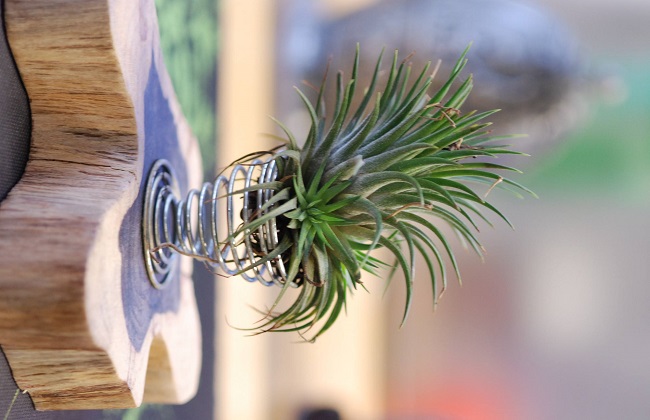
1. Ornamental value
Air plants can be attached to dead wood, rocks, or placed on shells or in pots, and they can grow as long as their roots do not sit in standing water. At home, they are often hung up with metal wire or fishing line, creating vivid and unusual shapes. Placing such a plant in your home surely adds a lot of fun.
2. Home decoration
You can hang the plant by the window, or place it in a pot on a desk or coffee table, decorating the home and making the room look full of life.
You can also put it in a glass container, or place it on a stand and let its tendrils curl freely inside.
The simplest way is to stick it directly onto a vertical wall, and it can still become a decoration.
It can also be placed on the dining table, giving it a special charm.
3. Air purification
You probably did not expect this: air plants are not just decorative like a vase; they can also make some real contributions to us. Air plants grow without any connection to soil, yet they can purify the air, and they are also called air pineapples. In many households abroad, air plants are chosen to purify indoor air, especially in newly renovated houses; hanging a few plants in a room can absorb formaldehyde very well.
Do not think air plants are as delicate as they look. Everyone knows that spider plants are recognized as plants that can effectively purify formaldehyde indoors, and research has proven that the formaldehyde-purifying effect of air plants can be similar to that of spider plants. Among them, Spanish moss (Tillandsia usneoides), Tillandsia xerographica and Tillandsia velutina have even stronger formaldehyde absorption capacity.
That is the introduction to the uses of air plants brought to you by Qinnong Web. After reading it, are you not surprised? It is hard to imagine that such a small plant has such a great effect on environmental purification. In fact, there are as many as several hundred species of air plants, and the largest can reach 2 m in diameter, so not all varieties are very small. If you are interested, you can learn more about them.