This flower blooms in strings, easy to grow and easy to keep alive, and it loves sunlight
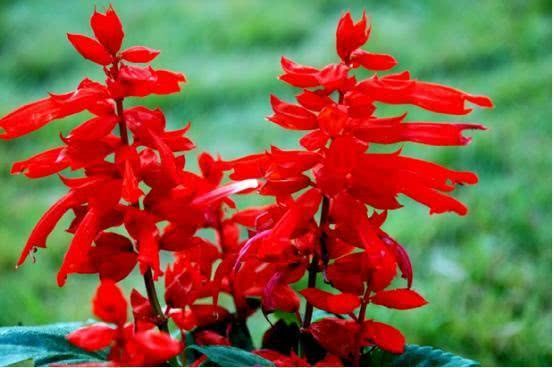
Scarlet sage (Salvia splendens): when it blooms, the flower stems are covered with red leaves, and the strings of red are extremely vivid. The flowering period is generally from June to October, and the flowering period is long. Scarlet sage can be sown from seed; the method is simple and easy, with a high survival rate.
The best time to sow scarlet sage is from March to June. After scattering the seeds on the surface of the soil, you can cover them with a little soil or not cover them at all. Before the seeds germinate, keep them in a shaded place; they can germinate in about 10 [days]. After seedlings emerge, if you find them too densely packed, you can discard the poorly growing ones or divide them into separate pots. During this period the soil should be kept moist, but not waterlogged.
To promote germination, you can use a diluted organic nutrient solution as the settling water, watering thoroughly once; this can promote seed sprouting and at the same time provide nutrients for the seedlings.
Scarlet sage likes sunlight, so do not keep it in a dark indoor place. Move it outside to get more sun, as this is good for its growth. When the temperature is above 30 degrees, provide shade. If it lacks light, the stems will grow leggy, the leaves will turn yellow and drop, and the flower color will not be vivid and the flowers will drop easily.
Scarlet sage is a drought-tolerant plant. For later watering, water only when the soil is dry and let it dry out between waterings; too much water will turn the leaves yellow. In summer, water once every two or three days; in spring and autumn, water once every 5-7 days; in winter, extend the watering interval. As for fertilizing, when mixing the soil you can mix compound fertilizer into the bottom as a base fertilizer, and later you can add water-soluble fertilizer.
Scarlet sage likes a loose, well-aerated soil medium, so do not use only heavy clay soil; mix in an appropriate amount of perlite and sandstone, etc., to increase looseness. If the soil is too alkaline, it is unfavorable for the growth of scarlet sage. The simplest method is to mix vinegar and water at 1:30, and pour the mixed liquid onto the soil to increase the soil's acidity.
Scarlet sage can be pinched back, which not only dwarfs the plant but also delays the flowering period. The first pinching can be done when 5 leaves have grown, pinching back to leave only 2 leaves. After pinching, side branches will grow; then when the side branches grow to 5 leaves, pinch again, and this can be done multiple times.
For pest and disease control, you can use chlorothalonil at 800-1000 times dilution to control gray mold and downy mildew, and spray omethoate emulsifiable concentrate at 1500 times dilution to control aphids, red spider mites and other diseases.