How to grow roses? Stick to one thing and they will bloom continuously through all four seasons
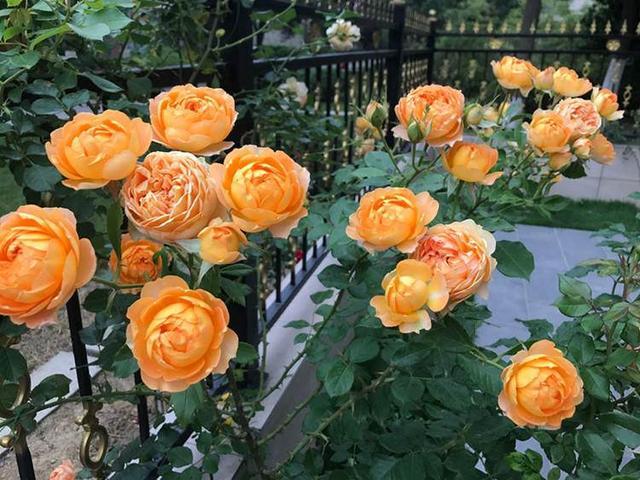
Roses have a long growing period, a long blooming period, and bloom many times, and each bloom consumes a large amount of nutrients, making them one of the flowers with high fertilizer needs. Therefore, if you want to grow roses well, you need to "stick to" one thing through spring, summer, autumn, and winter, and that is fertilizing, so that roses can bloom in all four seasons.
Many flower lovers do not understand when the roses they grow are short of fertilizer and when they need fertilizing. In fact, when fertilizing roses, you should fertilize according to the plant's condition, applying frequently and lightly. If the branches and leaves are small, thin, and yellowing, showing nitrogen deficiency, you need to apply nitrogen fertilizer; if the branches are weak and the flowers droop, this is a sign of phosphorus and potassium deficiency, and phosphorus and potassium fertilizers should be supplemented in time.
When fertilizing roses, it is better to fertilize before 10 a.m. and after 3-4 p.m. during the day. If it is a hot summer, then fertilize in the early morning and in the evening. To "stick to" fertilizing roses through spring, summer, autumn, and winter, the specific operations are as follows:
1. Spring fertilizer
If flower lovers applied enough base fertilizer to the roses in the previous autumn and winter, and of good quality, then generally there is no need to apply spring fertilizer to the roses. For mature rose plants, it is enough to apply nitrogen fertilizer once when flower buds appear.
2. Summer fertilizer
After the first batch of roses blooms and before the second batch of flower buds sprouts, flower lovers need to use an organic liquid fertilizer specially for roses, diluted 500 times, and apply it once to replenish the consumption from the first bloom and promote the differentiation of the second batch of flower buds and the growth of summer shoots, laying the foundation for autumn flowers. Because summer has high temperatures, more rain, and high humidity, too much fertilizer can easily cause the plants to grow excessively, which is instead unfavorable for flower bud differentiation, so use liquid fertilizer once every half a month, and just water it onto the roots in an appropriate amount.
3. Autumn fertilizer
To apply autumn fertilizer to roses, generally from August to October, before the second full bloom and after pruning is finished, apply 1-2 times a lighter rose liquid fertilizer mainly based on phosphorus and potassium fertilizer, and it is best to use 0.2% monopotassium phosphate for simultaneous foliar feeding. When the flower buds show red, stop fertilizing immediately.
Before blooming, avoid applying excessive nitrogen fertilizer, so as not to cause excessive growth of flower buds, thick petals, deformed flowers, dull flower color, or even stiff buds that cannot open.
4. Winter fertilizer
The winter fertilizer for roses is the fertilizer applied when roses enter dormancy, mainly organic fertilizer and an appropriate amount of phosphorus fertilizer applied in a shallow ring-shaped trench. The trench should be 10-20 cm deep and 20-30 cm wide, and for each plant mix in 10-20 granules of granular fertilizer on the pot surface, then cover with soil and water thoroughly.