Succulent Plants Surviving Summer: Care Essentials You Must Know
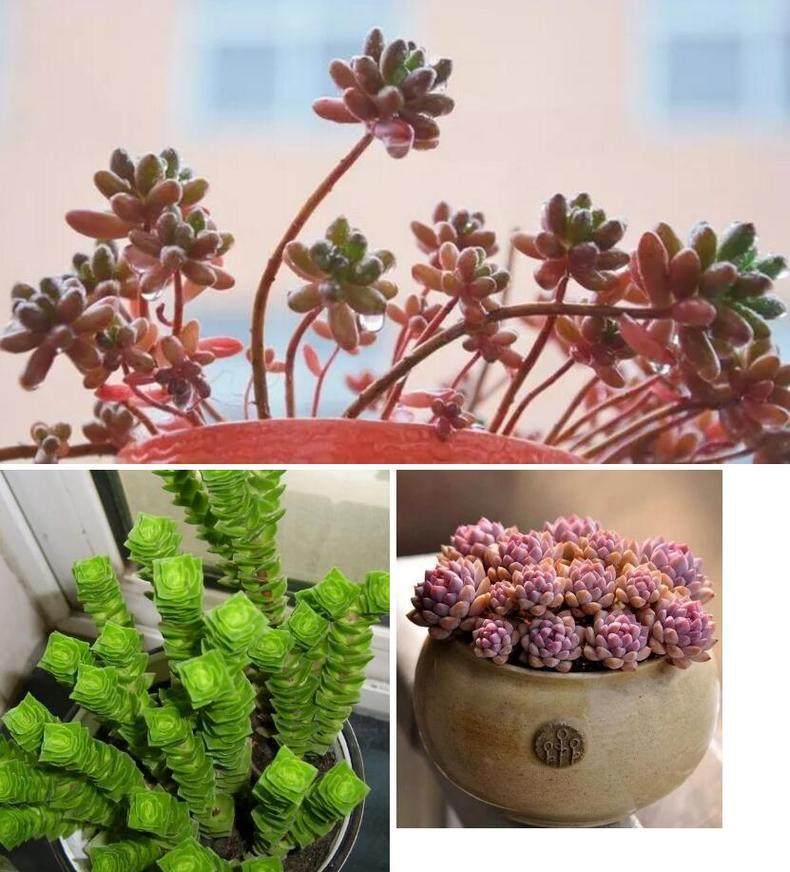
For many plants, getting through summer is like passing a tribulation, so summer care must be done thoroughly. The thoughtful Huacaojun has collected and organized several plants that are prone to diseases in summer. Today, let's first tell you how succulents get through summer.
How should the soil be chosen?
What do succulents fear most in summer? Of course, it is stuffy roots, so you must choose loose soil with strong water permeability. This kind of soil generally has larger particles, which is good for succulent root growth and can avoid the problem of poor root respiration in succulents.
Where should they be placed?
Summer weather is hot, and even friends in Africa say they cannot stand it, let alone succulents. Although succulents are typical drought-tolerant plants, they still cannot stand long periods of exposure to the sun. In spring and autumn, they can be placed outdoors to grow freely.
But in summer, it is best to place them on a balcony or by a window, where they can get some sunlight and also have ventilation. If there is really no other way, they can also be placed indoors. Remember not to turn on the air conditioner, otherwise it is easy to cause root rot in succulents.
What kind of ventilation environment is needed?
The rainy season is a period of high incidence of pests and diseases. Ventilation can evaporate moisture from succulents and reduce the occurrence of pests and diseases. In summer, many succulent growers, to save trouble, directly take succulents into air-conditioned rooms for care, saying it is ventilation. In fact, the air-conditioned room environment is relatively closed. Not only can it not ventilate, but it also prevents succulents from breathing.
When growing succulents indoors, be sure not to keep doors and windows closed for long periods. Maintain at least two hours or more of ventilation time every day.
In succulent potted plants with a large amount of peat as the substrate, especially succulents represented by Echeveria, due to sufficient nutrients, a large number of drooping thick leaves remain at the bottom during the dormant period, which is not conducive to ventilation and air permeability at the root and stem area and easily breeds pests and diseases. Therefore, when succulents are growing vigorously, the lower leaves can be cleaned up for leaf-cutting propagation.
How should the amount of watering be controlled?
Watering in summer must be well controlled. The midday sun is strong, so avoid watering at noon. Generally, choose morning or evening for watering. Follow the principle of "do not water if not dry, water thoroughly when watering." Water directly into the potting soil, and it is best not to water onto the leaf surface.
But avoid water accumulation in the pot, which can cause root rot. If you do not know when to water succulents, you can insert a toothpick or chopstick into the soil to confirm the degree of dryness of the soil, or observe the degree of wilting of the leaves.
If you encounter continuous rainy weather in the south, you may not need to water, but you should move them to a balcony or window edge sheltered from the rain.
How should fertilizer be applied?
Succulents need suitable fertilizer during the growing period. Apply "thin fertilizer frequently." Applying an appropriate concentration of potassium dihydrogen carbonate can promote the growth of succulents and also enhance their resistance to the environment.
Prevention and control of pests and diseases
In summer, the weather is sometimes humid and sometimes stuffy and hot. Succulents cannot breathe smoothly and are prone to attracting some pests and diseases.
Common ones include "black fungus gnats," "scale insects," "root mealybugs," and other pests, which gnaw on succulent roots, causing wound infection and rot, and plant death.
Prevention and control measures:
Ventilation, ventilation is very important. They must not be stuffy. Pay attention to drainage when watering. Usually place them outdoors or on a balcony with windows.
To prevent pests, a small amount of carbendazim can be sprayed after rain or after insecticide treatment. Most pests can be prevented by applying "Xiaobaiyao" during the growing period. For insecticide treatment, you can choose noon when the sun is strong. At this time, scale insects mostly spread their wings to dissipate heat. Spraying "Jieqiaoling" at this time will have a better effect.
Finally, I hope all succulent growers' succulents can spend the summer beautifully.