4 Climbing Flowers That Turn Your Home into a Fairy Tale the Moment They Cover the Wall
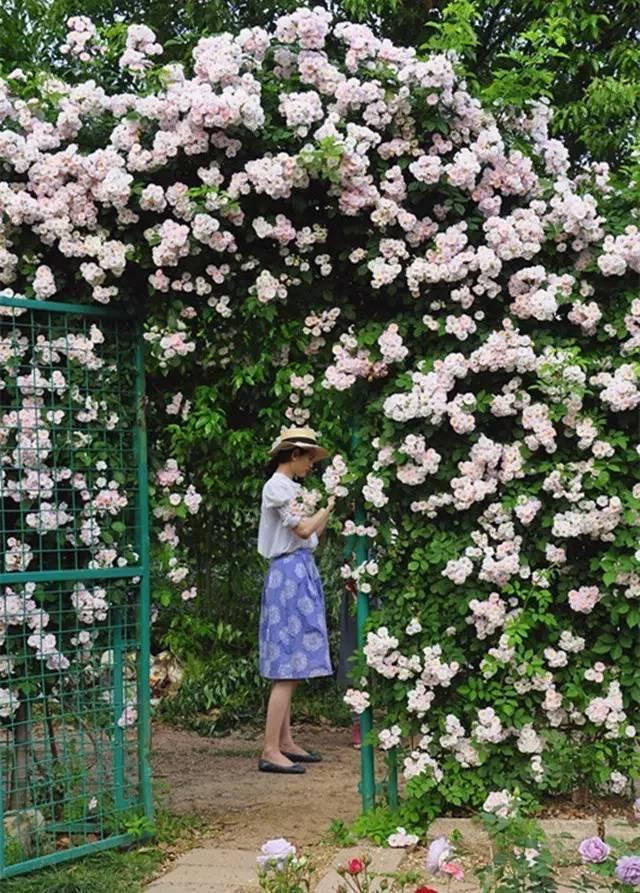
The delicate blooms on the vines carry a naturally soft power, drawing you into an oxygen-rich space filled with floral fragrance and a fairy-tale feel. Wherever climbing plants spread in broad swaths, even the hottest summer feels extra cool. Today let's see how these flowers hanging on the vines can completely take over your garden wall, balcony, windowsill and heart.
Climbing Rose
Beauty rating: ★★★★★
Ease of growing: ★★
Bloom season: All four seasons
The climbing rose is a huge group, loved by gardening enthusiasts for its vigorous growth, strong climbing ability and brilliant flower colors. Roses have a very long bloom season, most flowering from spring all the way into autumn, and some varieties such as Sweet Dream can even bloom in all four seasons.
Because of their tenacious vitality, they can grow into lush branches and leaves, making them better suited to planting in a yard; an unenclosed balcony can also accommodate one, but be sure to prune regularly.
Conditions for blooming
? On one hand, it needs good ventilation, and more than half a day of sunlight every day.
? Prune often: once a year in December after the leaves fall. After May, cut back by 1/2 the flower stems that have already bloomed.
? Fertilize frequently and promptly. When roses are dormant in January-February, mix in 1/4 rice-husk ash, broad bean shells, soybean cake or chicken manure as a base fertilizer. In May, as they enter peak growth, apply a top dressing every 10 days; you can use fermented fish liquid or vegetable-leaf liquid, diluted with water at a 3:7 ratio. Stop fertilizing in November.
Sweet Dream↓
Rose Eden↓
Spectrum↓
Margaret↓
Clematis
Beauty rating: ★★★★★
Ease of growing: ★★★
Bloom season: Spring, autumn
If you ask what pairs best with the climbing rose, the answer is certainly clematis: one charming without losing its edge, the other sturdy without losing its grace. Their vines twine together, each bringing out the best in the other.
Conditions for blooming
? Be sure the root system gets air and drainage. For potting soil, mix coarse peat and perlite at 6:1, and choose a porous or thin-walled clay pot.
? Clematis isn't too fussy about watering; just water when the pot is dry.
? To grow a clematis covered in blooms, fertilizing is essential. In winter especially, fertilizing means adding new peat mixed with organic fertilizer and bone meal to the soil to help the roots grow. In spring and autumn, when temperatures are higher, you can water the soil with liquid fertilizer or spray it on the leaves, 2-3 times a month. In summer, stop fertilizing.
Florida Sieboldii↓
Josephine↓
Vyvyan Pennell↓
Cassis↓
Andromeda↓
Cypress Vine
Beauty rating: ★★★★
Ease of growing: ★★★★★
Bloom season: July-September
By comparison, the annual cypress vine is small and delicate, with vines that twine and wind, making it very suitable for growing on a balcony or windowsill. The cypress vine looks frail but is very tenacious, and once planted, even if you forget to sow it again, seeds left behind will sprout on their own from the pot the next year.
Conditions for blooming
? The cypress vine isn't demanding about soil; ordinary garden soil will do. Cover with a thin layer of soil, water and wait. Spring and autumn are the sowing seasons.
? No need to water or fertilize during the seedling stage.
? When it starts climbing, give it a small support with a twig; pinch off the top of the main vine to encourage more branches.
? Apply ordinary organic fertilizer for even better blooming.
? After the flowers fade, wait until the seeds turn brown, then pick them and save them for sowing next year.
Cypress Vine (feathery-leaf)↓
Cypress Vine (round-leaf)↓
Cypress Vine (maple-leaf)↓
Chinese Trumpet Creeper
Beauty rating: ★★★
Ease of growing: ★★★★
Bloom season: May-August
The Chinese trumpet creeper is one of the most famous garden flowers. With thin bamboo supports it can be trained into all kinds of patterns, and it suits courtyards, balconies or windowsills. It can also be used medicinally, to invigorate blood and dissolve stasis, and to clear toxins and reduce swelling.
Conditions for blooming
? The Chinese trumpet creeper isn't demanding about soil; it can grow in both sandy loam and clay loam.
? During the bloom season, the soil should be neither too dry nor too wet.
? The Chinese trumpet creeper likes warmth, so in winter it should be brought indoors to overwinter. It likes sunlight but tolerates a little shade.
? After it sprouts in spring, apply liquid fertilizer 1-2 times a month.
? To make it bloom abundantly and branch thickly, prune the branches in early spring before it sprouts, so it gets good ventilation and light.
Don't plant these climbing flowers rashly -- be careful, because before you know it, your home will turn into a fairy-tale world!