Air Pollution Act Amendment Suspected of Favoring Big Factories; EPA: Mobile-to-Stationary Pollution Offsetting Limited to Kaohsiung-Pingtung and Must Be Compliant
By Lin Pei-chun
The Legislative Yuan passed the Air Pollution Act amendment on the 25th through a third reading. Two major policies - "mobile pollution can offset stationary pollution" and "replacing old vehicles" - have been questioned by the public as favoring big factories and bullying economically disadvantaged groups. The Environmental Protection Administration (EPA) held a press conference on air pollution control today (the 27th). Deputy Administrator Jan Shun-gui said: "This is over-interpretation and over-worry by the outside world." He stressed that the EPA had already prepared supporting measures before setting out the regulations, "a carrot is prepared behind every stick."
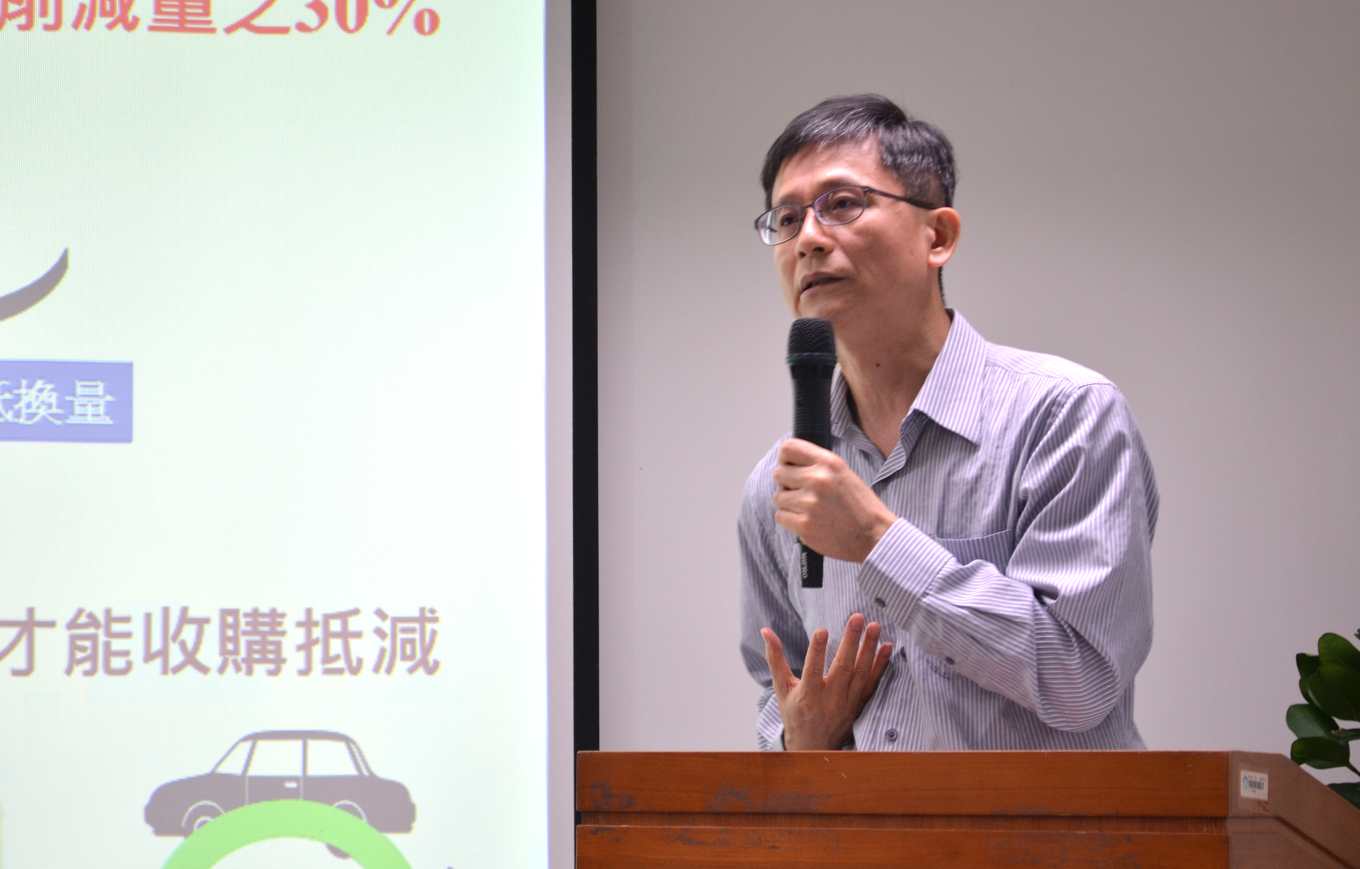
Chuang Ping-chieh, a professor in the Department of Environmental Engineering at National Chung Hsing University, said that the regulation on replacing old automobiles and motorcycles is reasonable, but in terms of factory emission control, the government should more strictly restrict five major types of factories - such as coal-fired power plants, coal-fired factories, steel plants, cement plants, and oil refineries - from participating in emission offsetting, so as to truly eliminate emissions from heavy pollution sources.
Air Pollution Act Amendment Focuses on Five Points: Both Stationary and Mobile Pollution Are Regulated
The Legislative Yuan passed the Air Pollution Act amendment on the 25th through a third reading. The five major points include: adding a good neighbor clause, a factory source control mechanism, mobile pollution control measures, a new whistleblower clause to encourage reporting of illegal acts, and raising penalties as well as recovering illegal profits.
Under the good neighbor clause, local competent authorities will consult with county and city governments to jointly formulate air pollution control plans to solve local poor air quality problems. In the section on emissions from "stationary pollution source" factories, health risk assessments will also be conducted, especially to control hazardous air pollutants.
For automobiles and motorcycles, which belong to "mobile pollution sources," the amendment will crack down on vehicles older than 10 years. Those that fail inspections or exhaust testing may have their licenses revoked in the most serious cases; at the same time, governments in various places may also designate air quality maintenance areas to restrict high-polluting vehicles from entering.
Mobile-to-Stationary Pollution Offsetting Is Limited to the Kaohsiung-Pingtung Area, Not Applicable Nationwide
However, the provision in the law that "mobile pollution sources can offset stationary pollution sources" has sparked controversy. The public worries that if factories fail to meet total volume control standards in the future, they can simply purchase emission credits from mobile pollution sources such as automobiles and motorcycles to offset their emissions.
In response, Jan Shun-gui explained that currently only the Kaohsiung-Pingtung area is a total air pollution control zone and can apply the offsetting mechanism; other areas can only reduce emissions and have no room for offsetting.
Tooffset emission credits, one must first meet the standards,and the offsetting system will last at most ten years
For existing factories in the Kaohsiung-Pingtung area, if they want to obtain offset credits, all types of pollution sources should first reduce emissions on their own and use clean coal, and only those that meet "Best Available Control Technology" (BACT) are eligible. Newly established factories must even achieve "Lowest Achievable Emission Rate" (LAER) before they can set up. Jan said: "Only after everything has been done and there is no other way to obtain emission volume can old vehicles be purchased for offsetting."
Jan Shun-gui added that the old vehicles that factories are allowed to offset must be registered in the Kaohsiung-Pingtung area. It is estimated that there are currently 230,000 motorcycles and 16,000 diesel vehicles that can be offset. After all are eliminated, they may no longer be purchased for offsetting. In other words, the mobile pollution offsetting system will stop after ten years, "it is not applicable forever," Jan emphasized.
Eliminating Old Vehicles, Jan: Handle in Stages and Phases
In response to public concerns that after the Air Pollution Act amendment takes effect, many old automobiles and motorcycles will be forced out of use, and the first to be affected are economically disadvantaged people who cannot afford to replace their vehicles.
Jan Shun-gui responded that because the exhaust pipes of automobiles and motorcycles are closer to human height than the smokestacks of stationary pollution sources, the exhaust they emit is more easily encountered by the public. In addition, as early as 2012 the United Nations classified diesel exhaust from engines as a Group 1 carcinogen, and more than half of the automobiles and motorcycles in our country are over 10 years old, already creating serious pollution sources and causing great harm to human health, which is why the public is encouraged to replace old vehicles.
For economically disadvantaged people who need to buy new vehicles, the Executive Yuan will provide diesel vehicle buyers with a total of 3 billion in interest-bearing loans, and is also studying subsidies to help disadvantaged people purchase 5- to 8-year-old used vehicles that meet emission standards from used car dealers.
Finally, Jan also emphasized that when the EPA eliminates high-polluting old vehicles, it promotes this in stages and phases. The first to be handled are Phase 1 and Phase 2 large diesel vehicles and two-stroke motorcycles; as for Phase 3 diesel vehicles and four-stroke motorcycles, as long as they are equipped with smoke filters and well maintained, they are not affected.
Scholar Urges That Five Major Types of Factories Must Not Participate in the Offsetting System
Chuang Ping-chieh, a professor in the Department of Environmental Engineering at National Chung Hsing University, said that the regulation on replacing old automobiles and motorcycles is reasonable, but in terms of factory emission control, the government should more strictly restrict five major types of factories - such as coal-fired power plants, coal-fired factories, steel plants, cement plants, and oil refineries - from participating in emission offsetting, so as to truly eliminate emissions from heavy pollution sources.