Peace lily leaves have wilted, what should I do? Find the cause and apply the right remedy
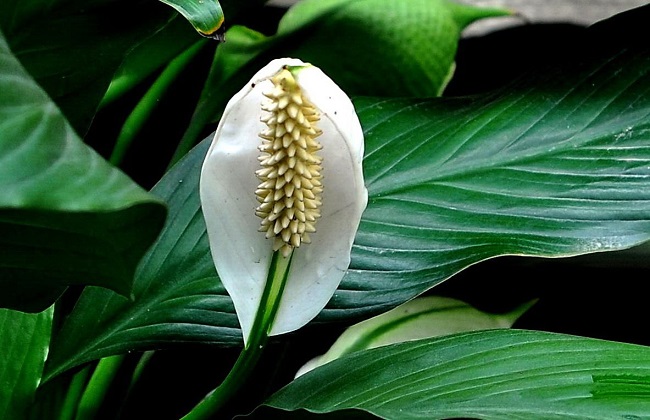
The peace lily (Spathiphyllum) is one of the most popular potted flowering plants, a herbaceous plant belonging to the Araceae family. When it blooms, it has only one petal, shaped like a palm, which is why some people also call it the white sail; even when it is not flowering, it can still be grown as an excellent foliage plant. But sometimes you may find that the leaves of the peace lily become wilted. What is going on? Below, Qinnong Web will explain the causes of a peace lily wilting and how to deal with it.
There are many reasons why peace lily leaves wilt, and sometimes it is a combination of several causes that leads to the wilting of the leaves. For this reason, Qinnong Web has put together the possible causes of peace lily leaf wilting so that everyone can refer to them for comparison.
I. Causes of peace lily leaf wilting
1. Improper lighting
Peace lilies need suitable light during care. Most peace lilies are cared for indoors, and indoor light is not strong. If at this point the peace lily is suddenly placed under sunlight for exposure, the sudden change in environment will make the peace lily unable to adapt, mainly shown as wilted and yellowing leaves.
2. Insufficient humidity
Peace lilies need relatively high air humidity while growing. If the air is too dry, the leaves of the peace lily will become wilted and listless.
3. Improper fertilizing
Improper fertilizing of peace lilies mainly refers to using fertilizer that is too concentrated when fertilizing, which causes fertilizer burn, making the peace lily grow poorly and causing the leaves to wilt.
4. Unsuitable temperature
Unsuitable temperature mainly refers to when the temperature is above 35°C in the hot summer and below 5°C in winter, when peace lilies are prone to leaf wilting.
5. Pests and diseases
Pests and diseases can also cause peace lily leaves to wilt. For example, when mite pests occur, the leaves of the peace lily will wilt, lose their luster, and become withered and yellow.
II. Solutions for peace lily leaf wilting
1. Suitable lighting
Generally, when growing peace lilies, the lighting must be good. Be careful not to keep it too shaded for a long time. In winter and in spring and autumn, maintain suitable light, and in summer provide appropriate shading. Be careful not to suddenly change the light conditions of the peace lily, causing it to wilt.
2. Relatively high humidity
When growing peace lilies, the environmental humidity must be a bit higher. You can spray water and sprinkle water to increase air humidity, or use a plastic bag to cover the plant. However, with this method, be careful to often give the peace lily some air so that the temperature inside the bag does not get too high.
3. Reasonable fertilizing
When fertilizing peace lilies, apply light fertilizer frequently. Do not use concentrated fertilizer or fertilizer that has not been fully decomposed. After fertilizing, it is best to water once with clean water to reduce the occurrence of fertilizer burn.
4. Suitable temperature
The temperature needs to be kept within a warm range. In summer high temperatures and winter low temperatures, pay attention and take measures to cool down and keep warm.
5. Preventing and controlling pests and diseases
What mainly needs to be prevented and controlled is insect pests, such as mite pests. Specialized insecticide can be sprayed to kill the insects.
From the above, it can be seen that the solutions for peace lily leaf wilting correspond one-to-one with the causes. As the saying goes, apply the right remedy for the illness. If the leaves of your peace lily at home are wilting, you must first find the cause, and then find the corresponding solution based on the cause. Moreover, if a peace lily has wilted leaves, it usually also has a certain impact on flowering. For a plant that has been grown for a long time not to bloom is a very frustrating thing, so when you find symptoms of wilting in a peace lily, deal with it promptly.