A Detailed Guide to Growing and Caring for the Hawaiian Palm
The Hawaiian palm (Chamaedorea elegans, compact form) is a plant native to Mexico, Guatemala and other places. Does this name easily make people think of sunshine, beaches and delicious macadamia nuts? But this plant is not edible, and it also fears direct sunlight, which is why it can be grown indoors as a foliage plant. Below, QinNong Net introduces the growing methods and precautions for this plant.
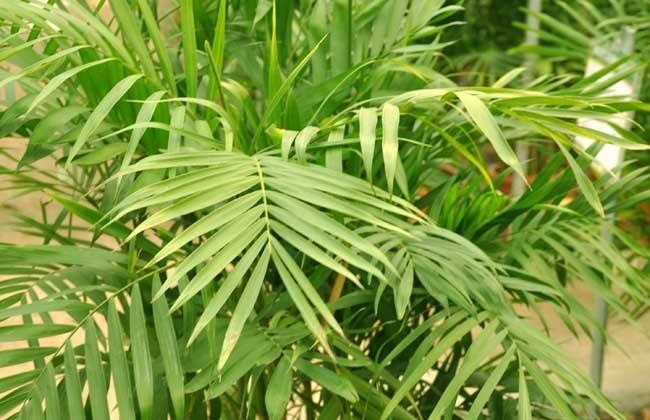
I. Growing Methods
1. Soil
It generally prefers to grow in loose and fertile soil, so when choosing soil, this requirement must be met. We can use some leaf mold and garden soil, etc., mix them together, then add some organic fertilizer, and after mixing evenly, it can be used as the growing medium.
2. Temperature
The Hawaiian palm originally lived in warm places, so it prefers to grow in warm places, and the most suitable temperature is generally 20 degrees. In winter, the temperature must be kept above 10 to avoid affecting growth. Of course, it also has a slight cold tolerance, but it can only endure short periods of 0-degree low temperatures, so if you want it to get through winter smoothly, it is best to adjust the care temperature to above 10 degrees; if that is not possible, it should at least be kept above 5 degrees.
3. Light
As mentioned earlier, although the Hawaiian palm grows in relatively warm places, this plant itself is not tolerant of direct sunlight and is more suited to growing in semi-shaded environments. It can grow in a relatively dark indoor spot for 1 to 2 months without affecting the plant. So in normal lighting, it must not be exposed directly to strong light, otherwise it will affect the leaves.
4. Water
The Hawaiian palm is better suited to a moist environment, especially during its growing season, when it must be given enough water so that the potting soil is in a moist state. Although it likes moisture, it cannot be too wet, otherwise its roots will rot. Then in winter, watering should be controlled so that the potting soil stays dry, but it also cannot be too dry, otherwise the leaves will lose their luster.
5. Fertilizing
During the growing season of the Hawaiian palm, nitrogen fertilizer needs to be applied once a month, then by September, applying nitrogen fertilizer should stop, and only one or two applications of phosphorus fertilizer are needed to help it get through winter smoothly. Then in winter, all fertilizer application should stop.
II. Precautions
In high-temperature and high-humidity environments, the Hawaiian palm is prone to pests and diseases. The more common diseases include downy mildew and black spot, while the main pests are red spider mites and scale insects. For these, fungicides can be sprayed for control, commonly carbendazim or thiophanate-methyl at a 1000-fold dilution.
The growth of the Hawaiian palm requires diffused sunlight, while direct sunlight on the leaves must be avoided, so it is quite suitable for growing at home. The Hawaiian palm can grow in a dim environment for 1 to 2 months, and its growth will not be greatly affected. The Hawaiian palm has the function of absorbing harmful gases such as formaldehyde, so it can be placed in a newly renovated room. It can also adjust indoor humidity, making it especially suitable for a newly renovated room.