How to Water a Hawaiian Palm? Detailed Guide to the Correct Method
Hawaiian palm (Chamaedorea elegans, parlor palm) - just hearing this name easily makes people think of tall coconut trees, but when you actually see this plant, you will find that it really has little to do with coconuts. The Hawaiian palm is native to Mexico, Guatemala and other places, and is also cultivated in batches in Taiwan, China. Its plants are graceful, with dense branches and leaves, and its leaves are emerald green and dripping with freshness, making it very beautiful when placed indoors. But if you want to grow this plant well, you must first learn how to water it. Today, Qinnong Web will introduce for everyone: how to water a Hawaiian palm.
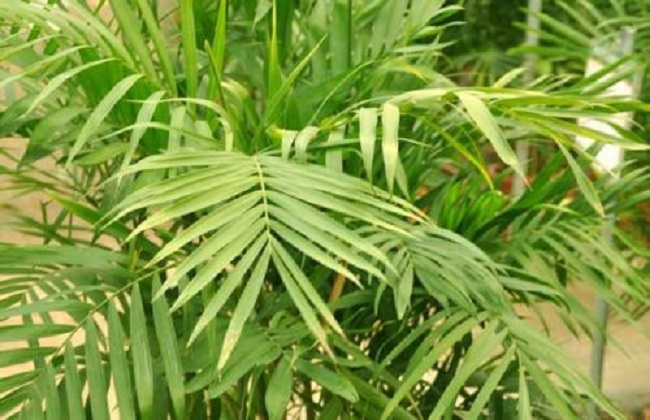
Watering a Hawaiian palm is divided into three stages. The first stage is watering it when it is first brought home, the second stage is watering it during its growth period, and the last stage is the method of watering it throughout the four seasons. Below, let us take a specific look together with Qinnong Web.
1. Watering After Initial Planting
This plant likes moisture very much, so it has relatively high water requirements. During its initial planting period, it is necessary to maintain a sufficient water supply, because when the plant is first planted, due to being unfamiliar with and unaccustomed to the growing environment, plus its growth period being relatively short and it being relatively fragile, it is necessary to maintain a sufficient water supply during the initial planting period, giving the plant a relatively good growing atmosphere and allowing it to grow healthily.
2. Watering During the Growth Period
This plant also has many water requirements during its growth period, but it is different from the initial planting period. Watering during the initial planting period is mainly to water the soil, ensuring that the plant roots can absorb water. However, during the growth period, it is not only necessary to keep the soil water supply sufficient, but also to keep its leaves from lacking water. Therefore, at this stage, the correct approach is to keep the soil water supply suitable for the plant's growth, that is, as long as it does not cause waterlogging. Secondly, prepare a sprayer and spray clean water on the leaves of the plant from time to time to ensure that the leaves maintain healthy growth.
3. Watering in the Four Seasons
1. Spring. This plant is a water-loving plant, but because the soil is relatively moist in spring and there is relatively more rainfall, at this time watering should be done according to the weather. As long as the soil is moist, that is enough; there is no need to water every day.
2. Summer. Summer temperatures are relatively high, so water vapor evaporates relatively quickly. Therefore, at this stage, water frequently. Remember that the soil must not be left in a dry state, but at this time it also must not be allowed to become too dry. Occasionally, water can be appropriately sprinkled on the leaves.
3. Autumn. The weather in autumn is relatively dry, and the weather gradually turns cooler, so at this stage it is necessary to keep the soil moist, but watering must not be too frequent. The amount must be controlled well, especially at the turn of autumn and winter, when the amount of watering must be gradually reduced.
4. Winter. The weather in winter is cold, and this plant is not a particularly cold-resistant plant. Therefore, special attention should be paid to not watering too much. Occasionally, the soil can be allowed to be slightly drier, as long as it does not affect the plant's growth. This can help the plant pass through winter smoothly.
The above is the watering method for Hawaiian palm introduced by Qinnong Web for everyone. Hawaiian palm has very strong shade tolerance and dislikes strong light, so it is very suitable for planting indoors. It can be placed in the living room or study at home, or placed in offices, meeting rooms and other places as greenery decoration, giving people a sense of dignity, elegance and refinement. Friends who like green plants might as well try planting one at home!